Caravanning Celebrities meet Wise Women of West Cornwall

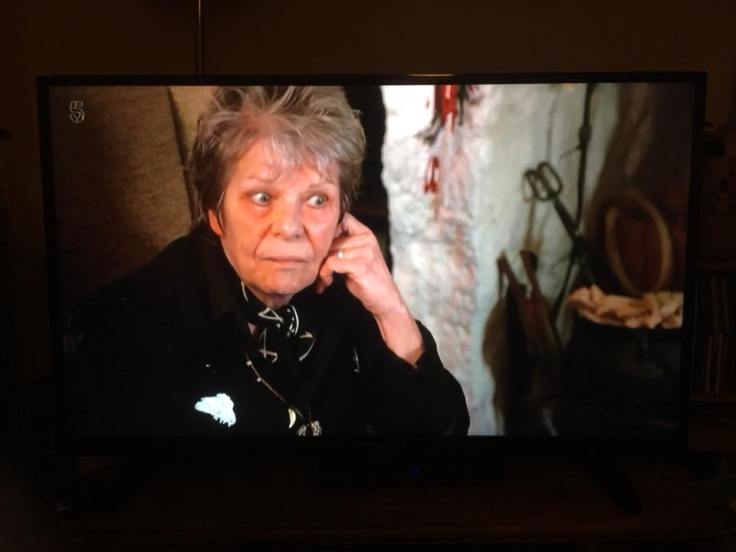
In May this year we were invited by Channel 5 to take part in their programme Celebrities go Caravanning. We hoped the selected celebrities would have an open mind and respect the work we do.


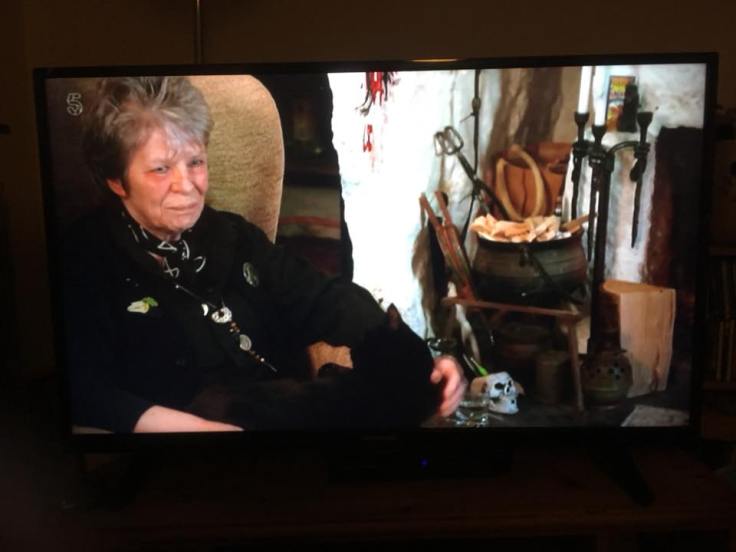
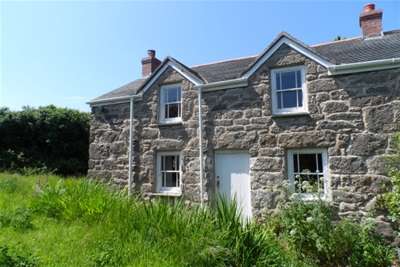
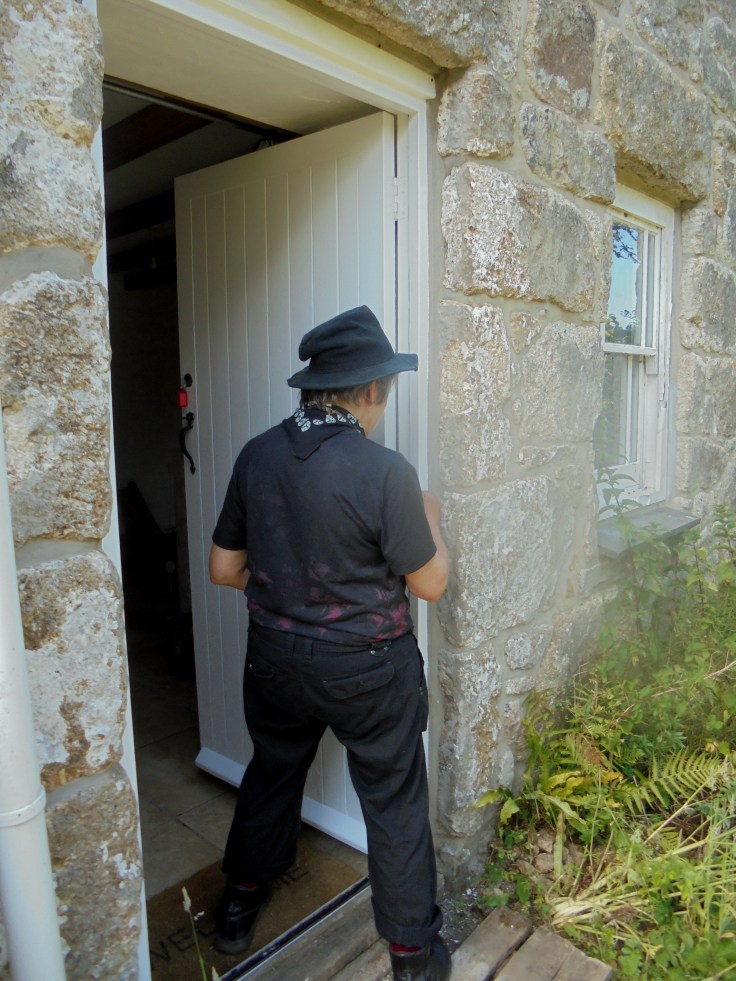
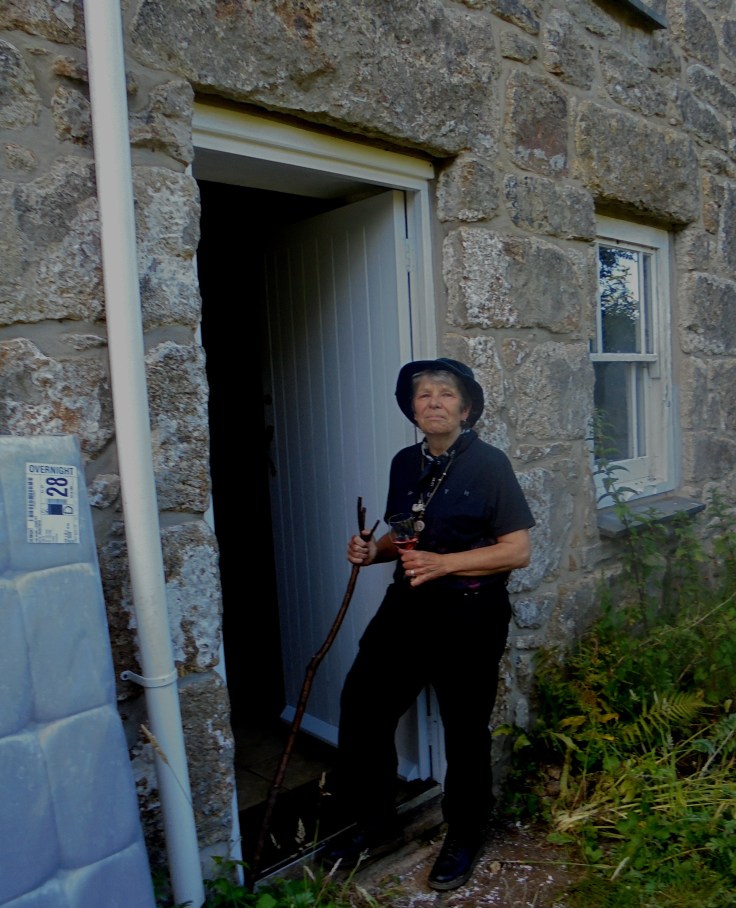
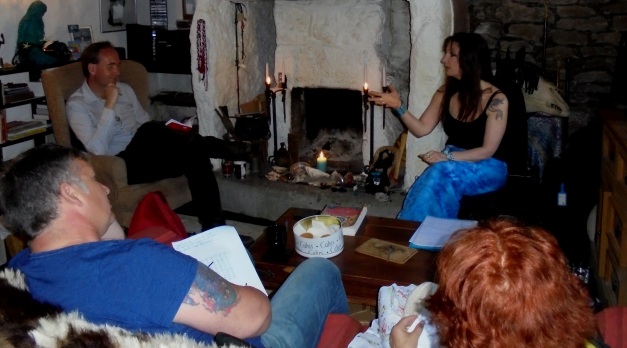
Squeezed into Cassandra’s tiny cottage was a camera crew of four with all their equipment and two celebrities, Colin Baker and Sherrie Hewson. There was limited room for manoeuvre! My familiar Clutterbuck is accustomed to the media visiting Cassandra’s cottage and no longer makes a hasty retreat via the cat flap. He was the star of the show on this occasion!

A huge thank you to Chris Neno for the photographs above.

Channel 5’s camera crew portrayed the subject well and showed respect for Cassandra’s property. It was a pleasure to work with them and along with Colin Baker and Sherrie Hewson who were fascinating people to converse with. The chants and incantations we used are for media purposes and not included in our personal work.

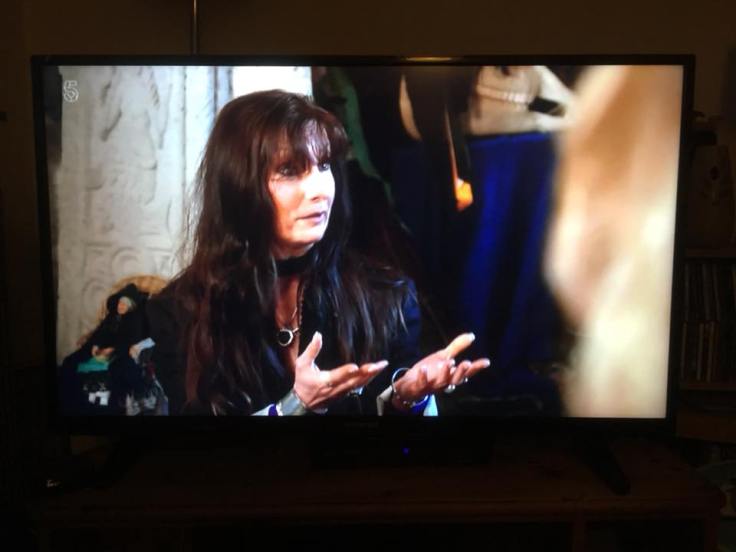
I recorded the following footage of this programme from our television:

The Titanic’s Cornish Connection

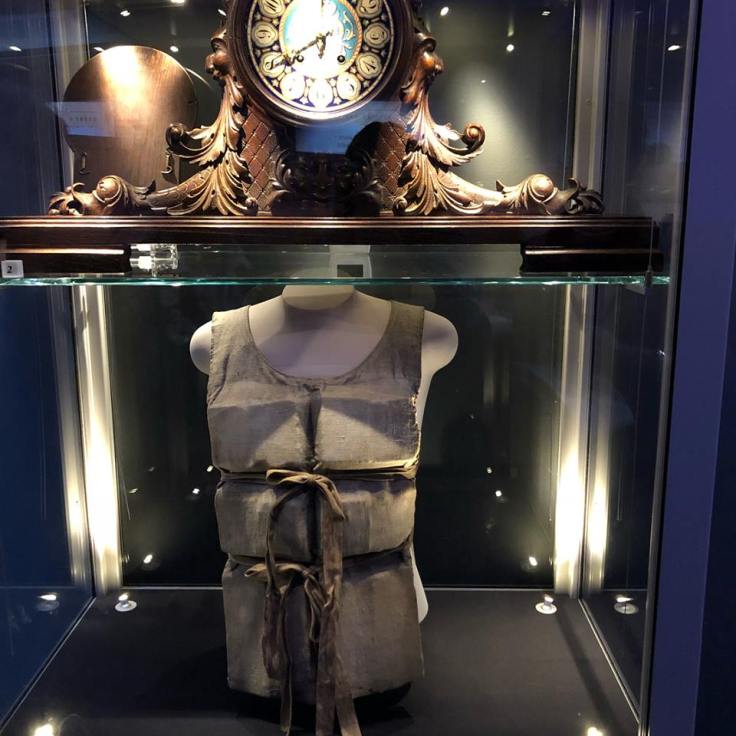
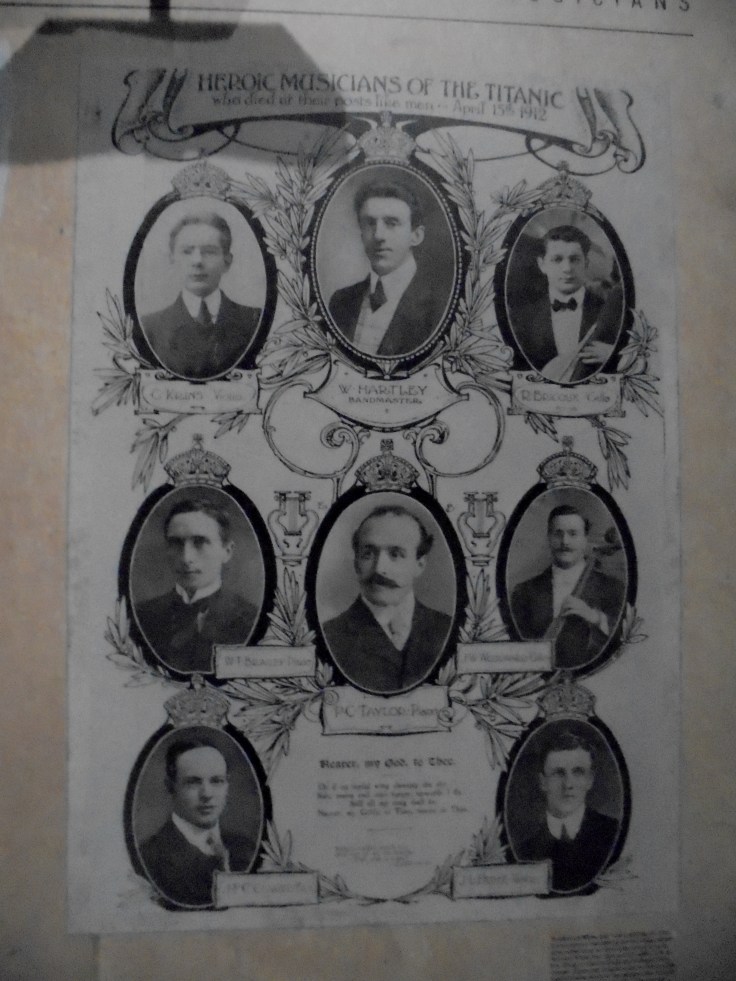
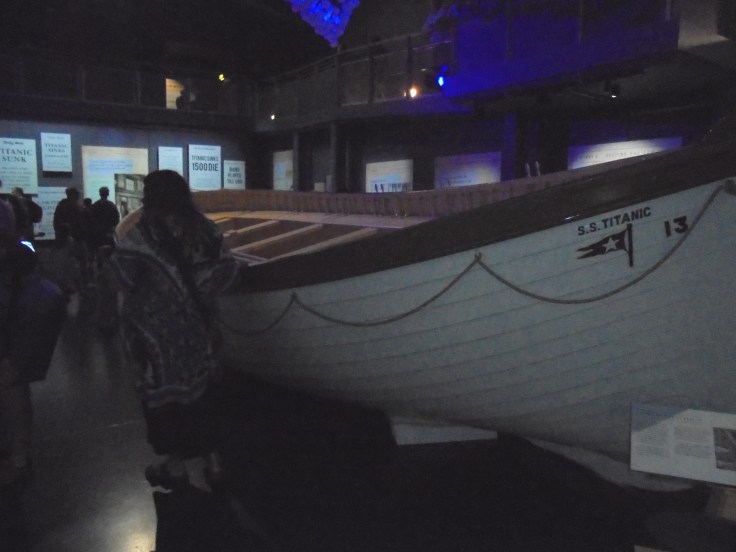
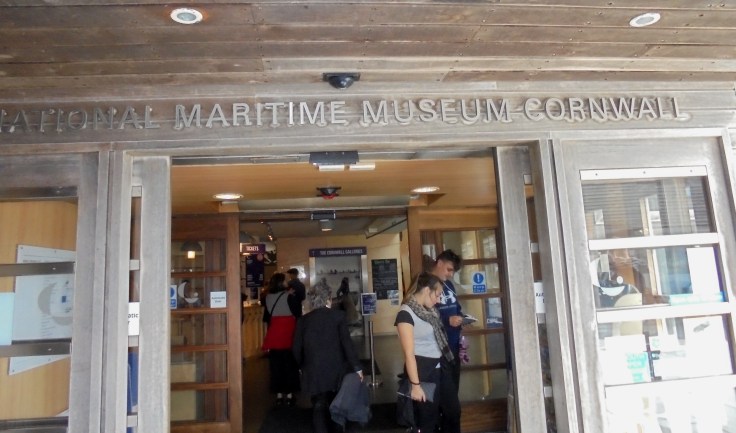
I have always felt a strong connection to the history of the Titanic and was unaware of its significant connection with Cornwall. When I visited the Titanic Exhibition at the Falmouth National Maritime Museum on 29th July this year I discovered more information.


The Christmas card was sent to Lulu Drew, the widow of James Drew, originally from Constantine. Lulu and James had emigrated to America in 1896 and in 1912 they returned to Cornwall to visit family. For their return journey to America they travelled on Titanic, and their cabin was next to that of Emily Richards of Newlyn. Remarkably descendants of Emily Richards have also lent items to the Museum for the exhibition.
Sadly James lost his life in the disaster on 15 April 1912. The Christmas card reads: “At this time of year our thoughts are with Lulu Drew who lost her husband James when the Titanic sank. From Aunt Bessie xx”

Ernie Warmington has also lent the Museum a memorial postcard that was sent from Portscatho to Mylor. Memorial postcards were printed after the disaster to help raise funds for the survivors.
Ernie Warmington says: “I’ve visited the Museum to see the Titanic exhibition and the Cornish connections on display have made a real impact. I knew I had these objects and that they would be of great local interest, I just didn’t know where to lay them.

Here are some of the Cornish passengers of the Titanic:

.Mrs William Rowe Hocking was born as Eliza in Tresco in the Scilly Isles off Cornwall, England on 12 April 1858. She first appears on the 1861 census living at Bay on Tresco but the family later settled on the British mainland and appear on the 1871 census at an unspecified address in Penzance, Cornwall. She was married in Penzance in 1880 to William Rowe Hocking (b. 1854), a confectioner’s foreman, and the freshly married couple appear on the 1881 census living at 27 Leskinnick Terrace, Madron, Penzance. Her daughters and two grandsons were rescued in lifeboat 4. Her son George was lost.

Mr Edwy Arthur West was born in Perranzabuloe, Cornwall, England on 20 November 1875. Edwy first appears on the 1881 census when he and his family are residing at Point in Feock, Cornwall. When the family appear on the 1891 census they are residents of Kenwyn, Truro and Edwy, then aged 15, is still attending school. Edwy had struck out by himself by the time of the 1901 census and he was recorded as boarding at 76-86 Rings Road, Portsmouth and he was described as an unmarried house furnishers assistant. Arthur had served as a chorister for many of his young years in Truro Cathedral and to mark his passing a memorial to him was placed within the Cathedral by his wife and daughters who, after the tragedy, returned to live in Cornwall.

Ada Mary West was born 1879, Truro, Cornwall. Ada and her family appear on the 1881 census living at Prospect Place in Truro. Ada West died in St Vincent’s Nursing Home in Plympton, Devon on 20 April 1953 aged 74. One keepsake that remained in her possession for the remainder of her life was the flask that her husband had passed to her the last time she ever saw him.

Mrs William John Wilkes was born as Ellen Needs in Tresco in the Scilly Isles off Cornwall, England on 13 June 1864. She first appears on the 1871 census living with her family at an unspecified address in Penzance, Cornwall. Also travelling with her, albeit in second class, were her sister Eliza Hocking and her son George and two daughters Ellen and Emily with the latter’s two sons. Ellen was rescued on lifeboat 16. Her sister, nieces and great-nephews were rescued in lifeboat 4.

Master Sibley George Richards was born in Newlyn, Cornwall, England on 17 June 1911. He was the second son of James Sibley Richards (1887-1939), a general labourer, and Emily Hocking (1887-1972). His parents were both Cornish and had married in 1908. By 1912 he had one sibling, his elder brother William Rowe (b. 1909). On the night of the sinking Sibley and his brother were asleep in their cabin with their mother when their grandmother came to alert them of the danger. The family escaped in lifeboat 4 but his uncle was among the lost. Arriving in New York, he was met by his father who had travelled from Akron.
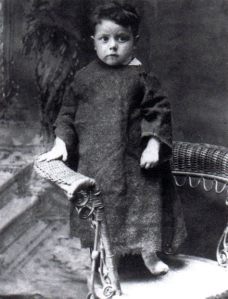
Master William Rowe Richards was born at 6 St Mary’ s Street, Penzance, Cornwall, England on 1 April 1909. He was the eldest son of James Sibley Richards (1887-1939), a general labourer, and Emily Hocking (1887-1972). His parents were both Cornish and had married in 1908. He was named after his maternal grandfather. On the night of the sinking William and his brother were asleep in their cabin with their mother when their grandmother came to alert them of the danger. The family escaped in lifeboat 4 but his uncle was among the lost.

Mrs Sidney Richards (Emily Hocking) was born in Penzance, Cornwall, England on 22 April 1887. She first appears on the 1891 census living at 39 Adelaide Street, Penzance. Her father is believed to have settled in South where he died and her mother remarried, becoming Mrs William Guy. The family appear on the 1901 census at 34 Mount Street, Penzance. Emily was married in 1908 to James Sibley Richards (b. 9 October 1887), a general labourer from Newlyn, Cornwall. The couple appeared on the 1911 census living at 6 St Mary’s Place, Penzance, a boarding house ran by her mother. The couple would have two sons whilst in England: William Rowe (b. 1909) and Sibley George (b. 1911) and later lived at ‘The Meadow’, Newlyn. Their boat was only a short distance away from the Titanic went it went down. The people in the boat pulled seven men out of the water. The Richards and Hockings hoped that George Hocking had been rescued by another ship, but he was lost. After leaving the Carpathia, the Richards stayed at Blake’s Star Hotel at 57 Clarkson’s Street in New York City and she was reunited with her husband Sibley Richards who had travelled from Akron.

Frank Thomas Andrew 1 was born as Thomas Francis Gribble in Perranarworthal, Falmouth, Cornwall, England in the closing months of 1885. Frank grew up on his father’s 25 acre farm, Gilly Tresamble, in Perranarworthal and appears there on both the 1891 and 1901 census records. Frank was married on 4 July 1908 at the register office in Helston, Cornwall. His bride was Rhoda Tripp (b. 11 December 1887). Rhoda hailed from Redruth, Cornwall and was the daughter of Henry Tripp, a farmer, and his wife Emily. Frank and Rhoda settled in Illogan, Cornwall and lived at Forest Gate, Four Lanes in that village, appearing there on the 1911 census. At that time they had one daughter, Lucy (b. 30 November 1908). Frank worked as a tin miner. Frank Andrew died in the sinking and his body, if recovered, was never identified.

Robert Hichens 1 was born in St Peter’s Square, Newlyn, Cornwall on 16 September 1882. He was the son of a fisherman, Philip Hichens and Rebecca Hichens (née Wood) who was originally of Whitby, North Yorkshire. By 1906 he was shown on his marriage certificate to be a “master mariner”. He had married Florence Mortimore at the parish church of Manaton, Devon on 23 October in that year. On the night of 14 April 1912 Robert Hichens was at the ship’s wheel (having relieved Q.M. Oliver at 10 p.m.) when the warning came from the lookout that an iceberg had been spotted ahead of the ship. When the order came to hard a’starboard he immediately swung the wheel as far as it would go. At about 12.23 he was relieved by QM Perkis at around which time one of the officers shouted ‘That will do with the wheel, get the boats out.’ Later, Second Officer Lightoller told Lookout Fred Fleet to get into Lifeboat 6 on the port side and put Robert Hichens in charge of that boat. The lifeboat (capacity 65) left the ship at about 12.55 with only 28 persons on board with the order that they were to make for the lights that could be seen in the distance.

Robert’s conduct on the lifeboat would later come under intense scrutiny. After being rescued and landing in New York, Senator William Smith had subpoenaed 29 crew members for the US Inquiry and the remaining crew were to return to England on April 20 aboard the steamer Lapland. Robert hadn’t received any notification, and so he was aboard Lapland when it left New York at 10 a.m. Shortly after departing the ship received a wireless to stop and await a boarding party. When the boarding party arrived 5 more crew were taken ashore, among them was Robert.

Mr Richard George Hocking, 22, was born 26 July, 1889 at 39 Adelaide Street, Penzance Cornwall, the youngest son of Mr William Hocking (Confectioner and Baker) and Mrs Eliza Hocking (née Neads). After the death of his father in South Africa the family moved to 6 St Mary’s Street, Penzance.

George perished in the disaster, his body, if recovered, was never identified. His mother had asked him to enter her lifeboat but he replied, ‘No, these men are good to stand back for you, and I must stay back and let their wives and mothers go’. A brass plaque in memory of George Hocking and his friend Harry Cotterill was placed in St John’s School, St Michaels’s Street, Penzance shortly after the tragedy.

Miss Ellen “Nellie” Hocking was born in Penzance, Cornwall, England on 5 November 1891. She was the daughter of William Rowe Hocking (b. 1854), a baker and confectioner, and Eliza Needs (b. 1858). Her father hailed from Cornwall whilst her mother was born in Tresco on the Isles of Scilly and they were married in 1880. When Nellie appears on the 1901 census she is 34 Mount Street, Penzance. Her mother was on her second marriage by this time–the ultimate whereabouts of her father being unknown–to a Mr William Guy. Mr Guy died in 1907 and the family later show up on the 1911 census living at 6 St Mary’s Place, Penzance where her mother ran a boarding house. She remarked at one time to Nora Keane that as night had fallen the previous night she had heard a cock crowing (a sign in Cornish folklore of impending disaster). Nellie was told that she had imagined it but she was adamant.  Nellie, her mother, sister and nephews were rescued in lifeboat 4. Her brother George was lost.
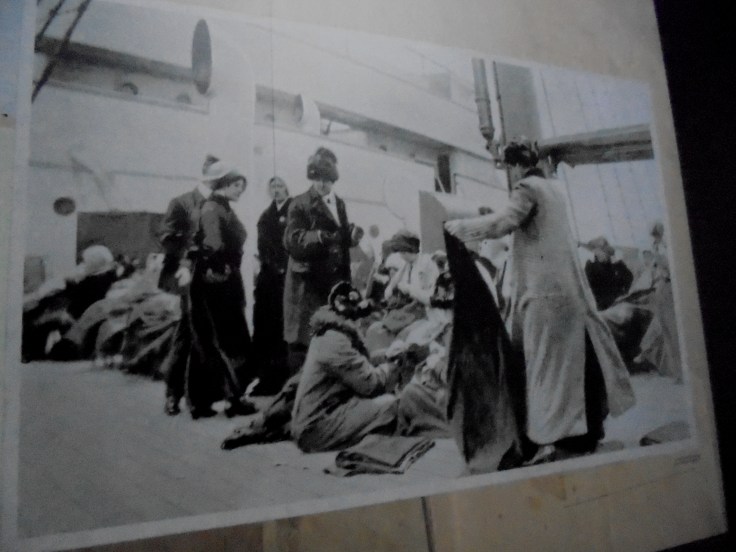
Mr Joseph Charles Fillbrook was born in Truro, Cornwall, England in early 1894. He was the son of William Fillbrook (b. 1868), a mason, and Catherine Vincent (b. 1866). His father was native to Truro whilst his mother was Canadian-born. Joseph first appears on the 1901 census living at the home of his maternal grandparents Edward and Mary Jane Fillbrook at 10 Victoria Square, Kenwyn, Cornwall and again on the 1911 census with his now widowed grandmother at Williams Row, Calenick Street, Kenwyn; he was described as a house painter by the time of the latter record and had been apprenticed as such since leaving school. His parents and siblings are listed on the 1901 census living at 8 Lemon Row and on the 1911 census at 16 Charles Street, Truro. Joseph Charles Fillbrook was lost in the sinking and his body, if recovered, was never identified.

Mr Joseph Charles Nicholls was born in Nancledra, Cornwall, England on 24 July 1892. He was the son of Richard Henry Nicholls (b. 1867) and Agnes Friggens (b. 1861), both Cornwall natives who had married in 1886 and he had two known siblings: Mary Ethel (b. 1886), Richard Henry (b. 1890). His father was a stonemason who worked at the quarry at Trenowith Downs.
The family appeared on the 1891 census living at an unspecified address in Nancledra, Cornwall. When Joseph’s father Richard Nicholls died is not certain but his mother was listed as widow on the 1901 census when she and her children were living at Corbis Bay, Uny Lelant, Cornwall. Joseph was lost in the sinking. On 23 April 1912 his body was recovered from the sea by the MacKay Bennett.

Mrs Robert Davies was born as Agnes Friggens 1,2 in Ludgvan, Cornwall, England on 23 November 1861. She was the daughter of Grace Friggens (b. circa 1841 in Gulvall, Cornwall) who was unmarried at the time of her birth (3). Grace seemingly married a few years later to a man named Thomas Victor and had at least one more child before emigrating to the USA, leaving Agnes behind.Agnes was apparently raised by Henry White (b. 1820) and Dinah  (4) (b. 1819), the latter née Rowe, natives of Ludgvan who already had a large family. Agnes first appears on the 1871 census living with them at an address in Lennor, Penzance. By the time of the 1881 census, Dinah (now a widow) and Agnes are the only ones present at their home on New Mill, Madron, Penzance and both are described as charwomen. Agnes survived the sinking, probably in lifeboat 14, the events immediately before and after the sinking were recounted by her to a Calumet newspaper on arrival in Michigan.

Read more about the history

Here are some of the images captured on my visit to the Museum.
There were also costumes on display from the popular Titanic movie:

Even though the creation of a romantic story was the main focus of this movie it still highlighted the tragic loss of many lives along with the intensity of that night. A time in history that will always be remembered.  It is also a reminder of how helpless humans can be when dealing with the power and energy of the sea.

Property Cleansing

Cassandra and I have undertaken many Property Cleansings and I thought now was an auspicious time to write about the subject.

 Years ago I lived in a row of terraced houses and in one particular property adjoining these the couple divorced after a few years. I noticed that couples who moved into the property also divorced and at the time I wondered if the energies from these occurrences affected new tenants.

It is vital to understand these negative influences that are usually categorized into two types: thought energies (or if they have a shape – thought forms) and negative spirit influence. Now, you may instantly think about dead people, however we are all “spirits”. Some of us are living within the physical realm and some aren’t. We do not become a spirit when we physically die as we are one housed within a physical body.

One may also say, “But I cannot see/hear spirits, this is proof they don’t exist”. Well, we cannot see radio, or television waves in a room. You cannot hear a dog whistle, but dogs can! It would be rather foolish to conclude such a whistle made no noise simply on the grounds that you didn’t hear it.

Negative thought energies are created by someone (dead or alive) thinking in this way, e.g. anger, hatred, fear etc. If the person is thinking these thoughts about us they are automatically projected in our direction. As negative spirits are attracted to negative energy these will often accompany it,particularly if this is done formally, e.g. casting a spell.

Fortunately there is defense against these things. Positive energies will dissolve negative and we can invoke positive spirits to protect us against negative ones. There is nothing particularly profound about it.

The negative thought content of a spell, or any other form of psychic attack, can be cancelled out by directing a positive thought form of the same, or greater strength at it. When they meet, the negative thought form will dissolve. This can be achieved by prayer, visualization, etc.

We inhabit certain energies wherever we live. Our homes are a space of unity where many energies meet – our feelings, thoughts and emotions emit a certain type of energy, but also attract other energies. Family members, neighbours or visitors in our homes can also bring in negative energies which may affect our mood and well-being.

Once they enter your home, negative energies impact your whole life. They can cause your budget to fluctuate, break the relationships between family members and disrupt the harmony in your home. As a result, you will feel anxious, restless and broken, with no will to live. However, the symptoms may not be noticeable earlier, which is why it’s important to know how to detect the negative energy in your home.

When moving into a new house, flat, unit or workplace, you will need to cleanse the new property or workplace because buildings absorb the energies of previous occupants. The curtains and carpets also need to be cleaned as they hold the stagnant/negative energies from previous tenants. These stagnant/negative energies can be absorbed by the people living or working within this space, causing arguments, physical and mental illnesses, and relationship problems.

Many people do not realize that when they move into a new place there are energies that might be lingering there from past residents or past incidents. While these energies are usually not going to greatly affect you, there is still a chance that it could affect you or someone in your family if the energy is strong enough. These energies can be particularly powerful in a home where  negative energy has built up over a long period of time. For example, a home where a bitter divorce took place, a home where a suicide or murder took place, or a home where a person may have gone through major depression (or other disorders that would affect a person’s spirituality and/or mentality). These are all spaces that could be rife with leftover negative energy.

So while you focus on cleaning your new house physically, it is wise to remember to clean your new house spiritually as well. This also applies to a home that has never been cleansed spiritually to your knowledge. If you’re looking to lighten up the air and promote a positive energy flow in your home, cleansing the energy of your house is imperative.

Now that you understand the importance of energetically cleansing your home, let’s learn about the best and easiest ways to cleanse.

A good ol’ fashioned smudging ritual is a Native American tradition of lighting bundles of herbs and using the smoke in order to spiritually cleanse an area or person from negative energy or spirits. Different herbs are used in order to do a smudging ritual, and so the choice of herb is up to you. Some of the herb bundles that can be used include: white sage, cedar, and sweet grass. If you cannot get your hands on a smudging bundle, you can always make your own. Or you can use herbs that you have in your own kitchen cabinet!
There are many herbs with purification qualities that will work just as well as a white sage bundle will work in cleansing a home. For example, you can use dried rosemary, basil, common sage (the kind that you get from the grocery store), cloves, cumin, garlic, and onion (among many others). Create your own loose incense with one or more of these dried herbs and burn them over a charcoal disk (carefully of course!) Let the smoke fill each room with its purifying and cleansing powers.

Blessing one’s home while moving in is actually quite a common practice among various faiths. That being said, you do not have to be of a particular faith in order to bless your home before or while moving in.
The best things to use are oils or holy water. For the oil, you can use plain ol’ olive oil or whatever kind of oil you have in your cabinet. For the holy water, you can acquire some from a Church or create your own.

Cassandra and I were recently asked to perform a house cleansing for someone moving into our village and on this particular occasion we were given complete access to thoroughly examine the property and were there  four hours.

It was indeed pleasure to do this work for our new residents and we warmly welcome them into our community.

Ten Years in Cornwall

The 12th June 2018 marked the 10th anniversary of my move to Cornwall. The life I visualised here is completely different to the one I now have.

Living near the sea, the elements of rain, wind and storms intensify. Cornwall may not be as cold as other parts of the UK (although our last winter was a harsh one) and frosts occur less here. The cost of living is rising everywhere, but in tourist areas, prices also rise during the holiday seasons and tourists pay higher prices for the short time they are here, but residents have to do this throughout the season. Work opportunities increase during summer, but lessen in winter and cold weather means an increase in utility bills.

Taking a vacation in Cornwall is easier than living here as you have free time to visit beaches and places of interest, but when one is trying to earn a living and survive, pleasure visits to beaches or sites rarely occur.

On a positive note I have enjoyed my work as Wisewoman throughout the last nine years and learnt so much from Cassandra Latham Jones during this fascinating and testing journey. Working with the land and sea’s powerful unpredictable energies has been challenging. Tests from the ‘powers that be’ are severe with obstacles constantly placed in one’s path. It takes strength of character and determination to overcome these and continue………the spirits test you as if to say ……..”how much do you want this???” Cassandra admits she has been tough task master with me throughout this time and admires my tenacity.  She also revealed that others who desired to learn from her were unable to withstand the tough tasks and tests it entailed.

My experience and training in ceremonial magic while in Kent has been useful for conducting Rites of Passage. Cassandra is happy to leave what she refers to as ‘arm waving’ to me when setting up a sacred space for ceremonies.

The consultations we provide together work well, the moment just before a reading while Cassandra connects with a client’s energies, I ‘tune in’ to spirit presences around them. While Cassandra shuffles the Tarot cards I provide the client with a description of any presences and messages they wish to pass on. Cassandra then lays out the Tarot spread and on many occasions the same message has also appeared within the cards giving the client double confirmation. I have witnessed many readings over the years and I know her cards well. I own an identical Tarot deck and am able to provide readings from them.

Property cleansing needs a huge amount of work, particularly when they have been inhabited by a variety of residents over time,(more-so with period properties). The energies from traumatic events are absorbed within the foundation and walls of these buildings and can have a profound effect on future residents. In hotels and drinking establishments often referred to as Inns the energies intensify and can affect the smooth running of businesses. We have had many successful outcomes from this work.

Curse breaking is another intense area of our work. Many clients consult us about this and Cassandra has a unique and powerful method that she has passed on to me.

Wart charming is a service that at first I was rather sceptical of, it was difficult to understand how it could possibly work. Even now I cannot explain it but have witnessed the success of this process with clients.

I have constructed many charms over the years and had a high success rate with fertility charms in particular. It delights me to think I have assisted in creating new lives and brought happiness to prospective parents.

I continue to provide Holistic Services and have taught Reiki,  a system that is of great benefit to students. The original practice of Reiki is more about spiritual and emotional development of the person rather than a complementary healing therapy.  I have assisted a wide range of clients with Reiki including the terminally ill and also helped pets owners and those who work with stressed animals.

My Crisis and Trauma counselling services have also come to the fore as often clients are affected by religious cults and childhood abuse. They do not realize how past trauma can affect their everyday lives as adults, even though it happened long ago. This counselling service also helps those with bereavements, divorce, family issues and mental/physical health problems.

 Walks with Wisewomen was also an enjoyable aspect of our work as it enables us to visit and enjoy the sites with our clients. I have, over time learnt the folklore associated with them by listening to Cassandra repeating the information on each visit. We also find out more about our clients as we converse with them while walking to and from the sites. (We no longer provide this service).

Our: ‘Old Ways’ workshops have been successful during the last few years. I suggested hosting them and Cassandra was at first a little reticent, but as we had many inquiries about them, she agreed to try. The workshops have gone from strength to strength covering five subjects. We have met some fabulous people who experienced some extraordinary occurrences while they were with us. The preparation and workshops themselves are hard work but also energizing and satisfying on a deeper level.

I have learnt a great deal while living here and the main lesson is that life is indeed unpredictable. One can plan for the future to a certain extent but unforeseen circumstances can create sudden changes that can have incredible impact with positive or negative outcomes.

I have also learnt that being successful in work and within a community brings rivalries, competitiveness and jealousy from some, who will then project dissatisfaction with themselves onto another. When a person experiences this level of pettiness it is vital to remember that these people, by their treatment of you, are validating how exceptionally good you are. If you were not successful or talented, negative people would not bother with you. When a person moves into a new community, they are on ‘foreign territory’ and therefore vulnerable to predators and bullies. I have also met, genuine good-hearted people within the community who will do what they can to assist and support you, especially if they were once in this position.

Cassandra Latham Jones falls into this category and has helped me in so many ways.

I have integrated socially by attending festivals and utilising my talents as  musician and dancer.  The residents of St Buryan village have been particularly welcoming and now treat me as part of their community.

My time here has  been  a catalyst for new ideas as Cassandra and I, along with my son, formed our: Guise team Boekka featuring Penkevyll the Lands End ‘Oss. Our team has performed since 2010 and we now have Morvargh my Dark Sea ‘Oss who has joined our team. To top it all, my idea of Cassandra, myself and Penkevyll the ‘Oss, meeting Phil and Vivien Larcher with their Welsh Mari Lwyd in Boscastle on Samhain 2014, has now grown into a huge event:  The Dark Gathering!

As I have been a resident of Cornwall since 2008, I am no longer a ‘newbie’. The local community has witnessed the difficulties and the obstacles I have overcome. I am sure certain individuals could not have withstood or endured a fraction of what they have directed my way, but that is par for the course.  The positives I have experienced far outweigh the negatives and I am still here…….

The Dark ‘Arte’ of Glamour

I remember during childhood,  my mother’s fascination with certain movie stars. She would ‘fall in love’ with the characters they portrayed, believing they were wonderful people who she placed upon a pedestal. Occasionally, when she discovered information concerning their personal lives, that surfaced within the media, it resulted in huge disappointment and they ‘fell from a great height’ off the pedestal she had placed them upon. (I remember when she discovered that Rock Hudson was ‘gay’ she would no longer watch his movies). Unfortunately there are some individuals who are adept at hiding their ‘true selves’ and use their ‘personas’ as a tool to manipulate others.

In the Pagan world we have many ‘celebrities’ or renowned individuals using various titles to create an elite image, some are authors, speakers, organizers and entertainers. They portray a glamorous ‘persona’ and are selective concerning the information they reveal about themselves. Some are skilled in taking one grain of truth and embellishing that with misleading information. There are those who also imitate the persona and image of characters from popular magical movies by copying their attire and imitating their characteristics.

I have observed some who dress and imitate remowned witches e.g. Patricia Crowther, Doreen Valiente, Ithell Coulhoun and Alaistair Crowley to name a few. Their adoring followers, loving the magical fantasy of the character and the mystical land they inhabit, will believe without question and place them high upon a pedestal. Observing this process has stirred my curiosity to research this particular subject.

The Dark ‘Arte’ of Glamour

Glamour began quite literally with magic. Growing from the Scottish gramarye around 1720, glamour was a sort of spell that would affect the eyesight of those afflicted, so that objects appear different from they actually are. Sir Walter Scott anglicized the word and brought it into popular use in his poems:

“You may bethink you of the spell

Of that sly urchin page

This to his lord did impart 

And made him seem, by glamour art

A knight from Hermitage”

Read more here: The New Enquiry

Definition of Glamour

“Any calculated, carefully polished imaged designed to impress and persuade.

Many magical operations are designed to impress and persuade. In some cases the spell has been directed at an individual that the worker is attempting to persuade or influence in some way. Attention given to personal glamour can be a deciding factor in the outcome of that working. Studies have shown that most people make a decision about a new acquaintance within the first thirty seconds to two minutes of interaction. It is within your power to influence that decision not only with magical action, but with a carefully crafted image, as well as communication skills. This naturally applies to interactions of both a personal and professional nature.

Read more here: Crossroads of Sorcery

Ethics of Glamour: Witches & Pagans

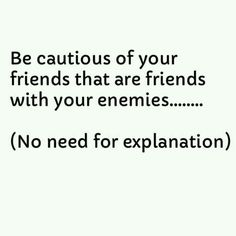
Are Friends who Associate with your Enemy Trustworthy

In my experience this scenario is fraught with difficulties……..

It’s a familiar story. A group of three or more friends, having the best of times. Then two of those three friends begin a feud and the third, innocent party is stuck to choose. We’ve all been there and I know from personal experience it’s hard to tell whether or not you can trust a friend who is friends with your enemy. It’s also hard to be friends with two people who hate each other.

For the innocent party who just wants to be friends with everyone, it’s really hard. I personally don’t know if it’s possible because I’ve never seen it work out. You’re going to like one friend more than the other, or you’re going to accidentally betray one or the other friend and they’re going to turn on you.
I understand wanting to keep your friends, but unless you can be perfect and schedule the same amount of friend dates for the same amount of time, while also not becoming the middle person for their petty vendettas, it just isn’t going to work and someone is going to end up losing.

Read more here: The Odessy Online

Understanding Scapegoating.

Here is another subject clients in this position consult us about. Cassandra and I have been scapegoated in the past ourselves, which enables us to help them.

The ego defence of displacement plays a role in scapegoating, in which uncomfortable feelings such as anger, frustration, envy and guilt are displaced and projected onto another. It is often the more vulnerable, person or group. The scapegoated target is persecuted, providing the person who inflicts the scapegoating not only with a conduit for their uncomfortable feelings, but also with pleasurable feelings of piety and self-righteous indignation. The creation of a villain necessarily implies that of a hero, even if both are purely fictional.

Some would say that Satan the Devil was used as a Scapegoat for sins and interestingly they also depict his image as half man half goat.

Read more here: Psychology Today.

.

Devon and Cornwall PF Conference 20th Anniversary

After a seven year absence from the Devon and Cornwall Pagan Conference, Cassandra and I attended the event this year.

Twenty years is a commendable achievement and as Cassandra was an organizer for the first twelve years, we thought it an auspicious occasion to celebrate with the rest of the team.

It was delightful to receive such a warm enthusiastic welcome from the majority of attendees on our arrival Friday evening. It was obvious many had missed Cassandra’s vibrant entertaining personality.

We had another surprise meeting John and Kitty who travelled from Scotland to attend the Conference. It had been six years since we last met.

Levannah was also delighted to see Cassandra and they spent part of the evening updating one another and sharing a little nostalgia about early Conferences.

On Saturday morning during the Opening Ritual, Levannah made a surprising announcement that the event would no longer have a connection with the Pagan Federation and would continue independently.

The following text is taken from literature handed out at the Conference:

Welcome to Pagan Phoenix Southwest

Pagan Phoenix SW·Wednesday, 7 March 2018

We have organised the conference event for the last twenty years in this region for Pagans with the Devon and Cornwall Pagan Federation. In 2019 there will be some changes to the way the conference is organised. The conference team has decided that it is time to make the conference independent of the Pagan Federation. This will enable it to grow and develop, and continue to be an annual event in Cornwall at Penstowe, for all Pagans and magical folk of all paths, at which we can gather together to celebrate, learn and enjoy.
Pagan Phoenix SW is an independent, locally run non-profit company which has been set up by your organising team to run the conference. This is all it will do; other activities undertaken by the PF will continue to be their responsibility. We will bring you the very best Pagan and magical speakers, artists and musicians.
You should not notice many changes; only good ones. The conference will be run on a not-for-profit basis and the team who organise it will be volunteers and will not be paid. Pagan Phoenix SW will retain enough funds to run the conference. There is currently a charity raffle at the conference but in addition to this, in future, any surplus funds will be donated to charity and if you attend the conference you will be invited to vote as to which charities we should support.
There will be a concessionary ticket rate and we will continue to offer two for one tickets for people with disabilities who require a carer in order to attend. Conference attendees are very welcome to make suggestions for speakers, and performers. We will welcome stall-holders and local crafts persons just as we do now. Accommodation will continue to be organised through our good friends at Penstowe. You are welcome to contact us via the facebook page.
We have already started work on the 2019 conference. The programme will be publicised and tickets will go on sale, as usual, at Samhain.
We would like to extend a very warm welcome to you to the next conference which will be held here at Penstowe on Saturday 9th March 2019. Please put the date in your diary now; we are looking forward to seeing you again next year.
Blessings to one and all from Pagan Phoenix SW!

It surprised us to hear of this change along with other developments, but we understood their reasons for this decision. All who attended seemed supportive as they had enjoyed this event throughout the last twenty years and were happy about its continuity.

Levannah spoke of the early years and it was good to hear Cassandra included in these memories. All of the organizers were asked to stand and the audience applauded them for their hard work.

During the day, there were talks by Julian Vayne, Marian Green, Ronald Hutton, Susanne Rance and Penny Billington (in place of Rae Beth due to ill-health). They are unique and fascinating speakers who are charismatic and confident with their chosen subjects. They have excellent rapport with the audience and this is wonderful to observe.

Julian Vayne never fails to entertain and has a remarkable talent of drawing the audience into his ‘world of the wyrd’ with his fascinating view on the Craft .

Marian Green is a ‘mine of information’ and her delivery is relaxed due to numerous years of experience and a deep connection with her chosen subject. The same can be said of Penny Billington.

Ronald Hutton’s story of his early days within the Craft held one’s attention, especially relating how the Craft was not taken seriously in the past. He attained his position as a Professor before he spoke about these matters hoping his position as an academic would alter perceptions. He injects humour into his stories that helps when discussing deep, serious content.

During the lunch break Cassandra and I were approached by others wanting an update on our lives and work. We were never alone that day as there were many to converse with at this well attended event.

Susanne Rance discussed the meaning of Runes and their connections with certain areas of the body. There are powerful sounds that resonate with various runes when they are sung or chanted. The audience participated by singing each note and the vibrations were distinctly felt around the venue.

Levannah also gave tribute to our dear friend Lorraine Hall who sadly passed away the previous year. She worked as an organizer with Cassandra during the early years of Conferences and I will always remember the wonderful welcome I received from her on arrival at the 2006 Devon and Cornwall Conference.  My former husband and I had purchased our new home in Cornwall and she greeted me with: “Welcome to Cornwall”! She then took me to meet Cassandra.

The speakers along with Damh the Bard formed a panel who were asked questions by members of the audience. A memorable answer came from Damh when he appealed to the Pagan community to put aside ‘sh!tty egos’ and make a concerted effort to get on with one another instead of creating divisions. He also spoke of his first meeting with Cassandra in the early days of discovering his Pagan path. Each question asked was answered in turn by a speaker from the panel. Their individual views, interpretations and stories were inspiring to hear.

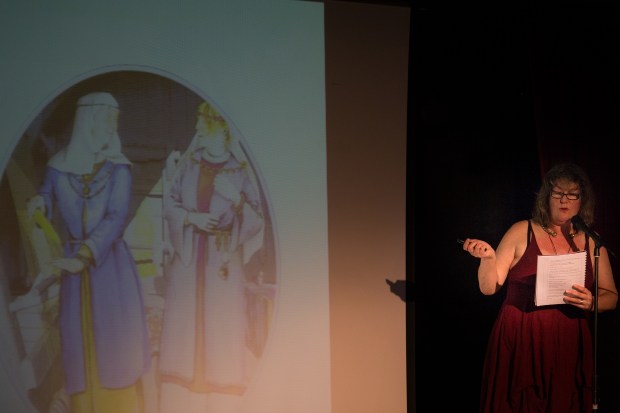
During this, the winner of the Deities competition at the 2006 Conference appeared on stage wearing his Cernunnos costume that caused much hilarity when he won that year. I had also entered this competition as Sekhmet among many other entrants.

The closing ritual was the story of a Shaman drumming by a small fire in woodland. His spirit energy connected with various animals, a Phoenix, buzzard, fox, stoat, badger and the woodland spirit.

The narrator explained the symbolism and the gift of insight the Shaman would receive from each one. The animal masks were well made and the costume of the golden Phoenix was beautiful.

No event would be the same without an appearance from our wonderful Cornish Piper Merv Davey to lead the spiral dance. We had the opportunity to converse with him and his wife during the lunch break and he expressed an interest in performing at our All Hallows event.

We visited the London Inn for an evening meal after a ten minute walk from the venue. The night air was refreshing as a full Conference event can become extremely warm. As we studied the menu near the bar a young woman approached me and expressed her appreciation and enjoyment of our Wisewomen in West Cornwall Facebook page. It was good to receive feedback on various posts as well as our updates on work and events.

We arrived back at Penstowe Manor in time for Damh the Bard’s performance. We sang, danced and had a wonderful time with good friends. Fiona was recovering from a recent fall but still worked hard at the event. The evening provided an opportunity for her to relax and enjoy the music.

Cassandra and I were pleased we attended this special event as we had a fabulous time. We wish the Devon and Cornwall Conference a successful future as they forge ahead as Pagan Phoenix South West.

A Winter Handfasting 2018

We first met Karyl when she travelled here from the U.S. with a group of friends and arranged to join us for a Walk with Wisewomen two years ago.

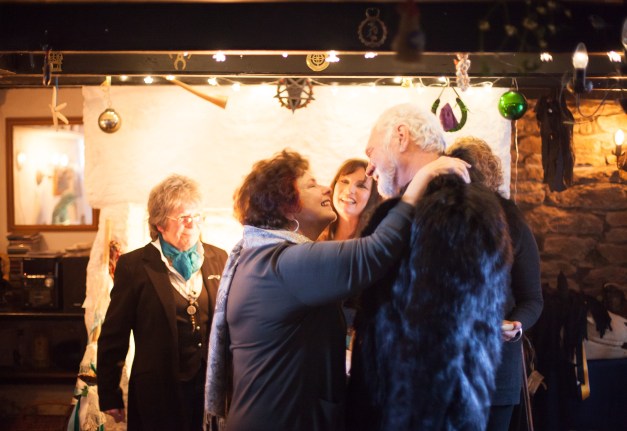
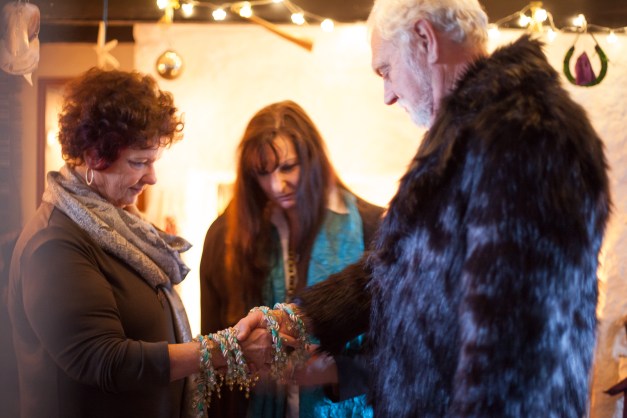
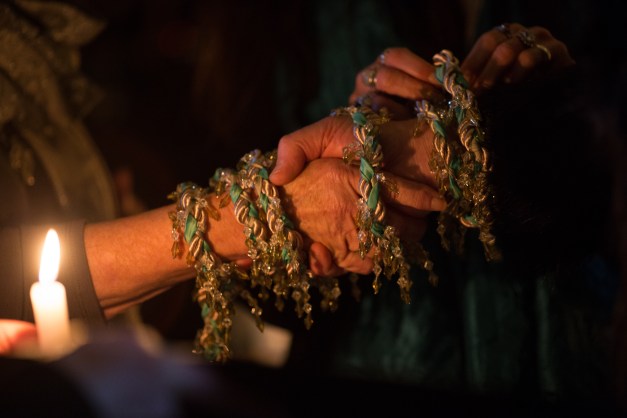
On this occasion, she returned with her new partner Paul and requested a Handfasting. January has had frequent stormy weather, gale force winds and heavy hail showers accompanied by icy temperatures, so Karyl requested we conduct the ceremony within Cassandra’s cottage.

This is the 2nd occasion when a Handfasting has occurred within the cottage, the first happened many years ago when a couple from Denmark unexpectedly called upon Cassandra requesting an immediate ceremony, giving her about an hour to prepare.

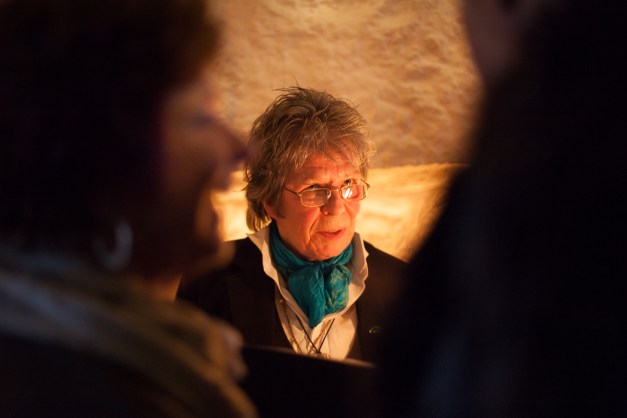
Karyl had booked in advance, so our wonderful friend and photographer John Isaac captured fabulous images of the occasion. Karyl and Paul were accompanied by two good friends to witness the ceremony and offer support. It was a small and intimate ceremony before the larger legal wedding they had planned for May Day.

Images by John Isaac

Mermaid of Zennor

I have felt a close connection with Zennor from the first occasion Cassandra took me to visit Zennor Hill in 2009. We were there for the specific reason of my spiritual connection with the land. Whilst exploring the hill I was drawn energetically to the village of Zennor that was visible below the hill.

I then learnt about the legend of the Mermaid of Zennor and have already written about on this site. See Mermaid of Zennor

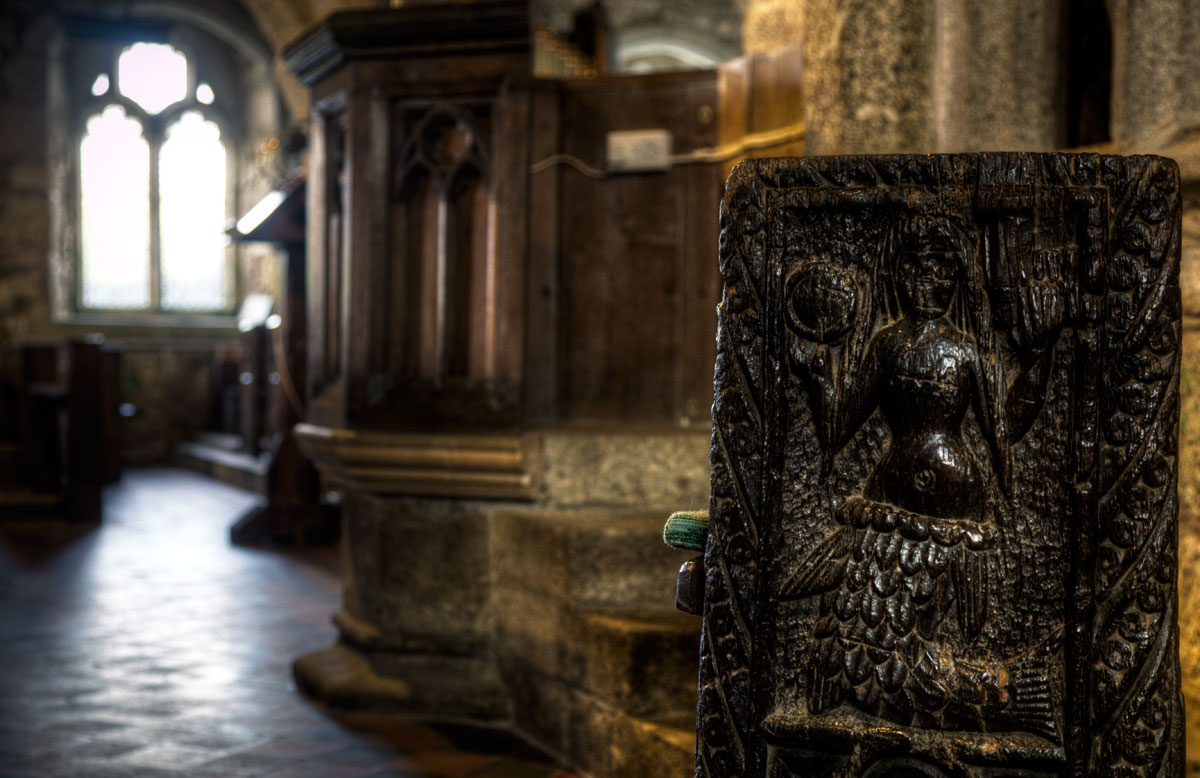
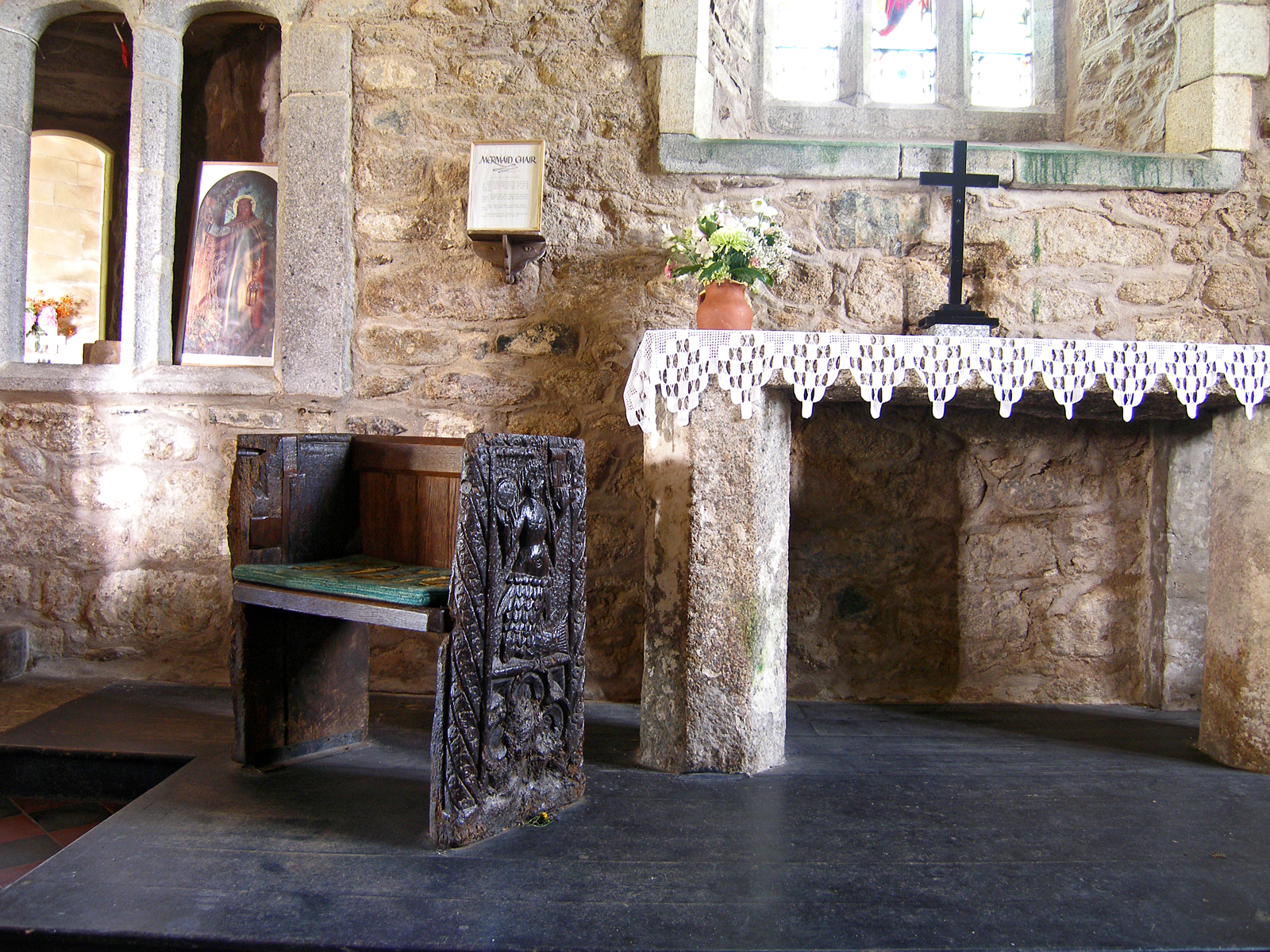
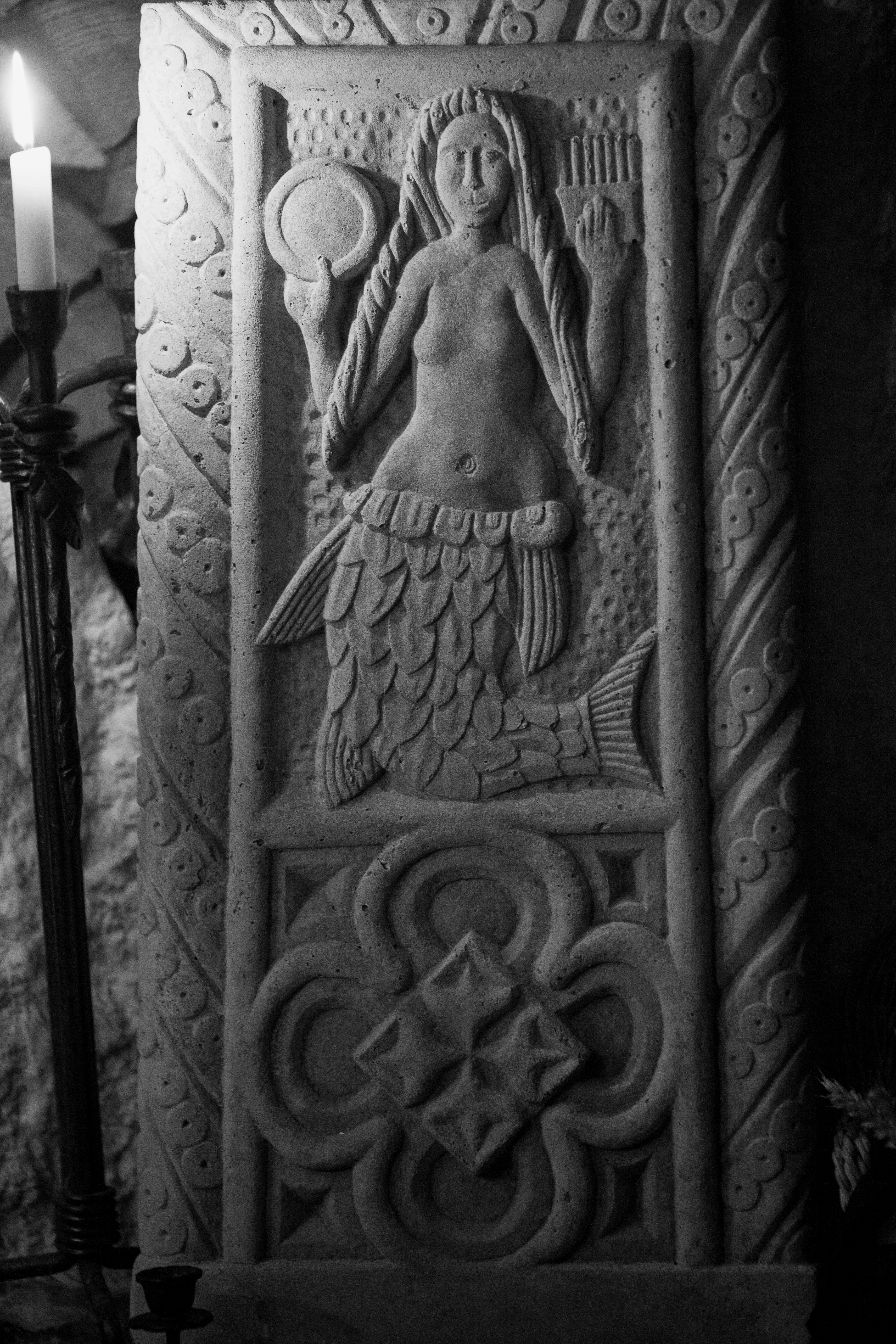
It was a delight to see the mermaid carving upon the side of the pew within St Senara’s church in Zennor.

The worn pew is tucked away in a side-aisle and shows the scars of over 500 years  constant use.

The curious carving of the mermaid has many interpretations from its medieval worshipers. Mermaids were a symbol of Aphrodite Goddess of love and the sea who held a love apple in one hand and a comb in the other. the quince (love apple) was later changed to a mirror which is a symbol of heartlessness and vanity. Medieval Christians viewed her as a symbol of the ‘sins of the flesh’. She was used to illustrate the two natures of Christ in the seafaring community as she was half fish and half human symbolizing that the Christ could be both divine and human. This resonated with the inhabitants of the region as their lives were intertwined with and dependent on the sea.

Read more here: Haunted Britain

Recently I visited The Healing Star in Penzance where they displayed a plaster cast of the Mermaid of Zennor by Rory Te Tigo. He left it in the shop hoping they could sell it for him. Each time I visited I was entranced by it, especially as there is little memorabilia of this particular mermaid. When I eventually decided to purchase it, Rory had collected the mermaid as he planned to display her at an event.  I contacted him and he kindly offered to make another for me over a period of three weeks.

Rory had the marvellous idea of producing a casting of the mermaid carving displayed in the Tinner’s Arms at Zennor and creates replicas of it using this method.

I am now the proud owner of a Mermaid of Zennor which is about the same size as the one in the church. Rory described in great detail how he created her, as you can see by John Isaac’s wonderful photographs Rory works with precision and achieves wonderful results. Her powerful presence graces our home and brings with her the blessings of the sea.

Two final images by John Isaac

To see more of Rory Te Tigo’s work visit his: website

Create a free website or blog at WordPress.com.
Up ↑