Our 2017 spring and summer Old Ways Workshops began with one for twelve Swiss Pagans. We were unable to invite them all in Cassandra’s tiny cottage, so we hired the St Buryan village hall.
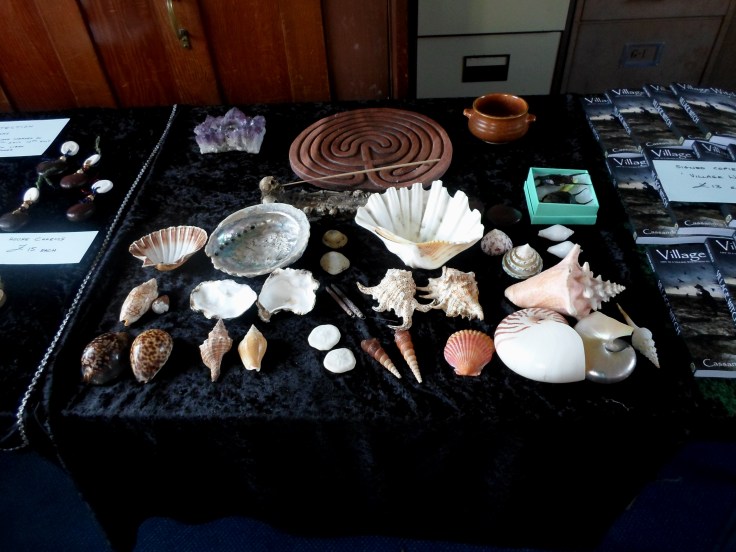
Wicca, a lovely woman who runs the: Swiss Museum of Witchcraft, arranged for her group to meet with us and translated the relevant information. Cassandra gave a talk on her life and work as a Wisewoman and I spoke about sea spirits, mermaid legends, elemental work and uses for seaweed, sand and other materials found on beaches. I also explained magical properties of various sea shells, sea beans and mermaids purses.
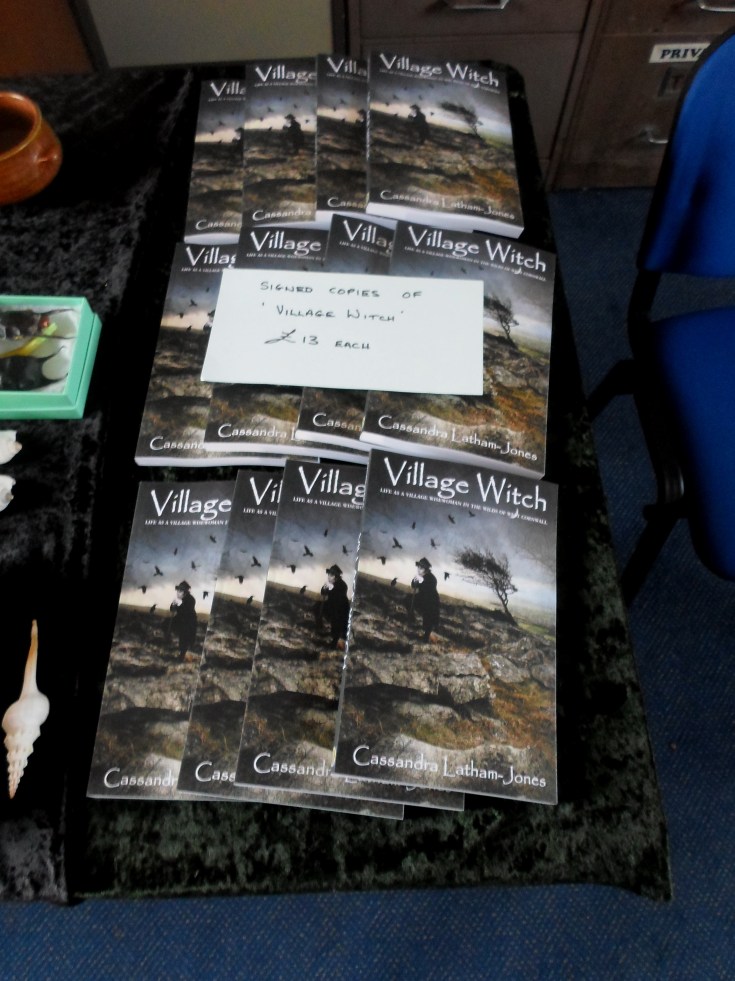
Cassandra was asked to construct a few protection charms for the group to purchase at their workshop.
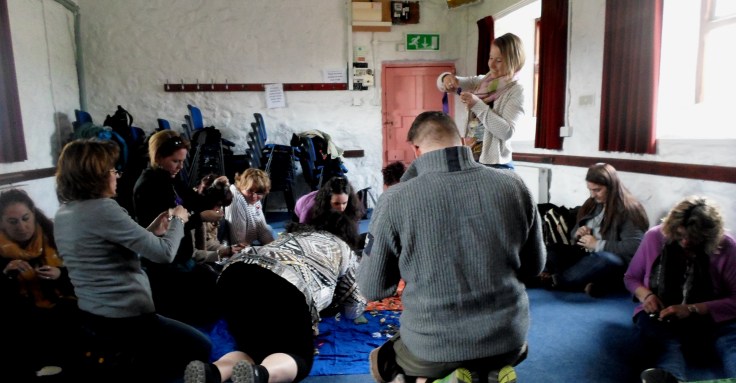
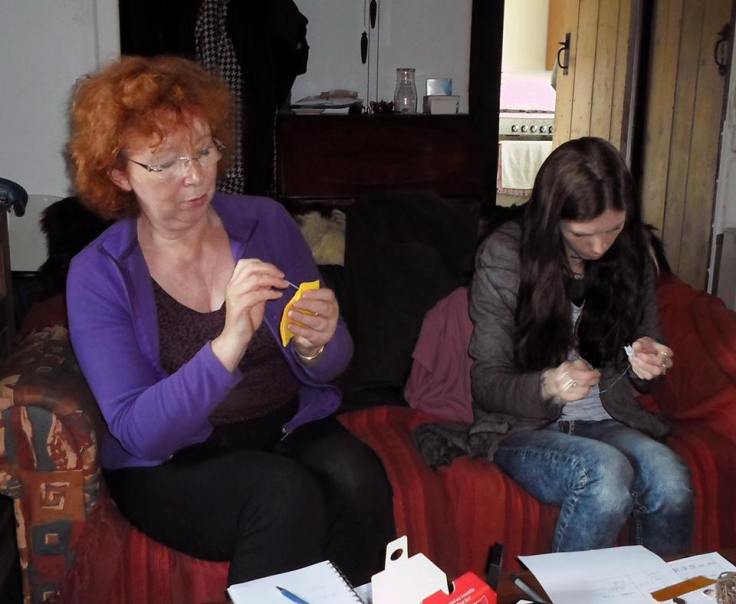
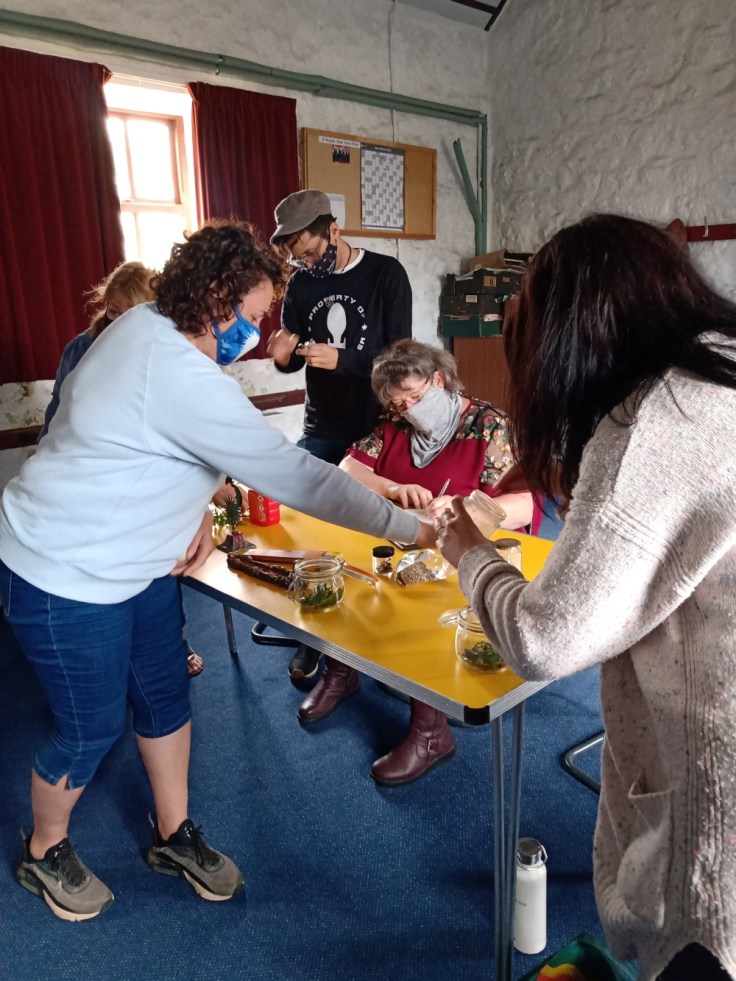
After allowing time for questions after the talks, we provided materials for them to construct personal charms. The unique designs they created and type of material they chose told us something about their individual personalities.
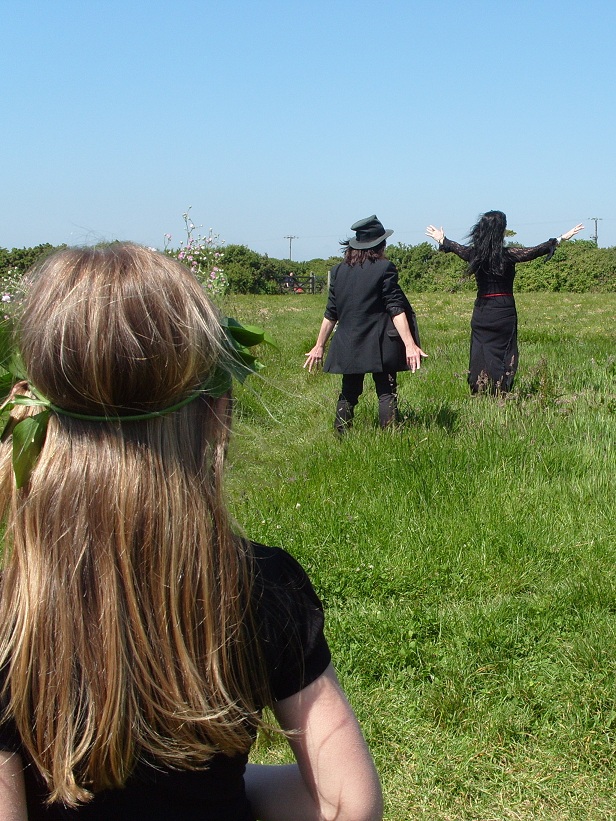
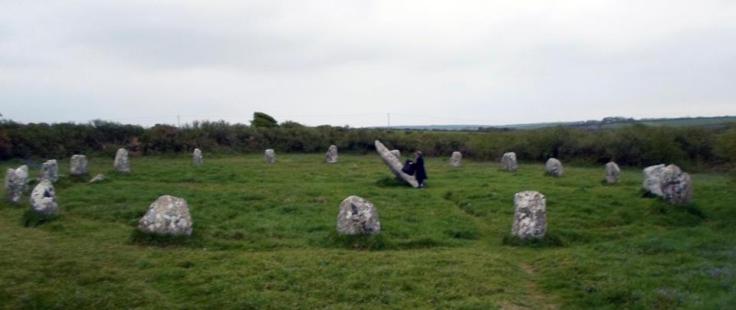
After blessing the charms we visited Boscawen-un Stone Circle to activate them with meditation and raising energy by dancing to the beat of a drum.
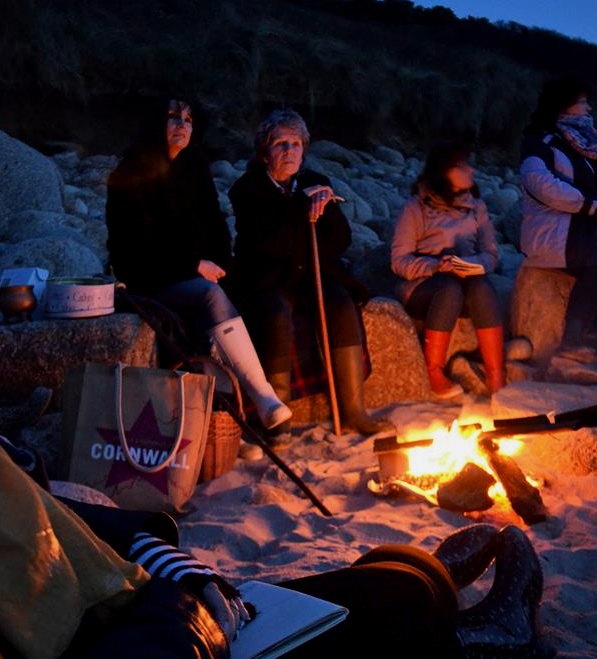
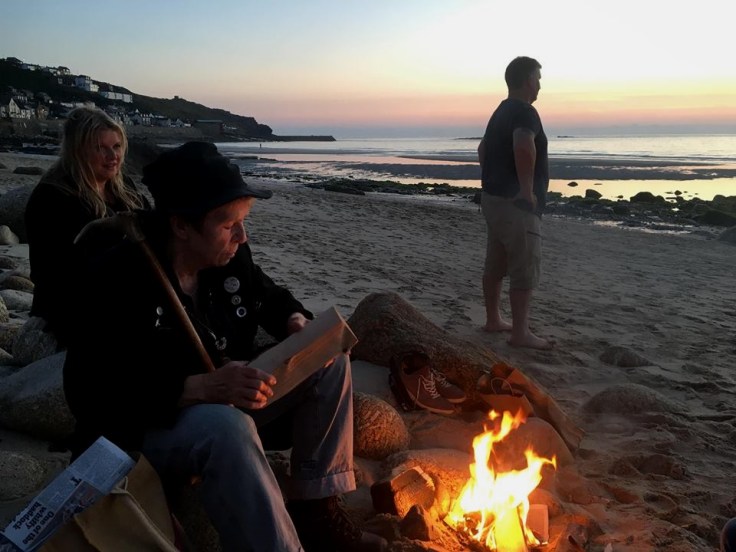
We visited Sennen Beach and watched the deep red sun in the sky as it descended over the sea. The group members live inland and rarely get an opportunity to experience wonderful energies from the sea in Switzerland.
Cassandra built a fire and we sat around it while discussing local folklore.
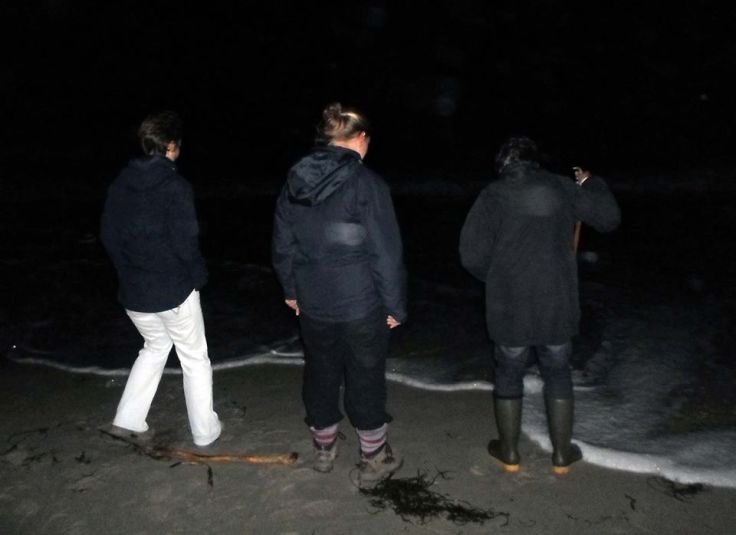
We sang chants by the shore to invoke the sea spirits and raise energy for casting spells with sea shells. We then returned to the fire for Cornish blackberry mead and saffron cake.
It was a wonderful workshop with a group of fabulous people. Despite the difference in language, our love of the Old Craft deeply connected us all.
I moved to St Buryan in 2010 and Cassandra introduced me to some of the local residents that frequent the St Buryan Inn. She often referred to it as “her office” conversing with members of the community who may require her services. The other residents who do not frequent the Inn attend local events and occasional church services that were conducted by our lovely Reverend Canon Vanda Perret. Cassandra and I often visited the Rectory for tea and a mutual update on local matters with Vanda and Bob. (Unfortunately they moved to another part of the UK due to circumstances beyond their control).
The following video footage is an example of evenings we spent in the St Buryan Inn, listening to the St Buryan Male Voice Choir or the Cape Cornwall Singers. Cassandra remembers many of the adults when they were small children and now they have children and grandchildren of their own. It was heart-warming to see the residents enjoying themselves.
I am in the following video (wearing a white shirt) participating in the singing. Cassandra usually sang with them too but on this occasion she stood on a chair operating the video camera.
The following information about the village is fascinating and there is also a tale of Betty Trenoweth. an old traditional story of the BURYAN-TOWN WITCH……
Betty Trenoweth of Buryan Church-town in Cornwall was a positive witch.
One day Betty went to the address promote and was on the see of retail a pig when her neighbour, Tom Trenoweth, stepped in and bought the pig before she can in the vicinity of the bargain. Betty was far from lighthearted about this.
Tom presently had troubles with his pig. From the very most basic day the pig ate and ate her new owner out of pen and home but, curiously, became thinner and thinner.
The pig wouldn’t stretch out home and wandered far afield, drifting apart prepared hedges and life-threatening other popular crops and zone.
Tom was low so in time deep the and no-one else option was to switch the animal at Penzance promote. On the way the sow most basic refused to embrace a distribute and as a result turn your back on. Tom followed the plump pig prepared gorse, brambles and bogs.
Towards the end the pig was jammed, but she was however full of energy. Her drained owner confident her very firm to his wrist and off they set another time.
At as soon as a hare – someone unconditionally that it was Betty Trenoweth in that vessel – started in front part of them with a cry of, “Chee-ah!” The sow ran following the hare at full rush, spent Tom miserable her as far as Tregonebris suspension bridge, under which the pig became hunger strike run aground.
She can neither be hard-pressed, pulled, prompted, nor coaxed out. Tom sat state all without help and thin until ‘day-down’ when – by a supernatural accident – out of order came Betty Trenoweth in at all form.
Expressing her top secret at Tom’s free challenge, she unfilled to serve him a two-penny loiter and to buy the pig for short the peculiar expense.
A yearning purpose ensued and Tom, weak of the whole concern, in the end gave in and told the living thing she can put up with the sow.
“Chee-ah!” she calm under the lanky suspension bridge and at as soon as the sow, acquiescent as a dog, crept out and followed her home at her heels.
The well-brought-up of this check in is to embrace twofold before go on a journey a Cornish witch – “Chee-ah!”
The Cornish Riddle Of The Trevethy Quoit Grate
“The village of St Buryan is situated approximately five miles (8 km) from Penzance along the B3283 towards Lands End. Three further minor roads also meet at St Buryan, two link the village with the B3345 towards Lamorna and the third rejoins the A30 at Crows-an-Wra.
St Buryan parish encompasses the villages of St. Buryan, Lamorna, and Crows-an-wra and shares boundaries with the parishes of Sancreed and St Just to the north, Sennen and St Levan (with which it has close ties) to the west, with Paul to the east and by the sea in the south. An electoral parish also exists stretching from Land’s End to the North Cornish Coast but avoiding St Just. The population of this ward at the 2011 census was 4,589.
Named after the Irish Saint Buriana, the parish is situated in an area of outstanding natural beauty and is a popular tourist destination. It has been a designated conservation area since 1990 and is near many sites of special scientific interest in the surrounding area.
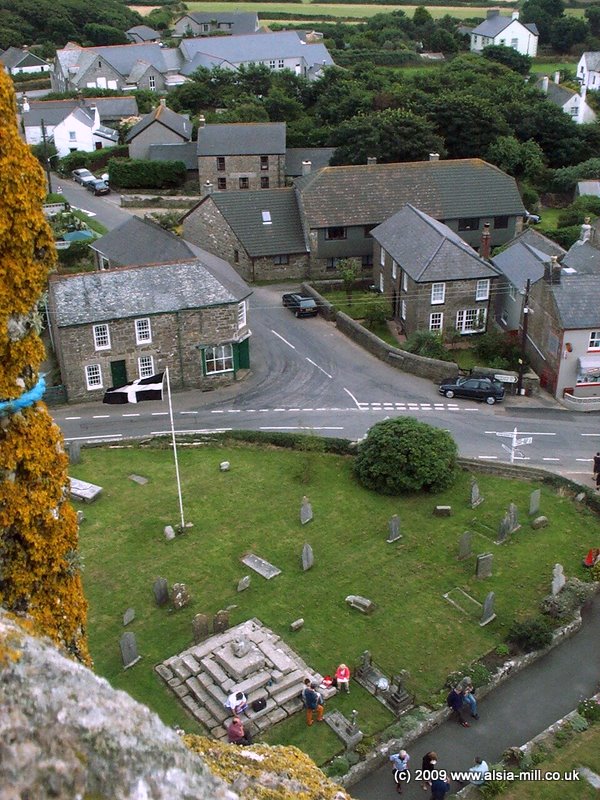
The parish is dotted with evidence of Neolithic activity, from stone circles and Celtic crosses to burial chambers and ancient holy wells. The village of St Buryan itself is also a site of special historic interest, and contains many listed buildings including the famous grade I listed Church. The bells of St Buryan Church, which have recently undergone extensive renovation, are the heaviest full circle peal of six anywhere in the world. The parish also has a strong cultural heritage.
Many painters of the Newlyn School including Samuel John “Lamorna” Birch were based at Lamorna in the south of the parish. St Buryan Village Hall was also the former location of Pipers Folk Club, created in the late 1960s by celebrated Cornish singer Brenda Wootton. Today St Buryan is a prominent local centre housing many important amenities.
The area surrounding St Buryan was in use by humans in Neolithic times, as is evident from their surviving monuments. A mile (1.6 km) to the north of St Buryan lies Boscawen-Un, a neolithic stone circle containing 19 stones around a leaning central pillar. The circle is also associated with two nearby standing stones or menhirs. Although somewhat overgrown, the site can be reached by travelling along the A30 west of Drift and is only a few hundred metres south of the road. A more accessible stone circle, The Merry Maidens, lies 2 miles (3 km) to the south of the village in a field along the B3315 toward Land’s End. This much larger circle comprises nineteen granite megaliths some as much as 1.4 metres (4 ft 7 in) tall, is approximately 24 metres (79 ft) in diameter and is thought to be complete. Stones are regularly spaced around the circle with a gap or entrance at its eastern edge. The Merry Maidens are also called Dawn’s Men, which is likely to be a corruption of the Cornish Dans Maen, or Stone Dance. The local myth about the creation of the stones suggests that nineteen maidens were turned into stone as punishment for dancing on a Sunday. The pipers’ two megaliths some distance north-east of the circle are said to be the petrified remains of the musicians who played for the dancers. This legend was likely initiated by the early Christian Church to prevent old pagan habits continuing at the site.
Like Stonehenge and other stone monuments built during this period the original purpose of such stone circles is unknown, although there is strong evidence that they may have been ceremonial or religious sites. Many other lone standing stones from the neolithic period can be seen around the parish, at sites including Pridden, Trelew, Chyangwens and Trevorgans. In addition to menhirs there are 12 stone crosses within the parish, including two fine examples in St Buryan itself, one in the churchyard, and the other in the centre of the village. These take the form of a standing stone, sometimes carved into a Celtic cross but more often left roughly circular with a carved figure on the face. It is thought that many of these are pagan in origin, dating from the Neolithic and later periods, but were adapted by the early Christian church to remove evidence of the previous religion. These crosses are often remote and mark/protect ancient crossing points. Other examples in the parish can be found at Crows-an-Wra, Trevorgans and Vellansaga.
After a period of decline during the twentieth century, which saw a reduction in the village’s population, culminating in the loss of a blacksmiths, the local dairy, the village butchers and a café in the early nineties, St Buryan has been enjoying a renaissance, fuelled in part by an influx of new families. The local school has been expanded to include a hall and a fourth classroom and a new community centre has recently been built nearby.
In common with other settlements in the district such as Newlyn and Penzance, the post-war period saw the building of a council estate to the west of the village on land formerly part of Parcancady farm. The development was meant to provide affordable housing at a time of short supply in the post-war years. The estate subsequently expanded westward in the nineteen eighties and nineties. In the last census return, St Buryan parish was reported as containing contains 533 dwellings housing 1,215 people, 1,030 of which were living in the village itself.
A church has stood on the current site since ca. 930 AD, built by King Athelstan in thanks for his successful conquest of Cornwall on the site of the oratory of Saint Buriana (probably founded in the 6th century). The Charter from Athelstan endowed the building of collegiate buildings and the establishment of one of the earliest monasteries in Cornwall, and was subsequently enlarged and rededicated to the saint in 1238 by Bishop William Briwere. The collegiate establishment consisted of a dean and three prebendaries. Owing to the nature of the original Charter from King Athelstan, the parish of St Buryan was long regarded as a Royal Peculiar thus falling directly under the jurisdiction of the British monarch as a separate diocese, rather than the Church. This led to several hundred years of arguments between The Crown and the Bishop of Exeter over control of the parish, which came to a head in 1327 when blood was shed in the churchyard, and in 1328 St Buryan was excommunicated by the Bishop. St Buryan was not reinstated until 1336. Only two of the King’s appointed Deans appear to have actually lived in the diocese of St Buryan for more than a few months, and the combination of these factors led to the subsequent ruinous state of the church in 1473. The church was subsequently rebuilt and enlarged, the tower was added in 1501 and further expansion took place in the late 15th and 16th centuries when the bulk of the present church building were added. Further restoration of the interior took place in 1814, and the present Lady Chapel was erected in 1956. The church is currently classified as a Grade I listed building. The Deanery was annexed in 1663 to the Bishopric of Exeter after the English Civil War, however, it was again severed during the episcopacy of Bishop Harris , who thus became the first truly independent dean. The current diocese holds jurisdiction over the parishes of St Buryan, St Levan, and Sennen. St Buryan church is famous for having the heaviest peal of six bells in the world, and a recent campaign to restore the church’s bells, which had fallen into disuse, has enabled all six to be rung properly for the first time in decades. The church has four 15th century misericords, two either side of the chancel, each of which shows a plain shield.
Like much of the rest of Cornwall, St Buryan has many strong cultural traditions. The first Cornish Gorsedd (Gorseth Kernow) in over one thousand years was held in the parish in the stone circle at Boscawen-Un on 21 September 1928. The procession, guided by the bards of the Welsh Gorsedd and with speeches mostly in Cornish was aimed at promoting Cornish culture and literature. The modern Gorsedd has subsequently been held nine times in the parish including on the fiftieth anniversary, both at Boscawen-Un and at The Merry Maidens stone circle. There is also a regular Eisteddfod held in the village.
St Buryan is the home of a wise woman, Cassandra Latham. In 1996 Cassandra Latham (now Cassandra Latham -Jones) was appointed as the first-ever Pagan contact for hospital patients. Within one year she was having so many requests for her services that she became a self-employed “witch” and was no longer financially supported by the government.
The feast of St Buriana is celebrated on the Sunday nearest to 13 May (although the saint’s official day is 1 May) consisting of fancy dress and competitions for the children of the village and usually other entertainments later in the evening. In the summer there are also several other festivals, including the agricultural preservation rally in which vintage tractor, farm equipment, rare breed animals and threshing demonstrations are shown as well as some vintage cars and traction engines. This is currently being hosted at Trevorgans Farm and is traditionally held on the last Saturday of July.
St Buryan is twinned with Calan in Morbihan, Brittany.” Wikipedia
Cassandra and I have been celebrants for many Handfastings since 2009.
We do our utmost to provide couples with the ceremony they desire and work closely with them leading up to the event.
A few years ago, we conducted a Handfasting ceremony for a young couple at St Loy woods. It was important to the bride that bluebells were in bloom for the occasion as they were also present when they first met.
Ceremonies can vary in size and location, some have many guests, while others prefer a more intimate occasion with a few close friends. When they are held in public locations, it understandably attracts ‘on-lookers’ whether it be creatures of the wild, ancient spirits of land and sea or the human variety. My ceremonial training within the Alexandrian tradition comes to the fore at these times for setting up a sacred space to perform these rites.
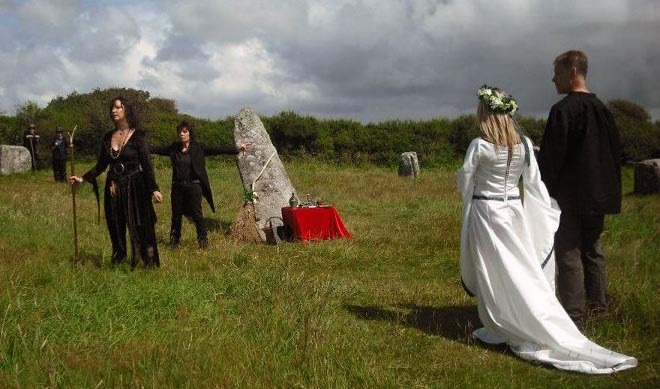
The image above is from one of our first Handfasting ceremonies at the Merry Maidens stone circle. Only the couple and a handful of family members and friends were present, as they requested the ceremony at short notice. Chinese tourists passed the site on an open top bus and eagerly captured images of the occasion.
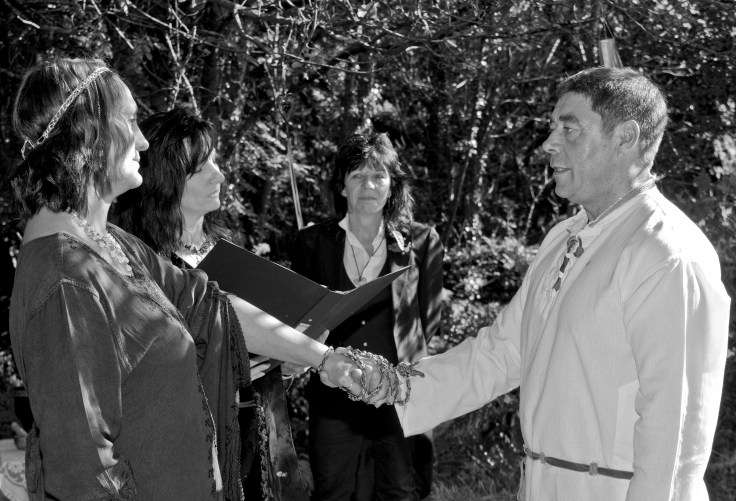
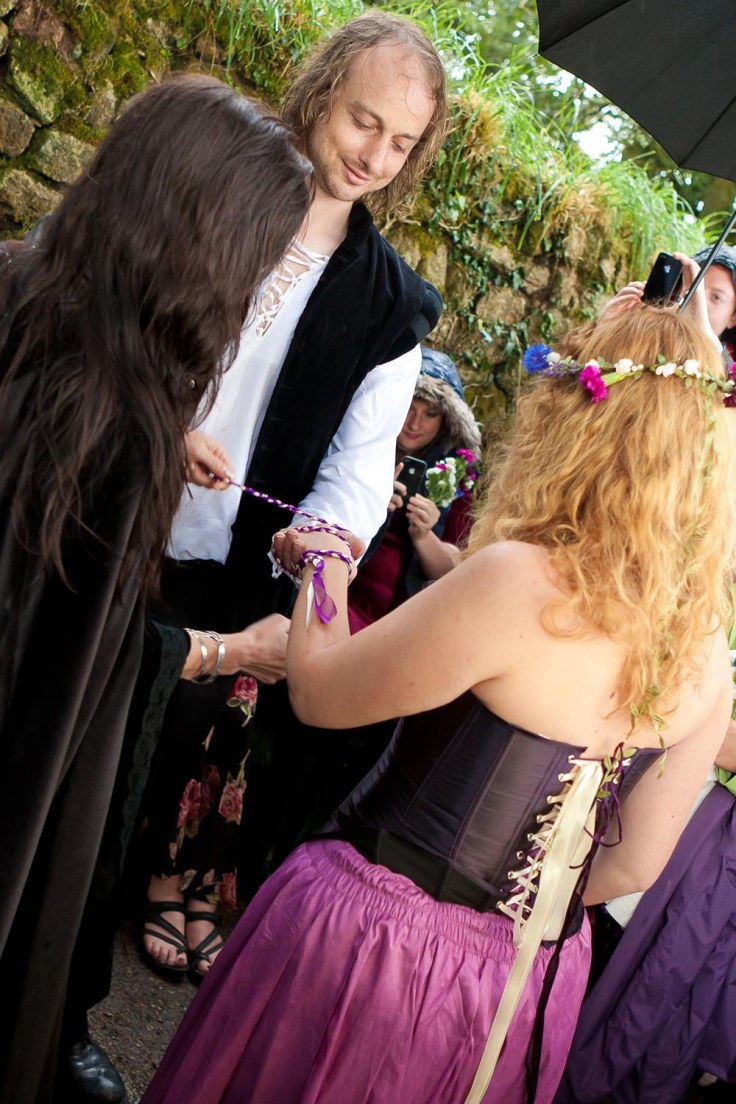
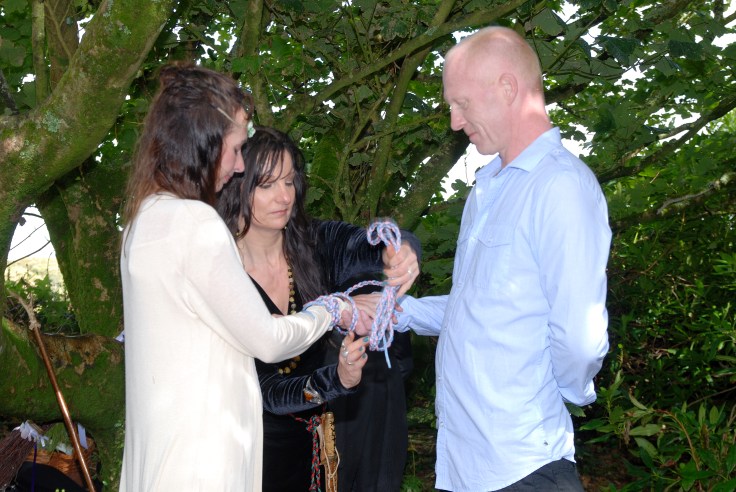
Cassandra and I performed this Handfasting ceremony ( image above) in the grounds of a Mill house that was our place of residence in 2010. It was a wonderful warm October day with perfect ambiance amongst the trees and beside a small stream.
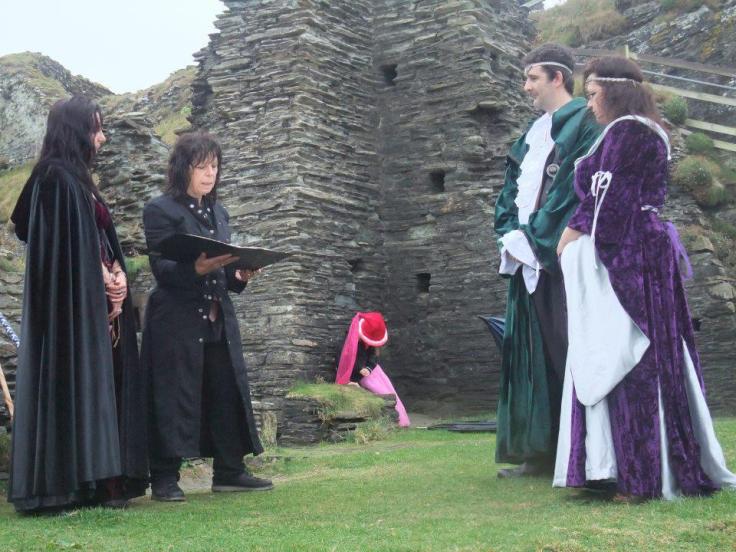
This ceremony (see image above) had a medieval theme and was held at King Arthur’s castle in Tintagel. There were a few rain showers, however this did not dampen the wonderful celebrations at this ancient site. We were invited to a hog roast buffet in the King Arthur’s Arms and had a wonderful time.
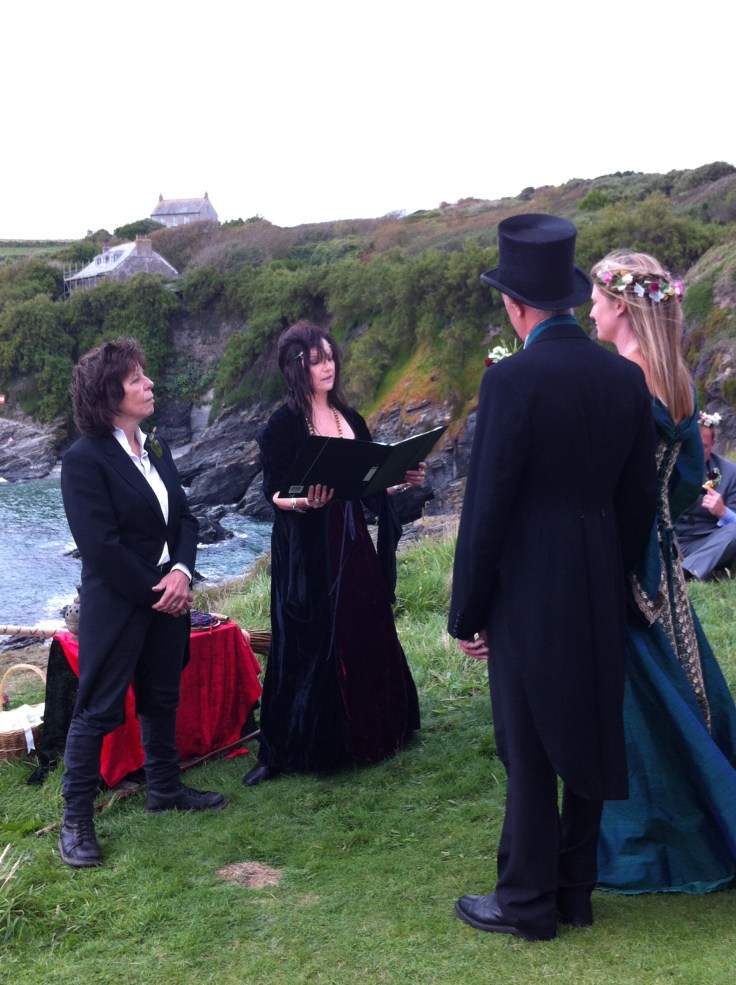
This ceremony (see images above) was held at Prussia Cove, the location where this lovely couple first met. We were blessed with warm sunshine that day and working so close to the sea was an extra special experience. A friendship developed between us and the couple after their ceremony and we visit them often. They now have two adorable children.
Boscawen-un stone circle is a popular site for Handfasting ceremonies. This particular one was memorable as our ‘Obby ‘Oss Penkevyll made an appearance and performed with her Teazers from Boekka.
Madron Baptistry was the venue for this Handfasting (see images above). A couple travelled from France accompanied by their family. They stayed at Godolphin House where we later joined them for a sumptuous medieval wedding feast with copious amounts of champagne and a hog roast in the fabulous dining room.
A couple from overseas had their ceremony at Sancreed Holy Well. They requested we purchase and decorate their broomstick in order to infuse it with fertile energy. Six weeks later, they revealed that they had conceived and they now have a beautiful daughter!
This ceremony ( see images above) was performed at the Sennen Coastguard look-out on a cold, wild and windy day! We attempted to place the altar accoutrements upon the table but they would not stay upright, so we kept them in a box and took them out when required. The bride’s veil attached to her hat was vertical most of the time and their guests were huddled behind the building to shelter from the force of the wind. We were determined to continue and the wedding party kept their sense of humour. We were appreciative of the warm open fire in the First and Last public house after the ceremony.
This Hand-fasting ceremony was held in the stunning Carn Glaze Caverns. It was for a couple who had invited a small family group. The acoustics in the Caverns were wonderful as Cassandra’s bull roarer resonated over the rock faces. The echoes of the marriage vows could be heard all around the space beside a fabulous blue lake.
We conducted another Hand-fasting at this venue for a jolly couple. Their laughter is so infectious to all who know them. They requested a performance by our ‘Obby ‘Oss Penkevyll and Boekka during their feast in the caves, along with a fire display team. (See video footage below)
We were delighted to receive a visit from them recently and were pleased to hear they are both well and happy together.
These are just a few of the Handfastings we have taken on the role of Celebrants for and each occasion is special and unique in its own way.
To enquire about our Handfasting ceremonies, please visit theContact page.
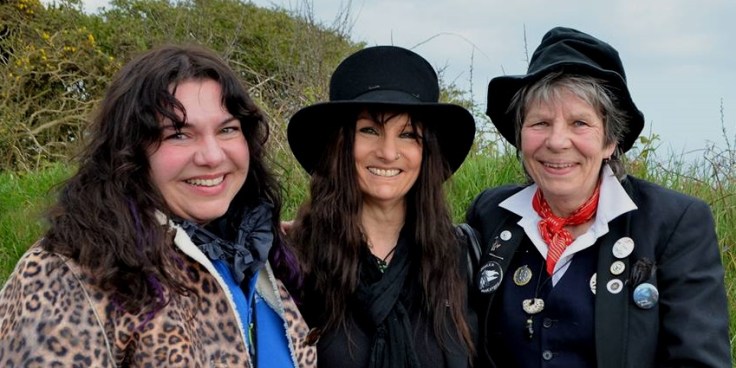
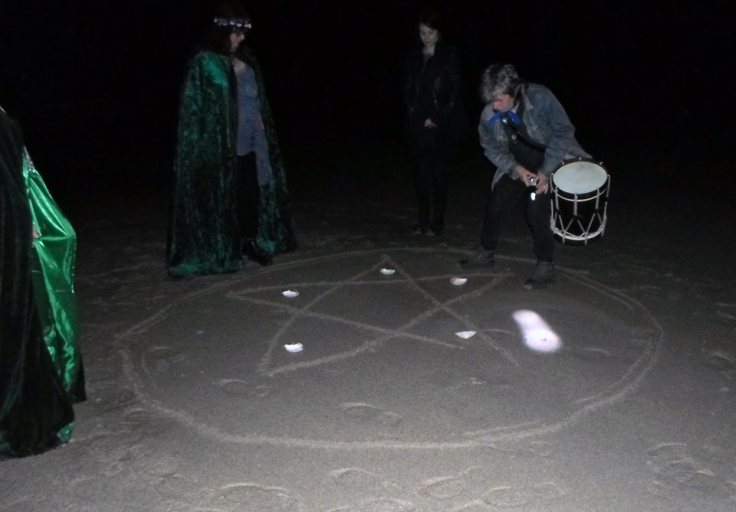
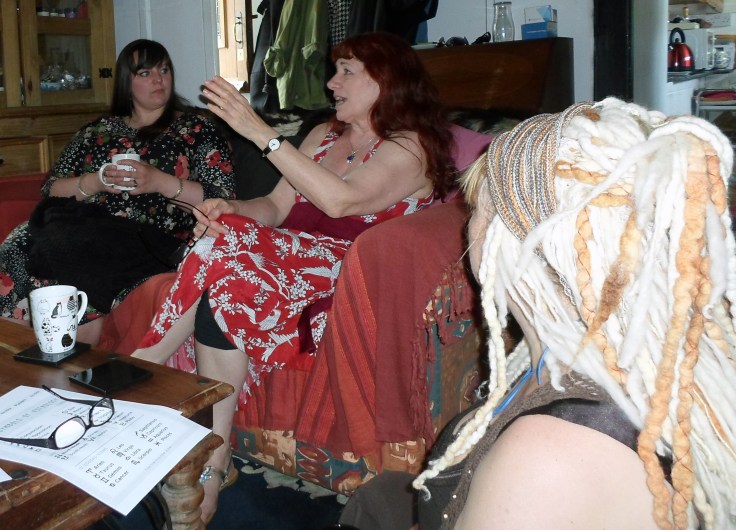
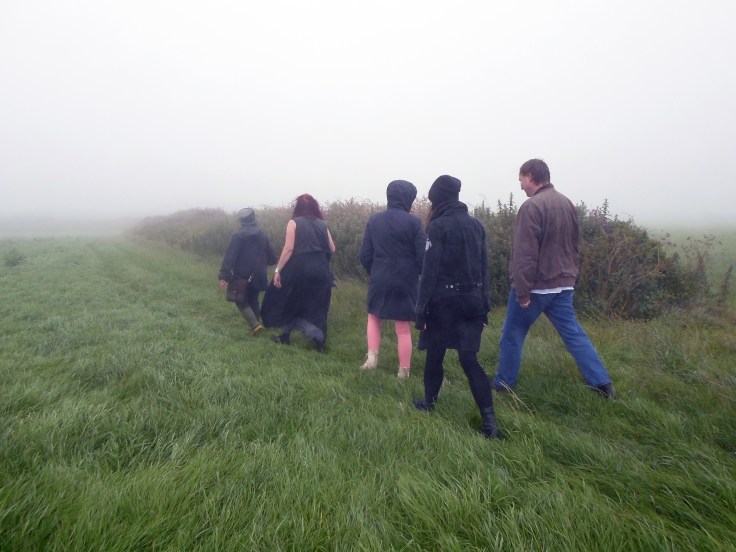
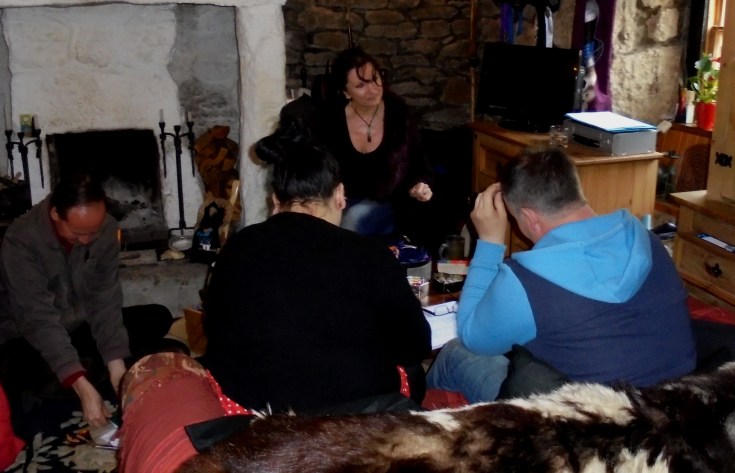
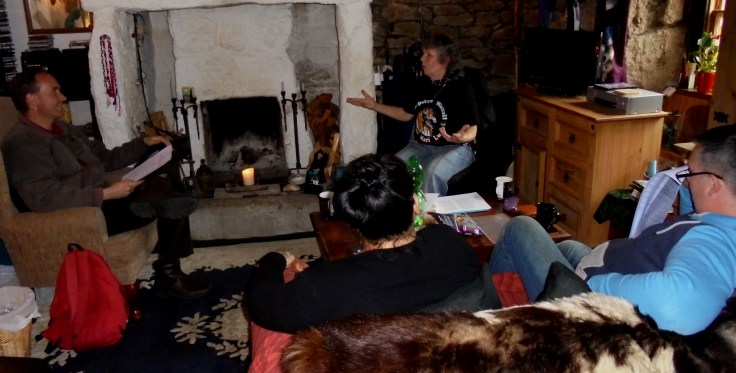
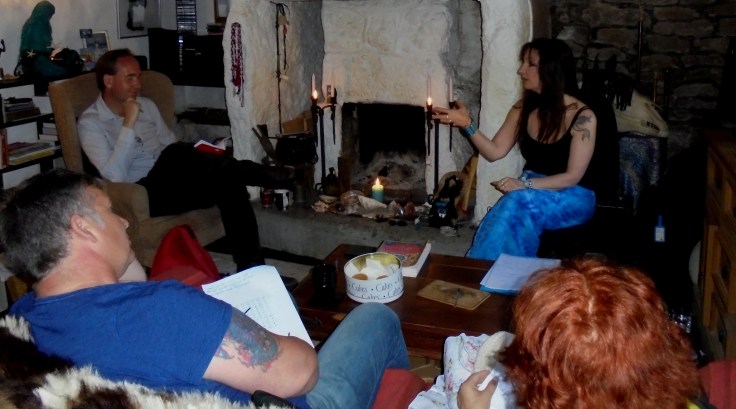
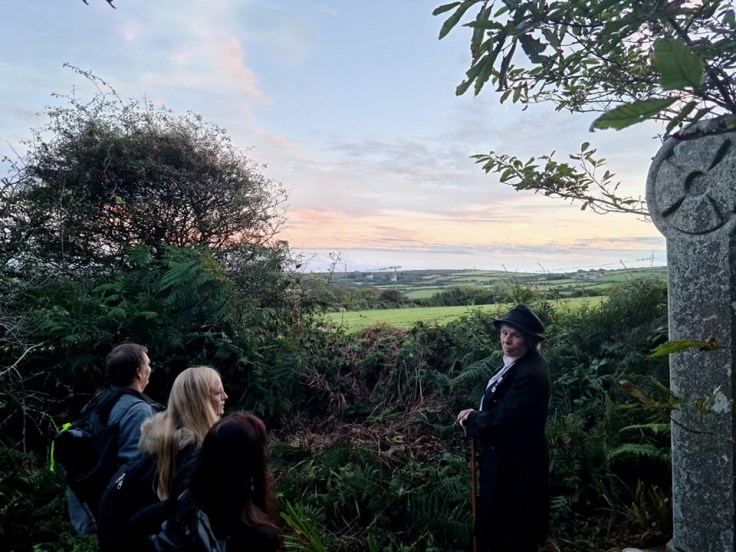
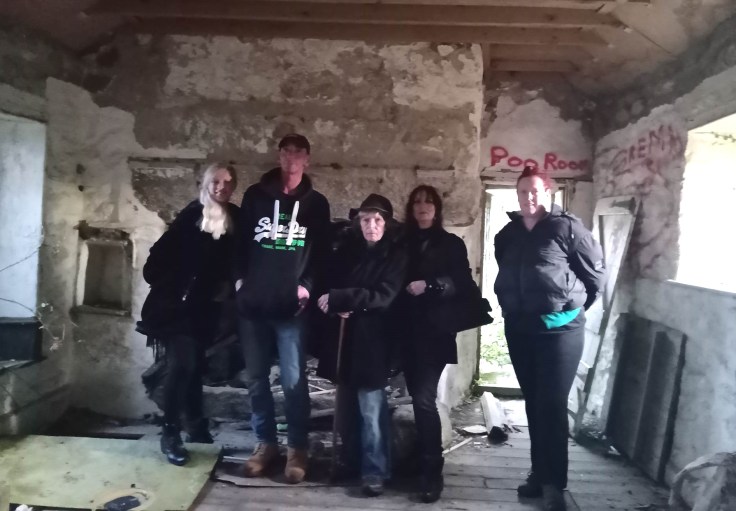
Cassandra and I have decided to move on from providing yearly ‘in person’ workshops as we have done them for the past nine years. Here are some memorable photographs of them….
2014
2015
We had a fabulous time with our workshops and met some wonderful people. There were many thought provoking discussions and profound experiences.
2016
2017
2018
2019
2020
2021
2022
2023
So many adventures in the last ten years! Thank you to all of you who attended our workshops.


































 laetitialathamjones.co.uk