I have always felt a strong connection to the history of the Titanic and was unaware of its significant connection with Cornwall. When I visited the Titanic Exhibition at the Falmouth National Maritime Museum on 29th July this year I discovered more information.
The Christmas card was sent to Lulu Drew, the widow of James Drew, originally from Constantine. Lulu and James had emigrated to America in 1896 and in 1912 they returned to Cornwall to visit family. For their return journey to America they travelled on Titanic, and their cabin was next to that of Emily Richards of Newlyn. Remarkably descendants of Emily Richards have also lent items to the Museum for the exhibition.
Sadly James lost his life in the disaster on 15 April 1912. The Christmas card reads: “At this time of year our thoughts are with Lulu Drew who lost her husband James when the Titanic sank. From Aunt Bessie xx”
Ernie Warmington has also lent the Museum a memorial postcard that was sent from Portscatho to Mylor. Memorial postcards were printed after the disaster to help raise funds for the survivors.
Ernie Warmington says: “I’ve visited the Museum to see the Titanic exhibition and the Cornish connections on display have made a real impact. I knew I had these objects and that they would be of great local interest, I just didn’t know where to lay them.
Here are some of the Cornish passengers of the Titanic:
.Mrs William Rowe Hocking was born as Eliza in Tresco in the Scilly Isles off Cornwall, England on 12 April 1858. She first appears on the 1861 census living at Bay on Tresco but the family later settled on the British mainland and appear on the 1871 census at an unspecified address in Penzance, Cornwall. She was married in Penzance in 1880 to William Rowe Hocking (b. 1854), a confectioner’s foreman, and the freshly married couple appear on the 1881 census living at 27 Leskinnick Terrace, Madron, Penzance. Her daughters and two grandsons were rescued in lifeboat 4. Her son George was lost.
Mr Edwy Arthur West was born in Perranzabuloe, Cornwall, England on 20 November 1875. Edwy first appears on the 1881 census when he and his family are residing at Point in Feock, Cornwall. When the family appear on the 1891 census they are residents of Kenwyn, Truro and Edwy, then aged 15, is still attending school. Edwy had struck out by himself by the time of the 1901 census and he was recorded as boarding at 76-86 Rings Road, Portsmouth and he was described as an unmarried house furnishers assistant. Arthur had served as a chorister for many of his young years in Truro Cathedral and to mark his passing a memorial to him was placed within the Cathedral by his wife and daughters who, after the tragedy, returned to live in Cornwall.
Ada Mary West was born 1879, Truro, Cornwall. Ada and her family appear on the 1881 census living at Prospect Place in Truro. Ada West died in St Vincent’s Nursing Home in Plympton, Devon on 20 April 1953 aged 74. One keepsake that remained in her possession for the remainder of her life was the flask that her husband had passed to her the last time she ever saw him.
Mrs William John Wilkes was born as Ellen Needs in Tresco in the Scilly Isles off Cornwall, England on 13 June 1864. She first appears on the 1871 census living with her family at an unspecified address in Penzance, Cornwall. Also travelling with her, albeit in second class, were her sister Eliza Hocking and her son George and two daughters Ellen and Emily with the latter’s two sons. Ellen was rescued on lifeboat 16. Her sister, nieces and great-nephews were rescued in lifeboat 4.
Master Sibley George Richards was born in Newlyn, Cornwall, England on 17 June 1911. He was the second son of James Sibley Richards (1887-1939), a general labourer, and Emily Hocking (1887-1972). His parents were both Cornish and had married in 1908. By 1912 he had one sibling, his elder brother William Rowe (b. 1909). On the night of the sinking Sibley and his brother were asleep in their cabin with their mother when their grandmother came to alert them of the danger. The family escaped in lifeboat 4 but his uncle was among the lost. Arriving in New York, he was met by his father who had travelled from Akron.
Master William Rowe Richards was born at 6 St Mary’ s Street, Penzance, Cornwall, England on 1 April 1909. He was the eldest son of James Sibley Richards (1887-1939), a general labourer, and Emily Hocking (1887-1972). His parents were both Cornish and had married in 1908. He was named after his maternal grandfather. On the night of the sinking William and his brother were asleep in their cabin with their mother when their grandmother came to alert them of the danger. The family escaped in lifeboat 4 but his uncle was among the lost.
Mrs Sidney Richards (Emily Hocking) was born in Penzance, Cornwall, England on 22 April 1887. She first appears on the 1891 census living at 39 Adelaide Street, Penzance. Her father is believed to have settled in South where he died and her mother remarried, becoming Mrs William Guy. The family appear on the 1901 census at 34 Mount Street, Penzance. Emily was married in 1908 to James Sibley Richards (b. 9 October 1887), a general labourer from Newlyn, Cornwall. The couple appeared on the 1911 census living at 6 St Mary’s Place, Penzance, a boarding house ran by her mother. The couple would have two sons whilst in England: William Rowe (b. 1909) and Sibley George (b. 1911) and later lived at ‘The Meadow’, Newlyn. Their boat was only a short distance away from the Titanic went it went down. The people in the boat pulled seven men out of the water. The Richards and Hockings hoped that George Hocking had been rescued by another ship, but he was lost. After leaving the Carpathia, the Richards stayed at Blake’s Star Hotel at 57 Clarkson’s Street in New York City and she was reunited with her husband Sibley Richards who had travelled from Akron.
Frank Thomas Andrew 1 was born as Thomas Francis Gribble in Perranarworthal, Falmouth, Cornwall, England in the closing months of 1885. Frank grew up on his father’s 25 acre farm, Gilly Tresamble, in Perranarworthal and appears there on both the 1891 and 1901 census records. Frank was married on 4 July 1908 at the register office in Helston, Cornwall. His bride was Rhoda Tripp (b. 11 December 1887). Rhoda hailed from Redruth, Cornwall and was the daughter of Henry Tripp, a farmer, and his wife Emily. Frank and Rhoda settled in Illogan, Cornwall and lived at Forest Gate, Four Lanes in that village, appearing there on the 1911 census. At that time they had one daughter, Lucy (b. 30 November 1908). Frank worked as a tin miner. Frank Andrew died in the sinking and his body, if recovered, was never identified.
Robert Hichens 1 was born in St Peter’s Square, Newlyn, Cornwall on 16 September 1882. He was the son of a fisherman, Philip Hichens and Rebecca Hichens (née Wood) who was originally of Whitby, North Yorkshire. By 1906 he was shown on his marriage certificate to be a “master mariner”. He had married Florence Mortimore at the parish church of Manaton, Devon on 23 October in that year. On the night of 14 April 1912 Robert Hichens was at the ship’s wheel (having relieved Q.M. Oliver at 10 p.m.) when the warning came from the lookout that an iceberg had been spotted ahead of the ship. When the order came to hard a’starboard he immediately swung the wheel as far as it would go. At about 12.23 he was relieved by QM Perkis at around which time one of the officers shouted ‘That will do with the wheel, get the boats out.’ Later, Second Officer Lightoller told Lookout Fred Fleet to get into Lifeboat 6 on the port side and put Robert Hichens in charge of that boat. The lifeboat (capacity 65) left the ship at about 12.55 with only 28 persons on board with the order that they were to make for the lights that could be seen in the distance.
Robert’s conduct on the lifeboat would later come under intense scrutiny. After being rescued and landing in New York, Senator William Smith had subpoenaed 29 crew members for the US Inquiry and the remaining crew were to return to England on April 20 aboard the steamer Lapland. Robert hadn’t received any notification, and so he was aboard Lapland when it left New York at 10 a.m. Shortly after departing the ship received a wireless to stop and await a boarding party. When the boarding party arrived 5 more crew were taken ashore, among them was Robert.
Mr Richard George Hocking, 22, was born 26 July, 1889 at 39 Adelaide Street, Penzance Cornwall, the youngest son of Mr William Hocking (Confectioner and Baker) and Mrs Eliza Hocking (née Neads). After the death of his father in South Africa the family moved to 6 St Mary’s Street, Penzance.
George perished in the disaster, his body, if recovered, was never identified. His mother had asked him to enter her lifeboat but he replied, ‘No, these men are good to stand back for you, and I must stay back and let their wives and mothers go’. A brass plaque in memory of George Hocking and his friend Harry Cotterill was placed in St John’s School, St Michaels’s Street, Penzance shortly after the tragedy.
Miss Ellen “Nellie” Hocking was born in Penzance, Cornwall, England on 5 November 1891. She was the daughter of William Rowe Hocking (b. 1854), a baker and confectioner, and Eliza Needs (b. 1858). Her father hailed from Cornwall whilst her mother was born in Tresco on the Isles of Scilly and they were married in 1880. When Nellie appears on the 1901 census she is 34 Mount Street, Penzance. Her mother was on her second marriage by this time–the ultimate whereabouts of her father being unknown–to a Mr William Guy. Mr Guy died in 1907 and the family later show up on the 1911 census living at 6 St Mary’s Place, Penzance where her mother ran a boarding house. She remarked at one time to Nora Keane that as night had fallen the previous night she had heard a cock crowing (a sign in Cornish folklore of impending disaster). Nellie was told that she had imagined it but she was adamant. Nellie, her mother, sister and nephews were rescued in lifeboat 4. Her brother George was lost.
Mr Joseph Charles Fillbrook was born in Truro, Cornwall, England in early 1894. He was the son of William Fillbrook (b. 1868), a mason, and Catherine Vincent (b. 1866). His father was native to Truro whilst his mother was Canadian-born. Joseph first appears on the 1901 census living at the home of his maternal grandparents Edward and Mary Jane Fillbrook at 10 Victoria Square, Kenwyn, Cornwall and again on the 1911 census with his now widowed grandmother at Williams Row, Calenick Street, Kenwyn; he was described as a house painter by the time of the latter record and had been apprenticed as such since leaving school. His parents and siblings are listed on the 1901 census living at 8 Lemon Row and on the 1911 census at 16 Charles Street, Truro. Joseph Charles Fillbrook was lost in the sinking and his body, if recovered, was never identified.
Mr Joseph Charles Nicholls was born in Nancledra, Cornwall, England on 24 July 1892. He was the son of Richard Henry Nicholls (b. 1867) and Agnes Friggens (b. 1861), both Cornwall natives who had married in 1886 and he had two known siblings: Mary Ethel (b. 1886), Richard Henry (b. 1890). His father was a stonemason who worked at the quarry at Trenowith Downs.
The family appeared on the 1891 census living at an unspecified address in Nancledra, Cornwall. When Joseph’s father Richard Nicholls died is not certain but his mother was listed as widow on the 1901 census when she and her children were living at Corbis Bay, Uny Lelant, Cornwall. Joseph was lost in the sinking. On 23 April 1912 his body was recovered from the sea by the MacKay Bennett.
Mrs Robert Davies was born as Agnes Friggens 1,2 in Ludgvan, Cornwall, England on 23 November 1861. She was the daughter of Grace Friggens (b. circa 1841 in Gulvall, Cornwall) who was unmarried at the time of her birth (3). Grace seemingly married a few years later to a man named Thomas Victor and had at least one more child before emigrating to the USA, leaving Agnes behind.Agnes was apparently raised by Henry White (b. 1820) and Dinah (4) (b. 1819), the latter née Rowe, natives of Ludgvan who already had a large family. Agnes first appears on the 1871 census living with them at an address in Lennor, Penzance. By the time of the 1881 census, Dinah (now a widow) and Agnes are the only ones present at their home on New Mill, Madron, Penzance and both are described as charwomen. Agnes survived the sinking, probably in lifeboat 14, the events immediately before and after the sinking were recounted by her to a Calumet newspaper on arrival in Michigan.
Here are some of the images captured on my visit to the Museum.
There were also costumes on display from the popular Titanic movie:
Even though the creation of a romantic story was the main focus of this movie it still highlighted the tragic loss of many lives along with the intensity of that night. A time in history that will always be remembered. It is also a reminder of how helpless humans can be when dealing with the power and energy of the sea.
Cassandra and I have undertaken many Property Cleansings and I thought now was an auspicious time to write about the subject.
Years ago I lived in a row of terraced houses and in one particular property adjoining these the couple divorced after a few years. I noticed that couples who moved into the property also divorced and at the time I wondered if the energies from these occurrences affected new tenants.
It is vital to understand these negative influences that are usually categorized into two types: thought energies (or if they have a shape – thought forms) and negative spirit influence. Now, you may instantly think about dead people, however we are all “spirits”. Some of us are living within the physical realm and some aren’t. We do not become a spirit when we physically die as we are one housed within a physical body.
One may also say, “But I cannot see/hear spirits, this is proof they don’t exist”. Well, we cannot see radio, or television waves in a room. You cannot hear a dog whistle, but dogs can! It would be rather foolish to conclude such a whistle made no noise simply on the grounds that you didn’t hear it.
Negative thought energies are created by someone (dead or alive) thinking in this way, e.g. anger, hatred, fear etc. If the person is thinking these thoughts about us they are automatically projected in our direction. As negative spirits are attracted to negative energy these will often accompany it,particularly if this is done formally, e.g. casting a spell.
Fortunately there is defense against these things. Positive energies will dissolve negative and we can invoke positive spirits to protect us against negative ones. There is nothing particularly profound about it.
The negative thought content of a spell, or any other form of psychic attack, can be cancelled out by directing a positive thought form of the same, or greater strength at it. When they meet, the negative thought form will dissolve. This can be achieved by prayer, visualization, etc.
We inhabit certain energies wherever we live. Our homes are a space of unity where many energies meet – our feelings, thoughts and emotions emit a certain type of energy, but also attract other energies. Family members, neighbours or visitors in our homes can also bring in negative energies which may affect our mood and well-being.
Once they enter your home, negative energies impact your whole life. They can cause your budget to fluctuate, break the relationships between family members and disrupt the harmony in your home. As a result, you will feel anxious, restless and broken, with no will to live. However, the symptoms may not be noticeable earlier, which is why it’s important to know how to detect the negative energy in your home.
When moving into a new house, flat, unit or workplace, you will need to cleanse the new property or workplace because buildings absorb the energies of previous occupants. The curtains and carpets also need to be cleaned as they hold the stagnant/negative energies from previous tenants. These stagnant/negative energies can be absorbed by the people living or working within this space, causing arguments, physical and mental illnesses, and relationship problems.
Many people do not realize that when they move into a new place there are energies that might be lingering there from past residents or past incidents. While these energies are usually not going to greatly affect you, there is still a chance that it could affect you or someone in your family if the energy is strong enough. These energies can be particularly powerful in a home where negative energy has built up over a long period of time. For example, a home where a bitter divorce took place, a home where a suicide or murder took place, or a home where a person may have gone through major depression (or other disorders that would affect a person’s spirituality and/or mentality). These are all spaces that could be rife with leftover negative energy.
So while you focus on cleaning your new house physically, it is wise to remember to clean your new house spiritually as well. This also applies to a home that has never been cleansed spiritually to your knowledge. If you’re looking to lighten up the air and promote a positive energy flow in your home, cleansing the energy of your house is imperative.
Now that you understand the importance of energetically cleansing your home, let’s learn about the best and easiest ways to cleanse.
A good ol’ fashioned smudging ritual is a Native American tradition of lighting bundles of herbs and using the smoke in order to spiritually cleanse an area or person from negative energy or spirits. Different herbs are used in order to do a smudging ritual, and so the choice of herb is up to you. Some of the herb bundles that can be used include: white sage, cedar, and sweet grass. If you cannot get your hands on a smudging bundle, you can always make your own. Or you can use herbs that you have in your own kitchen cabinet!
There are many herbs with purification qualities that will work just as well as a white sage bundle will work in cleansing a home. For example, you can use dried rosemary, basil, common sage (the kind that you get from the grocery store), cloves, cumin, garlic, and onion (among many others). Create your own loose incense with one or more of these dried herbs and burn them over a charcoal disk (carefully of course!) Let the smoke fill each room with its purifying and cleansing powers.
Blessing one’s home while moving in is actually quite a common practice among various faiths. That being said, you do not have to be of a particular faith in order to bless your home before or while moving in.
The best things to use are oils or holy water. For the oil, you can use plain ol’ olive oil or whatever kind of oil you have in your cabinet. For the holy water, you can acquire some from a Church or create your own.
Cassandra and I were recently asked to perform a house cleansing for someone moving into our village and on this particular occasion we were given complete access to thoroughly examine the property and were there four hours.
It was indeed pleasure to do this work for our new residents and we warmly welcome them into our community.
The 12th June 2018 marked the 10th anniversary of my move to Cornwall. The life I visualised here is completely different to the one I now have.
Living near the sea, the elements of rain, wind and storms intensify. Cornwall may not be as cold as other parts of the UK (although our last winter was a harsh one) and frosts occur less here. The cost of living is rising everywhere, but in tourist areas, prices also rise during the holiday seasons and tourists pay higher prices for the short time they are here, but residents have to do this throughout the season. Work opportunities increase during summer, but lessen in winter and cold weather means an increase in utility bills.
Taking a vacation in Cornwall is easier than living here as you have free time to visit beaches and places of interest, but when one is trying to earn a living and survive, pleasure visits to beaches or sites rarely occur.
On a positive note I have enjoyed my work as Wisewoman throughout the last nine years and learnt so much from Cassandra Latham Jones during this fascinating and testing journey. Working with the land and sea’s powerful unpredictable energies has been challenging. Tests from the ‘powers that be’ are severe with obstacles constantly placed in one’s path. It takes strength of character and determination to overcome these and continue………the spirits test you as if to say ……..”how much do you want this???” Cassandra admits she has been tough task master with me throughout this time and admires my tenacity. She also revealed that others who desired to learn from her were unable to withstand the tough tasks and tests it entailed.
My experience and training in ceremonial magic while in Kent has been useful for conducting Rites of Passage. Cassandra is happy to leave what she refers to as ‘arm waving’ to me when setting up a sacred space for ceremonies.
The consultations we provide together work well, the moment just before a reading while Cassandra connects with a client’s energies, I ‘tune in’ to spirit presences around them. While Cassandra shuffles the Tarot cards I provide the client with a description of any presences and messages they wish to pass on. Cassandra then lays out the Tarot spread and on many occasions the same message has also appeared within the cards giving the client double confirmation. I have witnessed many readings over the years and I know her cards well. I own an identical Tarot deck and am able to provide readings from them.
Property cleansing needs a huge amount of work, particularly when they have been inhabited by a variety of residents over time,(more-so with period properties). The energies from traumatic events are absorbed within the foundation and walls of these buildings and can have a profound effect on future residents. In hotels and drinking establishments often referred to as Inns the energies intensify and can affect the smooth running of businesses. We have had many successful outcomes from this work.
Curse breaking is another intense area of our work. Many clients consult us about this and Cassandra has a unique and powerful method that she has passed on to me.
Wart charming is a service that at first I was rather sceptical of, it was difficult to understand how it could possibly work. Even now I cannot explain it but have witnessed the success of this process with clients.
I have constructed many charms over the years and had a high success rate with fertility charms in particular. It delights me to think I have assisted in creating new lives and brought happiness to prospective parents.
I continue to provide Holistic Services and have taught Reiki, a system that is of great benefit to students. The original practice of Reiki is more about spiritual and emotional development of the person rather than a complementary healing therapy. I have assisted a wide range of clients with Reiki including the terminally ill and also helped pets owners and those who work with stressed animals.
My Crisis and Trauma counselling services have also come to the fore as often clients are affected by religious cults and childhood abuse. They do not realize how past trauma can affect their everyday lives as adults, even though it happened long ago. This counselling service also helps those with bereavements, divorce, family issues and mental/physical health problems.
Walks with Wisewomen was also an enjoyable aspect of our work as it enables us to visit and enjoy the sites with our clients. I have, over time learnt the folklore associated with them by listening to Cassandra repeating the information on each visit. We also find out more about our clients as we converse with them while walking to and from the sites. (We no longer provide this service).
Our: ‘Old Ways’ workshops have been successful during the last few years. I suggested hosting them and Cassandra was at first a little reticent, but as we had many inquiries about them, she agreed to try. The workshops have gone from strength to strength covering five subjects. We have met some fabulous people who experienced some extraordinary occurrences while they were with us. The preparation and workshops themselves are hard work but also energizing and satisfying on a deeper level.
I have learnt a great deal while living here and the main lesson is that life is indeed unpredictable. One can plan for the future to a certain extent but unforeseen circumstances can create sudden changes that can have incredible impact with positive or negative outcomes.
I have also learnt that being successful in work and within a community brings rivalries, competitiveness and jealousy from some, who will then project dissatisfaction with themselves onto another. When a person experiences this level of pettiness it is vital to remember that these people, by their treatment of you, are validating how exceptionally good you are. If you were not successful or talented, negative people would not bother with you. When a person moves into a new community, they are on ‘foreign territory’ and therefore vulnerable to predators and bullies. I have also met, genuine good-hearted people within the community who will do what they can to assist and support you, especially if they were once in this position.
Cassandra Latham Jones falls into this category and has helped me in so many ways.
I have integrated socially by attending festivals and utilising my talents as musician and dancer. The residents of St Buryan village have been particularly welcoming and now treat me as part of their community.
My time here has been a catalyst for new ideas as Cassandra and I, along with my son, formed our: Guise team Boekka featuring Penkevyll the Lands End ‘Oss. Our team has performed since 2010 and we now haveMorvargh my Dark Sea ‘Oss who has joined our team. To top it all, my idea of Cassandra, myself and Penkevyll the ‘Oss, meeting Phil and Vivien Larcher with their Welsh Mari Lwyd in Boscastle on Samhain 2014, has now grown into a huge event: The Dark Gathering!
As I have been a resident of Cornwall since 2008, I am no longer a ‘newbie’. The local community has witnessed the difficulties and the obstacles I have overcome. I am sure certain individuals could not have withstood or endured a fraction of what they have directed my way, but that is par for the course. The positives I have experienced far outweigh the negatives and I am still here…….
I remember during childhood, my mother’s fascination with certain movie stars. She would ‘fall in love’ with the characters they portrayed, believing they were wonderful people who she placed upon a pedestal. Occasionally, when she discovered information concerning their personal lives, that surfaced within the media, it resulted in huge disappointment and they ‘fell from a great height’ off the pedestal she had placed them upon. (I remember when she discovered that Rock Hudson was ‘gay’ she would no longer watch his movies). Unfortunately there are some individuals who are adept at hiding their ‘true selves’ and use their ‘personas’ as a tool to manipulate others.
In the Pagan world we have many ‘celebrities’ or renowned individuals using various titles to create an elite image, some are authors, speakers, organizers and entertainers. They portray a glamorous ‘persona’ and are selective concerning the information they reveal about themselves. Some are skilled in taking one grain of truth and embellishing that with misleading information. There are those who also imitate the persona and image of characters from popular magical movies by copying their attire and imitating their characteristics.
I have observed some who dress and imitate remowned witches e.g. Patricia Crowther, Doreen Valiente, Ithell Coulhoun and Alaistair Crowley to name a few. Their adoring followers, loving the magical fantasy of the character and the mystical land they inhabit, will believe without question and place them high upon a pedestal. Observing this process has stirred my curiosity to research this particular subject.
The Dark ‘Arte’ of Glamour
Glamour began quite literally with magic. Growing from the Scottish gramarye around 1720, glamour was a sort of spell that would affect the eyesight of those afflicted, so that objects appear different from they actually are. Sir Walter Scott anglicized the word and brought it into popular use in his poems:
“Any calculated, carefully polished imaged designed to impress and persuade.“
Many magical operations are designed to impress and persuade. In some cases the spell has been directed at an individual that the worker is attempting to persuade or influence in some way. Attention given to personal glamour can be a deciding factor in the outcome of that working. Studies have shown that most people make a decision about a new acquaintance within the first thirty seconds to two minutes of interaction. It is within your power to influence that decision not only with magical action, but with a carefully crafted image, as well as communication skills. This naturally applies to interactions of both a personal and professional nature.
In my experience this scenario is fraught with difficulties……..
It’s a familiar story. A group of three or more friends, having the best of times. Then two of those three friends begin a feud and the third, innocent party is stuck to choose. We’ve all been there and I know from personal experience it’s hard to tell whether or not you can trust a friend who is friends with your enemy. It’s also hard to be friends with two people who hate each other.
For the innocent party who just wants to be friends with everyone, it’s really hard. I personally don’t know if it’s possible because I’ve never seen it work out. You’re going to like one friend more than the other, or you’re going to accidentally betray one or the other friend and they’re going to turn on you.
I understand wanting to keep your friends, but unless you can be perfect and schedule the same amount of friend dates for the same amount of time, while also not becoming the middle person for their petty vendettas, it just isn’t going to work and someone is going to end up losing.
Here is another subject clients in this position consult us about. Cassandra and I have been scapegoated in the past ourselves, which enables us to help them.
The ego defence of displacement plays a role in scapegoating, in which uncomfortable feelings such as anger, frustration, envy and guilt are displaced and projected onto another. It is often the more vulnerable, person or group. The scapegoated target is persecuted, providing the person who inflicts the scapegoating not only with a conduit for their uncomfortable feelings, but also with pleasurable feelings of piety and self-righteous indignation. The creation of a villain necessarily implies that of a hero, even if both are purely fictional.
Some would say that Satan the Devil was used as a Scapegoat for sins and interestingly they also depict his image as half man half goat.
I was born in a prefabricated residence adjacent to Swanscombe woodland (the lowest prefab on the left) and raised within the small country town. I played by large willow and chestnut trees and explored the wonderful woodland. The headmaster at our primary school spoke of Viking invasions and the ancient settlement that was there long ago. He explained this as the reason many of us had fair skin and hair. We were surrounded by many Viking symbols at school and in our area, but in those days, I took it all for granted.
While researching my hometown’s history, I recently discovered three women were accused of Witchcraft in Swanscombe and executed at Maidstone.
(Above are photographs of the area where the Manor House stood and the grounds where I played during childhood and adolescence)
The ‘witches’ were tried at the Manor House, utilised as a court. It once stood next to the church and was then replaced by council office buildings. I spent a lot of time in these grounds during childhood and I now understand more about the energies I sensed there.
My great paternal grandmother passed away at 89 years of age in 1952 and at this time she was the oldest woman in Swanscombe. My father was born in the village as were generations before him dating back to the 16th century. Through research I discovered that I originated from a place with fascinating history.
INTRODUCTION
The ancient parish of Swanscombe, whose boundaries are those of the present town council, encompasses 2142 acres, or 3.34 square miles.
To the north is the River Thames; to the east the Ebbsfleet Stream, which separates Swanscombe from Northfleet. Watling Street, now the A2, forms Swanscombe’s southern boundary with Southfleet while Bean Road/Cobham Terrace and the Station Road area at Greenhithe mark the western border with Stone.
The geology of Swanscombe consists of alluvium on the marshes to the north stretching down the Ebbsfleet Valley along the Northfleet boundary to Springhead. An area of upper chalk follows which covers the area of the former cement works, the industrial estate bordering Northfleet and most of the site of Baker’s Hole to the east of Swanscombe village. Much of the Galley Hill, Milton Road and Ames Road area is standing on an outcrop of Boyn Hill Terrace gravel.
Swanscombe Street and the church of St Peter and St Paul sit on Thanet sand, as does Alkerden Farm.
The area of Swanscombe Woods, now mostly destroyed by quarries, was originally Blackheath and Woolwich beds of sand, pebbles, clays and loams with a large outcrop of London clay in the centre, which stretched down to Watling Street.
Within the geological landscape the land rises in height from a few feet above sea level on the northern marshes to 250 feet in the extreme south of the parish.
Until the mid l9th century, Swanscombe was a parish of two main settlements: Greenhithe in the west by the Thames, and Swanscombe Street, roughly east of centre, which was the home of the church and manor house. Small hamlets at Galley Hill, Knockhall, Milton Street and Western Cross, completed the pattern of settlements, except for a few farms dotted about, such as Alkerden, New Barn and Western Cross. The settlement at Greenhithe, which has its own article (under history, in the Greenhithe section of the web site), will be largely ignored in this article.
Each farm, village and hamlet had orchards associated with it, while two large wooded areas existed at Mounts Wood (south of Greenhithe) and Swanscombe Wood (known as Swanscombe Park) to the south of Swanscombe village itself. Road communications were mainly via the London Road running along a position north of Swanscombe and south of Greenhithe; the basic road system has changed little since the l9th century.
Until the early years of this century many associated Swanscombe’s name with “Sweyne’s Camp” – the site of the Viking invaders’ settlement during the raids of the 830s AD. Wallenberg suggests the name derives from Old English “swan” (or “swineherd”) and “camp” (or “field”).
EARLY HISTORY TO THE DOMESDAY BOOK
Swanscombe’s international fame is assured by the discovery, in 1935, 1936 and 1955, of fragments of a female’s skull in a disused gravel pit. The fragments were discovered in an area that had been revealing early flint implements and other remains since the 1880s. On 29 June 1935, Mr Alvan T Marston, a dentist and amateur archaeologist, discovered the first skull fragment 24 feet below ground level. Nine months later a further fragment was uncovered and, finally, in 1955 Mr J Wymer, an archaeologist at Reading University, found a third piece of the skull. The fragments fitted perfectly and are dated as being 250,000 years old and some of the oldest human remains in North-West Europe.
During the life of Swanscombe Man, which occurred in an Ice Age interlude of warm weather, the local area had a river similar to the Thames but flowing at a higher level. The ancient valley was slightly warmer in temperature than today and was shared by animals such as:
� Lions � Bison
� Deer � Wolves
� Elephants � Rhinoceroses
in addition to:
� Rabbits � Pigs
� Horses.
The number of people was very small and their lifestyle was a continual struggle for survival in those prehistoric grasslands. Many further animal, plant and implement discoveries have been made, such as at Galley Hill in 1888, when a small skull fragment was discovered and later dated as 100,000 years old. Barnfield Pit, the site of the Swanscombe skull’s discovery, was declared a National Nature Reserve in 1954 and is now protected.
The Roman invasion of AD 43 led to the founding of the Roman town of Vagniacae at Springhead. This town became an important religious centre based in an area where springs rise and feed the Ebbsfleet Stream, which forms part of Swanscombe’s boundary with Northfleet. Much of the Vagniacae site was excavated by Gravesend Historical Society during the 1950s to 1980s but most of the site was in Southfleet and Northfleet parishes. Roman tiles appear in St Peter and St Paul’s church and the Romans built Watling Street, which forms Swanscombe’s southern boundary. Roman tile kilns have been uncovered at Galley Hill and pottery-making remains have been discovered on Swanscombe Marshes.
During the 5th century the Germanic tribes under Hengist and Horsa conquered Kent and Saxon settlers occupied Swanscombe. The Saxons have left Swanscombe its name and they also founded the original parish church. Today St Peter and St Paul’s still has Saxon remains such as the lower portion of the tower and the small window in the tower with Roman tiles incorporated in it. As Kent developed so the Kentish kings divided the kingdom into provinces called “lathes” and each lathe was divided into groups of villages called “hundreds”. Swanscombe became part of the lathe of Sutton-at-Hone within the hundred of Axstane. At the end of the Saxon period, Swanscombe was larger in acreage and population and worth more in taxation than Northfleet, Southfleet and Stone.
The Danish invasions of the 9th century have left few remains in Swanscombe apart from the erroneous idea that the name derives from “Sweyne’s Camp”, and that the Viking ship should form part of Swanscombe’s civic badge. Here is an example of the Prefect badge I wore at school.
The Norman invasion of 1066 brought a new landlord, Odo, Bishop of Bayeux and the Domesday survey. Swanscombe’s entry in the Domesday Book reveals that there were 47 people listed, most of whom would have a family, that about 2,000 acres were under the plough and that the manor was worth 20 in 1066 and 32 in 1086.
Swanscombe also had six fisheries, one hithe (or landing place) at Greenhithe, with meadows and woodlands. In addition to rebuilding much of St Peter and St Paul’s church, the Normans created a “motte” or artificial mound for a castle on the edge of Swanscombe Woods. The site of this mound was marked on early Ordnance Survey maps and often referred to as “Sweyne’s Camp”. The mound would have been surrounded by a wooden stockade enclosing an area known as the bailey and a wooden castle would probably have surmounted the motte. From this position the Normans could have guarded both Watling Street and Swanscombe village. Sadly this interesting feature was destroyed in 1928 when the area was excavated by the Cement Combine.
A famous legend is associated with Swanscombe concerning the Normans which, although popular, has had doubts thrown upon it. William the Conqueror, having won the Battle of Hastings and having subdued Dover and other areas, was travelling along Watling Street towards London. At Swanscombe, he and his weary army were met by a moving forest. At a given signal, the branches were cast down to reveal a Kentish army under Archbishop Stigand of Canterbury and Abbot Engelsine of St Augustine�s. The Kentishmen demanded that William respect their ancient privileges -the Norman agreed before going on his way, avoiding a bloody battle. This event is commemorated by the Kentish motto “Invicta” which means, “unconquered”. Although Kent was to retain its own land custom of “gavelkind”, the kingdom’s independence was otherwise crushed under the feudal lords who occupied Kent and England generally. A memorial, erected in 1958 on the site of this event, was removed from its traditional site on Watling Street when the A2 was widened and placed at Manor Park, in 1965. The Invicta Memorial is now in the churchyard of St Peter and St Paul’s church and was rededicated by the Rector of Swanscombe in 1995.
FROM DOMESDAY TO THE INDUSTRIAL ERA 1086 – 1825
The parish church of St Peter and St Paul enshrines much of Swanscombe’s history in its walls. The church is situated in the centre of old Swanscombe and, before the building of St Mary’s at Greenhithe in 1856 and All Saints at Galley Hill in 1881 and 1894, was the parish church for the whole of Swanscombe. The earliest part of the present structure is Saxon, as described. The Normans added greatly to the structure throughout the l2th century, a chancel was constructed and much of the tower rebuilt. The font dates from the Norman period and was carved from one block of chalk with emblems of the Evangelists carved on the sides. The nave was rebuilt during the Early English period of 1190 to 1280 when the north and south aisles were added. By 1480 most of the present church had been constructed, much of it by local craftsmen and paid for mainly by local people. In 1344 John Lucas of Swanscombe granted land to the chaplain to build a chapel in honour of the Blessed Virgin. Further examples of local benefaction include:
� The gift of a spruce chest
� Two altar cloths
� A pewter basin from Robert Lyncoll in 1517
� 20 pence for a new chalice from John Grove in 1522
Inside the church, in the eastern part of the south aisle, was a chapel dedicated to St Hildefirth, a French bishop who died in 680. As the shrine of Becket at Canterbury grew in importance so Swanscombe benefited from its own shrine as pilgrims would cross the Thames on the Greenhithe ferry and stop off at Swanscombe. The shrine to St Hildefirth was credited with curing insanity and as such brought much needed pilgrim money into the parish’s coffers. The south aisle was owned by the Lord of the Manor, who was solely responsible for its upkeep and it is probable that he was greatly assisted by the visiting pilgrims’ gifts. The fragment of bone from St Hildefirth was the major feature for visiting pilgrims until the shrine and all other smaller chapels within the church were suppressed by Henry VIII’s Reformation.
Swanscombe, after the Norman Conquest, steadily developed agriculturally bringing more land under cultivation. As this process continued smaller manors grew up, such as Galley Hill mentioned as “Galyen” in 1278, Craylands, mentioned as “Greyland” in 1292, Alkerden (alias Coombes), mentioned as “Combe” in 1327 and Knockhall mentioned as “Atte Nockholte” in 1332. The Feudal system was severely disrupted by the Black Death of 1348/9, when an estimated third of the population was killed, and Swanscombe would not have escaped this catastrophe.
The Lords of the Manor were the powerbase of medieval Swanscombe and they, or their major tenants, lived at Swanscombe Manor House, which stood next to the church. The manor passed through many families, ending up with the Weldons in 1559 who owned it until 1731. Anciently, the Lord of Swanscombe Manor was one of the principal captains of Rochester Castle, whose purpose was to help garrison and maintain the structure. In order to achieve this, 23 Kentish, five Essex and three and a half Surrey manors were put under Swanscombe’s “Castle Guard” and had to contribute to Swanscombe’s duties. These duties were later changed to annual payments, which in turn lapsed, even though a legal case occurred during the l8th century over two manors not paying Swanscombe its dues. James l later granted the castle building to the Weldons who then stripped and sold the timber leaving the ruin we see today.
It was during the Civil War of 1642- 1649 that Swanscombe’s Lord of the Manor became important throughout Kent. In 1643 Sir Anthony Weldon became chairman of the Kent County Committee, which was the Parliamentary government of the county. As such Sir Anthony was a very powerful man, kind to his friends but a bitter enemy to those who crossed him. Sir Anthony was fearless against both Royalist and Parliamentarian officials in London who tried to squeeze the Kentish economy for their own purposes. An ardent Parliamentarian, Sir Anthony informed on the Rector of Swanscombe in 1642 whose loyalties were in doubt. When, in 1648, the county rose up against the Parliamentary regime and drew up the County Petition of complaints, Sir Anthony roared that he would not cross Rochester High Street to save the soul of any person whose name appeared therein. The revolt was serious and General Fairfax’s army was despatched to destroy the Royalists; a process which included the battle at Stonebridge Hill, Northfleet, on 1 June 1648. Sir Anthony was in his seventies and waited in his manor house at Swanscombe for the Royalists to arrest or kill him. He is quoted as saying, “Hourly I waited to be seized, which must cost the seizers, or some of them, their lives, for I shall not be their prisoner to be led in triumph …” Sir Anthony lived to see Parliamentarian order restored before he died and was buried at Swanscombe on 27 October 1648. Sir Anthony’s son, Colonel Ralphe Weldon, was commander of the Parliamentarian garrison at Plymouth and had to pay for food out of his own pocket to avoid a mutiny in 1647.
The Weldon family have left three memorials in the church. The huge alabaster monument in the south aisle was erected in 1609 to Sir Ralphe Weldon and his wife Elizabeth. Sir Ralphe held high government offices under both Elizabeth I and James I. The knight’s sword and helmet over the tomb are replicas, the originals are in Rochester�s Guildhall Museum. A memorial tablet to Dame Elinor Weldon of 1622 is in the chancel and one to Sir Anthony Weldon of 1613 is in the Lady Chapel.
Social history reflected the gradual decline of the feudal system during the l6th and l7th centuries and the parochial awareness of distress. Parish charities included two Greenhithe schemes and the Charity of Martin Meril. Meril, from Greenhithe, left 20 shillings as an annual payment to be paid to the poor, out of a house and land known as “Daniels” in Swanscombe in 1563. In 1635 Anthony Poulter also left 20 shillings as an annual payment to the poor. A poor acre, which yielded 1.5s 3d to the poor annually, was administered by the churchwardens. Swanscombe also ran a workhouse from the 1760s up until the Poor Law Reform of 1834 finally abolished it later in the same decade.
Crime was a factor of life as today. In 1566 William Patteryke stabbed a fellow servant after an argument; both men worked for William Satie, the Rector of Swanscombe. Patteryke was found guilty and hanged. In 1597 Ellen Webster and Joan Barton of Swanscombe were indicted for grand larceny when they stole 5 from James Barre. Barton was found guilty and whipped, Webster found not guilty. Finally, in 1607, George Warcopp and John Breres, labourers of Swanscombe, were indicted for highway robbery. They assaulted John Lynnett on the highway at Swanscombe and stole 401b of coloured silk. Both were found guilty and hanged.
The religious upheavals of the Reformation, the Counter-Reformation and the rise of Puritanism all resulted in behaviour such as that in 1652 when three Swanscombe women were accused of witchcraft and executed in Maidstone. “A further seven women were to hang for witchcraft at Penenden Heath near Maidstone in Kent on 30 July 1652. They were Mildred Wright, Anne Wilson, Mary Reade, Anne Ashby, Anne Martyn, Mary Browne and Elizabeth Hynes.”
The Compton census of 1676 was compiled because of the close interwoven patterns of religion and politics. This survey revealed that Swanscombe had:
� 243 conformists (i.e. Church of England)
� 18 nonconformists and
� No Catholics
The destruction of various church treasures, including the carvings on the font, is another aspect of this period.
Plague hit Swanscombe badly in July 1644 when the burial register records: “Afterwards in the space of two months were buried in the churchyard and the fields between 50 and 60 and about ten adults and the rest children who died of ye sickness.” During the Great Plague of London of 1665, Swanscombe had the following entry on October 12: “Mary Church died of ye sickness“. Fortunately only a handful of people died in 1665/6.
Rural life in l7th century Swanscombe was also represented in the tithe quarrel of 1662 – 1669. A local farmer refused to pay his gift (or tithe) to the rector in the form of underwood, herbage, ewes and lambs, but rather preferred to pay the tithes in money. The rector refused to accept money and insisted on having the goods instead.
During the l8th century Swanscombe’s landscape was home to ten rare species of herbs and plants, with a large expanse of woodland on the heavy clay soils south of the village. Hasted, in 1778, describes the chalk pits exporting chalk to East Anglia, London and elsewhere via the port and ferry at Greenhithe, which also exported the parish’s agricultural products. Hasted also mentions the “tolerable good land” and various major houses of the village before declaring Swanscombe “exceeding unhealthy“. Hasted’s reason for this last statement was that the woods “stop the current of air, and occasion the fogs and noisome vapours arising from the marshes to hang among them (the woods) and then descend on the village and lowlands again.” Also, during the l8th century, the Manor House was reduced in size and made into a farmhouse, presumably after the last resident Lords of the Manor, the Weldons, left in 1731.
Life in l8th century Swanscombe can be gauged by events such as the suicide of, John Kivell of Northfleet. Kivell hanged himself in Swanscombe Woods and was buried “in ye highway leading to Northfleet” on 21 October 1703. In 1721 a parcel of land in the High Street at Greenhithe, was given by Lady Swan for the benefit of the poor. As mentioned, a workhouse also existed from the 1760s.
A glimpse of pre-industrial Swanscombe can be gained through its folklore. Three stories of old Swanscombe are:
� The Virgin’s Garlands
� Clapper Napper�s Hole
� The Anchor from Heaven.
In the nave of St Peter and St Paul’s church hung, until the mid l9th century, funeral garlands which were carried before the coffin of a virgin who was buried in the parish. The garlands were placed on the coffin during the funeral and afterwards hung on a beam in the church as trophies of the victory over lusts of the flesh and as a symbol of everlasting life.
Clapper Napper’s Hole was a denehole on the southern edge of Swanscombe Woods and was divided into several caverns below ground. Many stories grew up about the place, no doubt embroidered by the gypsies who occasionally camped there. A kidnapper and robber, the terror of the locality, was said to have lived there in medieval times. The cavern is supposed to be haunted by a gentleman who was sent below playing a musical instrument in order to show people above ground the length of a tunnel, Above ground his companions followed the music or beat until it suddenly stopped, the man was never discovered. Similarly, a fortune-teller once inhabited the pit and told a youth, after reading his palm, that he would be a murderer. The youth, rather than face this awful prospect drowned himself and is supposed to haunt the cave. Legends concerning the pit being used by ancient Britons also abounded – the romance of the stories, coupled with the beauty of the surrounding landscape, made Clapper Napper’s hole a popular visiting place.
Finally, the hinges on the north door of St Peter and St Paul’s church are supposed to have been made from an anchor, which appeared one day descending from the clouds. A man, dressed in sailors clothes, then lowered himself down the chain, in order to free the anchor which was stuck behind a tombstone. The locals grappled this unfortunate man, who drowned even though on dry land while he was being held down. The chain from the clouds, was cut by the vessel, out of sight in the sky, and the locals used the anchor to make the church door hinges. The Blue Anchor public house opposite the church may be a reference to this curious tale.
An account, in the Gentleman’s Magazine of May 1803, tells of St Peter and St Paul’s church before the Victorian restoration. The structure consisted of a square tower of flints and an octagonal spire. This spire was struck by lightning on Whitsun Tuesday evening in 1802. The lightning passed down the spire into the church, damaging the monument of Dame Elinor Weldon and filling the church with a stench of sulphur but not damaging the church further. The nave of the church had a flat lead roof but the chancel had a pitched roof with tiles. There was also an old clock in the east wall of the tower. Inside, the west end had an oak gallery dated 1771.
Swanscombe was a picturesque place on the eve of industrialisation. Sparvel-Bayly, writing c1870, described it before the cement factory: “The woods on the heavy uplands, the long leafy lanes, the picturesque cottages and plenty homes of squires and yeomen … Swanscombe was once a charming village on the steep banks of the Kentish shore of Father Thames.“
THE INDUSTRIAL DEVELOPMENT 1825 – 1925
On the eve of the industrial era, Swanscombe’s population was 908 (in 1821), which had risen from 763 in 1801. It steadily increased after James Frost founded his cement factory, on a site on the edge of the marshes adjoining Galley Hill, in 1825. People from the neighbouring parishes and towns and even outside areas came to Swanscombe for employment. In 1833 Frost sold his interest in the cement works to the firm of Messrs Francis, White and Francis before the whole business was taken over by John Bazley White and Sons. White’s produced “Portland Cement” -a superior product to Frost’s “British Cement”. The cement works had a tremendous effect on the parish and as the works grew in size, capacity and efficiency, so its all-pervading influence on Swanscombe developed. To begin with the factory was small and the chalk and clay pits associated with it were similarly small. After the 1840s the Galley Hill area, which was closest to the works, began to develop with housing and Bazley White founded the Galley Hill Elementary School in 1858. The northern part of the High Street developed during the 1850s, the public house called “The Alma” refers to the Battle of the Alma during the Crimean War of 1853 – 1856. It was also during these early years that Bazley White had his concrete house built at the entrance to the cement works. The house was one of the very first to be largely constructed of concrete and it resembled a Jacobean/Gothic mixture in its architecture, complete with concrete cavalier statues, gables and oriel windows. It became the offices of Swanscombe Urban District Council 1926 – 1964, and was demolished later in the 1960s.
By 1868 Swanscombe was still a predominantly rural community with many acres under hops and several oast houses in the Swanscombe Street and Milton Street areas. However, Swanscombe Manor, which consisted of most of the land south of Swanscombe Street including the woods, with much land to the east and north of the villages, was sold for �40,000 to Thomas Bevan, one of the cement magnates. This sale signalled the future of much of the arable and woodlands, which would, over the next century, be largely excavated for chalk and clay, thus surrounding Swanscombe with the huge chalk pits that exist today. An example is Baker’s Hole to the east of Stanhope Road, which increased from a small chalk pit in 1873 to the giant valley, which existed by 1960.
The increasing industrialisation of the village, coupled with the pollution and unsightly appearance of the pits and factories infuriated some of Swanscombe’s older families who, under the leadership of S C Umbreville of Ingress Abbey, attempted to have the cement works closed by court action. This effort signalled the last struggle of old Swanscombe against the new industrial creation. The pro-cement lobby was well organised under the Rector of Swanscombe, the Reverend T H Candy, and consisted of a huge march and rally, which met at the Rectory Meadow in Swanscombe. The procession consisted of some 5,000 people from Stone, Greenhithe and Northfleet in addition to Swanscombe. The marchers were cement employees fearing for their jobs with banners and loaves of bread on sticks symbolising their daily bread provided by employment. Shopkeepers, shipping personnel and others joined in led by brass bands. This monster rally on 24 August 1874 eventually persuaded Mr Umbreville and his allies to drop their case.
Contemporary with the cement factory struggle was the chronic state of St Peter and St Paul’s church, which had received little restoration since the 18th century. The Reverend Thomas Candy, rector 1868-1888, undertook to raise money for the restoration on a subscription basis and the repairs were to cost in excess of �3,000. Candy’s own efforts raised only �200 but Sir Erasmus Wilson (1809 1884), the eminent skin specialist and the man who brought Cleopatra’s Needle to London, stepped in with an offer of �2,000. Wilson’s father, also a medical doctor, lived in Dartford and Greenhithe and Sir Erasmus himself had been taught by the Rector of Swanscombe, Reverend Renouard, while living at Greenhithe and attending St Peter and St Paul’s church. Sir Erasmus’s generous gift went to restoring the tower and nave and resulted in further donations including one from White’s cement works. A new north porch, was paid for, by the Erasmus Wilson Lodge of Freemasons from Greenhithe. The restored church was officially re-opened on 31 October 1874. The restoration included a new oak roof, new pews replacing the l7th century boxpews and the retiling of the floor. The clock also disappeared at this time.
Swanscombe itself was rapidly developing. As early as 1853 a meeting was held under the chairmanship of James Harmer, to discuss gas street lighting for Swanscombe and Greenhithe in view of development. In the 1860s further development occurred, many houses in the High Street are dated 1866 while those in The Grove date from the 1870s. As the population increased so existing streets became urbanised and completely new ones were built. The population in 1821 (before the arrival of cement) was 908, by 1851 this had risen to 1,763 and to 6,577 in 1891. The extra people needed housing, education, and services such as gas, sewerage, and later, electricity. In addition, the associated religious and cultural life, which grew with the influx of people, transformed the old rural village into a small town as much as the physical development. Between 1870 and 1898 on the land opposite the church and north of Swanscombe Street, there rapidly sprang up:
� Hope Road � Harmer Road
� Albert Road � Herbert Road
� Castle Road � Castle Street
� Eglington Road � Sun Road
Older roads, such as Church Road, were soon filled with these new terraced workers’ cottages. Swanscombe Street was losing much of its rural appearance by 1897, while Milton Street and Milton Road were likewise being covered with terraced houses. Milton Road’s dated houses are Emily Cottages (1877) and succeeding rows of housing illustrate how this road developed:
� Kirteen Terrace (1881) � Victoria Terrace (1882)
� Myrtle Villas (1889) � Eagle Villas (1902)
� Claridge Villas (1903) and
� Several others preceding World War One.
Swanscombe’s schools grew rapidly with the growth of population. The original national school was founded in 1844 at Howe Hill in Stone before being sold c1871 and rebuilt as the Greenhithe National School in 1873. Galley Hill School was built in 1858 and originally held a mechanics’ institute, this establishment being supported by the White’s Cement Factory whose employment was drawing many workers into the Galley Hill area. During the 1860s and early 1870s Mr Umbreville of Ingress Abbey rented to the village a large house opposite Swanscombe Street in Stanhope Road for use as a school. A school was associated with the Congregational church, which used to stand in Milton Road.
Swanscombe received its own purpose-built school in 1878 with the opening of Manor Road. The development of the village during the 1880s and 1890s between Church Road and Stanhope Road, plus further developments along Swanscombe Street and Milton Road produced more pupils and as a result an infants’ school was opened at Harmer Road in 1893.
Swanscombe’s cultural and political character was changing with the growth of working class housing and this period of the late l9th century resulted in the last of old rural Swanscombe being replaced by much of what we see today.
In 1847 the Swanscombe Literary Institute, was founded by White’s Cement Factory. This society, in 1887, had 87 members and met in the Reading Room of All Saints Church, Galley Hill. Private education was offered in addition to the schools mentioned, an example was the Kirton Private School run by Mr and Mrs Helliott. Swanscombe and Greenhithe Cricket Club was founded in 1880 and Swanscombe United Football Club and other soccer teams began in this period. The Swanscombe Liberal and Radical Association were also active and held a supper in honour of Gladstone’s birthday in 1887. In 1894, when Swanscombe Parish Council was created as part of local government reform, 15 councillors were elected out of 32 candidates and the Labour and Progressive Party “were early astir at Swanscombe” on that occasion.
In religious matters, the late l9th century was a golden age for Swanscombe with Anglicans, nonconformists and Catholics all represented in various churches and chapels. The mother church of St Peter and St Paul had been joined in 1856 by St Mary’s Greenhithe and in 1881 by All Saints church at Galley Hill. All Saints was largely paid for by White’s Cement Factory and was “the outcome of the desire of the proprietors of the Portland Cement Factory of Messrs J B White and Sons to promote the spiritual welfare of those dependent on the industry for their livelihood“. The present All Saints church was designed by Norman Shaw and dates from 1895, the old building becoming a church hall. Other religious institutions included:
� A Salvation Army barracks in Stanhope Road;
� A Primitive Methodist chapel in Milton Street (1888);
� An independent dissenting chapel at Swanscombe Cross (1851);
� A Congregational church, which existed in Milton Road from at least 1840 until demolished later in the l9th century.
A Strict Baptist meeting room was opened in Milton Road in 1901, but moribund by 1932; there was also a Wesleyan Chapel in Church Road.
The cement industry, which began Swanscombe’s industrialisation, was now well established, with excellent communications via road, rail and river. Cement was now established in Greenhithe, Stone and Northfleet. The opening of Tilbury Docks in 1886 and the development of paper and engineering industries in Gravesend, Northfleet and Dartford added employment. In Swanscombe itself, the other major employers were, the New Northfleet Paper Mill, built between 1883 and 1886 for Carl Ekman, a Swedish chemist, and the Britannia Cement Works, which was just inside the Swanscombe boundary with Northfleet. These major employers were soon followed by all the grocers, hairdressers, coal dealers, builders, bakers, doctors and teachers needed by the new workforce. Meanwhile, traditional farming and the newer market gardening were still significant sections of Swanscombe’s economy during the late l9th and early 20th centuries. In 1887, the Northfleet and Swanscombe Brickfields Company, which had helped to build many of Swanscombe’s new houses, closed down. Finally, Moore’s Mineral Water Factory in Milton Road was founded in 1879, giving local people work and supplying many local shops in the area with drinks until it was closed in 1968.
It was during the 1890s that Marie Stopes (1880-1958), the pioneer in family planning, lived at Swanscombe as a child with her parents and family. Marie’s father, Henry Stopes, had a great interest in prehistoric archaeology and he rented the Mansion House in Swanscombe Street. The Stopes lived in this Elizabethan mansion with its numerous panelled rooms and high-walled garden from 1894 until 1899. Marie’s childhood collecting archaeological specimens and various plants from Swanscombe Woods gave her a lifelong interest in botany.
Swanscombe’s increasing population necessitated a new cemetery, which was opened in 1885 as a burial ground, at a cost of 493. In 1895 and 1896 a scandal broke out concerning the Clerk of the Burial Ground, a solicitor from Dartford. The solicitor was accused by the Rector of Swanscombe and a member of the parish council of making numerous errors in the burial records and even getting the various plots muddled in his ledgers. The story was published in “The Star” newspaper and showed that the solicitor had too many similar jobs and was overworked by his numerous contracts. Swanscombe decided to take over the cemetery’s administration and later built a mortuary chapel in 1905. In 1902 Henry Stopes died and was buried in the cemetery.
On the evening of 14 August 1902, during a terrific thunderstorm, St Peter and St Paul’s church was struck by lightning, which caused a fire in the tower and the nave. The fire brigades of Swanscombe and Northfleet were quickly on the scene but the low water pressure hampered their efforts. The damage was considerable, the bells melted in the heat and the tower and nave were largely gutted. Falling timbers destroyed the ancient chalk font and the rood screen, but amazingly, nearly all the other treasures were saved. In September 1902 the church’s restoration was begun with the same architect who had restored it in 1873, Mr J Bignall. The new restoration cost �4,000 and was completed by June 1903. A new peal of eight bells was dedicated in March 1904.
Transport facilities to growing Swanscombe improved on 22 September 1902, when the newly constructed electric tramway, from Denton through Gravesend and Northfleet reached the parish. The trams ran along the London Road with stops at the George and Dragon on Galley Hill and Craylands Lane, where the trams turned around and returned eastwards. The tram conductors shouted “Holy City” when stopping at Swanscombe. This curious name was linked to the fact that Swanscombe was surrounded by pits or holes and “Holy” was really “Holey”. The terminus at Craylands Lane (Swanscombe Cross) was only 1� miles from that of Dartford’s trams at Horns Cross. The South Eastern and Chatham Railway stopped any attempt at linking the two tram systems, as this would have rivalled their monopoly. In order to placate local opinion, the Railway Company opened a railway halt at Craylands Lane in 1908. The halt’s position was on the edge of Swanscombe and not well used until moved to its present position in 1930.
In Swanscombe itself the Parish Council was agreeing to have the main roads tar-paved in 1908 and the same year saw the fire station in Church Road opened. The room above the fire station was used by the council for its meetings after it was built on in 1922
The growth of Swanscombe’s population was matched by problems of housing, sewerage, water supply and other services. As part of the self-help spirit, Swanscombe founded a Land Club. By 1911 the Land Club obtained allotments for rent from the parish council and then re-rented them to members. Animals were also kept, especially pigs and the Land Club also pushed for more housing to be built for workers. At the turn of the century Swanscombe was a curious mixture of an urban and industrialised village growing into a small town, but still surrounded by much countryside and with many of its rural buildings still intact. The fruit orchards gave rise to a jam factory near the Manor House, with many meadows and small streams running alongside roads. Some of the roads being built from the 1860s onwards were on the site of old footpaths, e.g. Sun Road, Church Road, Gunn Road and Park Road. Hard times brought unemployment and soup kitchens with much neighbourly co-operation. Good times included:
� Sunday treats � football
� Walks � picnics and elections.
It was during the pre-First World War period that Phyllis Bottome lived with her father, the Reverend William McDonald Bottome, vicar of All Saints, Galley Hill, 1900-1913. Phyllis is remembered as a novelist, essayist and biographer; her works include The Mortal Storm (1937), Life Line (1946) and Under the Skin (1950).
The Swanscombe branch of the Borough of Gravesend Co-operative Society was opened in the High Street in 1913.
The cement industry reorganised in 1900 when the independent companies combined to form the Associated Portland Cement Manufacturers Ltd (APCM). Frederick Anthony White, head of Swanscombe Cement Works, became the first chairman of the APCM and Swanscombe’s factory underwent considerable improvement with the installation of 16 rotary kilns of 80 feet in length and six feet five inches in width. Despite serious flooding of the works in 1904 when the Thames burst its banks, Swanscombe’s cement industry was rapidly eating up the supplies of clay brought in from the Medway and consequently began to dig for clay at Swanscombe Woods in 1909.
The outbreak of World War 1 saw much volunteering for the services resulting in a serious shortage of labour. Women were employed in the cement and paper factories while, after normal shifts finished, men and women would continue to work making extra munitions in temporary workshops. Ingress Abbey was used as a hospital for the wounded while part of Knockhall Lodge became a convalescent home. Food was grown on football pitches, and at the end of four years of slaughter, Swanscombe had lost some 106 men.
The 1920s brought much unemployment and there was a slump in the cement industry. Modernisation of the cement works was undertaken in order to decrease production costs. The new method of removing topsoil over chalk was by water jets washing soil into neighbouring pits. The population continued to grow from 7,693 in 1911 to 8,494 in 1921. In 1922 a sewerage scheme commenced which was completed in 1926. Many houses still had cesspools and water contamination was a real problem. In 1923 the Electric Cinema was opened, later renamed the Jubilee. It was demolished and replaced by the Wardona in 1939. The old Watling Street on Swanscombe’s southern boundary was opened as a new bypass in 1924, which relieved both the unemployed who built it and the traffic along the lower road.
Swanscombe, despite its continual development, was still a parish council within the Dartford Rural District. Swanscombe’s housing needs, as well as sewerage and electricity supplies, were concerns that many on the parish council felt that they could better organise themselves. Swanscombe, as the parish with the largest population and the best rateable value with its industry, resented having to “take its turn” in rural district policies and having to help pay for council services in neighbouring parishes. Consequently Swanscombe applied to become a separate local authority and this was achieved in 1926, when the Swanscombe Urban District Council was founded. This council, which consisted of 18 councillors and three wards, ran the town’s affairs for the next 48 years.
SWANSCOMBE URBAN DISTRICT COUNCIL 1926 – 1974
Now that Swanscombe had urban powers and was a separate local authority, the town could fulfil the wishes it had long cherished. In 1926 the sewage works on the marshes and a sewerage scheme for the main urban area were completed. Despite this, many houses still had cesspools, which had to be pumped out by lorries or carts and on such occasions children were kept indoors for fear of disease. Almost immediately on becoming an urban district Northfleet asked Swanscombe to amalgamate with them in order to become a larger local authority offering more services to their inhabitants. Swanscombe politely turned the offer down but various schemes for union with Northfleet were suggested throughout the 1926 – 1974 period.
In 1928 Swanscombe’s cultural life was improved by the construction of a parish room at All Saints church Galley Hill, the founding of a fund to buy instruments for the Swanscombe and Greenhithe Village Band and the opening of Swanscombe Library. Swanscombe’s library, the only one of the three 1928 schemes mentioned to be still functioning, was opened in a room above the fire station in Church Road in November. The branch was open twice a week for two hours in the evening and had 1,660 books, which were changed three times a year. The library later moved downstairs to occupy its present position during 1968. A major Kent County Council project for Swanscombe, was the building and official opening in April 1928 of the Swanscombe Central School in Eynsford Road. The school was built to help house the ever-growing population of pupils and to provide a higher standard of education than that provided by the elementary schools already operating. Perhaps the greatest project for Swanscombe at this time was the Urban District Council’s housing scheme, which was to increase the population and to be an example of municipal housing to other authorities. The land was purchased mainly from APCM to the south of Milton Road, west of Church Road and north of Gunn Road. By 1929, Ames, Gasson, Stanley, Sweyne and Vernon Roads had been partially or wholly constructed.
By 1930 electricity was decided upon as a means of street lighting and further extensions to the council’s housing undertaken. As more land was acquired for housing so the council decided to create an open space in the shape of Swanscombe Recreation Ground. The “movement for a better and brighter Swanscombe”, which was the council’s theme during the 1920s and 1930s, was greatly enhanced by the official opening of the Recreation Ground on 30 April 1932.
The complex included:
� A formal park � bandstand
� Football ground � bowling green
� Tennis courts � boating pond
� Public lavatories.
In addition, a drinking fountain was unveiled in memory of Councillor E Moore by his widow.
In November 1932 a second library was opened in Greenhithe High Street. During the early 1930s there were various proposals for local government boundary changes and Swanscombe ever watchful of Gravesend’s and Dartford’s hopes to expand into neighbouring parishes, proposed to annex parts of Stone, but the boundaries remained intact and no gains or losses were realised. It was during the late 1930s that Galley Hill School was finally closed.
Another great leisure event was on 8 August 1936, when the swimming pool was opened in London Road. By 1939, Swanscombe Urban District Council could look back over a period of great advances in most areas of housing, health and services. The housing scheme had been extended during the 1930s so that Broad, Gunn, Lewis, Moore, Park and Trebble Roads had all been built. In 1938 a temporary building, which later became Swanscombe Secondary School, was constructed in Southfleet Road. In 1939 the Wardona Cinema was reconstructed, the previous building was known locally as the “Bug Hutch” because of its dilapidated condition.
At the outbreak of World War Two in 1939, Swanscombe’s population was some 8,600. The major employers within the urban district were the cement factory and paper industries, as well as smaller engineering works, farming and smaller concerns such as Moore’s Mineral Water Factory and the small jam factory near Manor Farm. The cement factory, which had been updated during the 1930s, escaped serious damage during the war, but Swanscombe as a whole was hit many times because of its position in the Kentish industrial corridor to London. The first bomb to hit Swanscombe was on 27 August 1940, when a high explosive device fell in Knockhall Chase pit.
Some of the more spectacular bomb strikes included:
� Damage to All Saints church on 18 September 1940;
� A direct hit on the Dutch tanker “S S Larenarecht” on 22 September 1940;
� Damage to the control telephone and headquarters of Knockhall Lodge on 17 January 1943
� A direct hit on an Anderson shelter on 18 January 1943.
Serious loss of domestic property occurred at:
� Knockhall Chase on 8 October 1940;
� Galley Hill Road on 30 October 1940;
� Trebble Road and Milton Street on 5 November 1940.
On 10 November 1940, a direct hit on the Morning Star public house in Church Road caused the death of 27 people. The same raid damaged houses in Sun Road, Vernon Road and Castle Street. The first V1 flying bomb to hit the British Isles fell near Watling Street in Swanscombe on 13 June 1944; other flying bomb attacks included damage to Alkerden Farm on 25 July 1944, and a major hit on Taunton Road on 30 July 1944, when 61 families were made homeless. Finally, on 16 August 1944, farm buildings at Western Cross were damaged by a flying bomb. World War Two ended with Swanscombe having lost 63 civilian casualties, compared with Gravesend and Northfleet’s 36 and 40 respectively. Swanscombe had 93 properties destroyed compared with 45 in Gravesend and 35 in Northfleet. A small prisoner of war camp, which stood on a site in Swanscombe Street, housed German prisoners, who helped pick fruit and crops and often gave fruit to the local children. Some Swanscombe girls later married former prisoners.
Swanscombe Urban District Council set about rebuilding the damaged areas and they quickly erected prefabs. During the post-war years the council continued with their building projects: by 1949 Alamein Road, Bodle Avenue and Leonard Avenue had been built. The council itself had become more professional, especially with the appointment, in 1942, of the first full time clerk, after the previous deputy clerk had been sent to prison for two cases of fraud. Efforts to improve further the town’s housing and recreation facilities shaped policies pursued throughout the 1950s and beyond. In 1950 the council obtained Bushfield, an area south of Gunn Road, as an extra recreation facility. During the ‘Festival of Britain’ week in September 1951, several activities were carried out on these fields where fairs once stopped. Bushfield was later developed. As facilities improved and housing expanded, so even more of rural Swanscombe disappeared and farms were being sold for development or else being destroyed by chalk quarrying. The cement factory underwent further modernisation and even the serious flooding of 1953 did little to disrupt production. In 1958 the Wardona Cinema in Ames Road closed and was later demolished. By 1959 Childs Crescent, Wallace Gardens and Wright Close had been built.
The 1960s heralded a great period of expansion and redevelopment in Swanscombe’s housing. The council purchased Manor House Farm and surrounding grounds. Disgracefully, with features dating the farmhouse from several periods, it was demolished; the village pond was filled in and the farm’s grounds landscaped into Manor Park. The manor house was replaced by hideously ugly council offices in 1964 and these, after only 25 years, have been demolished. On 2nd October 1965, Manor Park was officially opened and also, in the same ceremony, the “Invicta” monument, commemorating the meeting of William 1 with the Kentish army, was relocated next to the new council offices from its original site along the A2. The new and present fire station was opened in 1966 on a site in The Grove. Swanscombe Urban District Council’s first development built with central heating was opened at Ingress Gardens in 1967. Also in 1967 the twinning of Swanscombe and Viby in Denmark was mooted, but this was never carried out. The same year saw the closing of Harmer Road School. Throughout the 1960s there were various murmurs of local government reorganisation and amalgamations, all of which Swanscombe Urban District Council opposed. In June 1968, Moore Brothers’ Soft Drinks Factory closed down. By 1969 further housing development had taken place:
� Bushfield Walk � Butcher Walk
� Gilbert Close � Keary Road
� Madden Close � Mitchell Walk
� Munford Drive � Rectory Road.
Craylands Square was to be redeveloped from 1969, replacing the Victorian and early 20th century housing in that area. One of the many casualties of the obsession with redevelopment at this time was the old Blue Anchor public house, which was demolished and rebuilt in 1965. In 1970 the new cement factory at Northfleet was opened and, as a result, Blue Circle closed all their other factories in North West Kent, except Swanscombe which made special cements. The craze for demolition begun in the 1960s destroyed almost every old building in Swanscombe – the last remaining weatherboard cottages, in Milton Road, were demolished in November 1971. Sweyne Primary School opened in February 1971, after further internal reorganisation at Swanscombe School in Southfleet Road. The old Harmer Road School was turned into a Youth Centre and a new sports pavilion opened in October 1970. By 1974 Swanscombe Urban District Council, having continued to build on its existing estates had added Durrant Walk (1970) and Irving Walk (1971) to the housing stock. On 1 April 1974, local government reorganisation came into force; Swanscombe Urban District Council was abolished to become a parish council under Dartford District, just as it had been before 1926.
RECENT SWANSCOMBE 1974-1996
The new Swanscombe Parish Council, being the largest within Dartford District, pushed for facilities planned by the old Urban District Council. In 1975 squash courts were opened in The Grove and the Swanscombe Church Centre was opened by Lord Astor of Hever and blessed by the Bishop of Rochester on 26 April that year. Redevelopment of part of Swanscombe High Street and London Road in 1976 created a light industrial estate. In 1977 Gravesend Church Housing Association opened a �270,000 development next to All Saints church, Galley Hill, which had itself been made redundant by this time, having been first closed by the Church of England and later by the Roman Catholic Church. The 1970s saw various developments and building projects, which improved facilities for many sections of the population, such as pensioners and youth. In 1981 Swanscombe Parish Council was upgraded to Swanscombe and Greenhithe Town Council and thus elected its own mayor for the first time. The population in 1981 was 8,876, which was a decline from the 9,174 of 1971 due, in part, to redevelopment of housing and some loss of population to neighbouring areas. 1985 saw the Jubilee Celebrations in Barnfield Pit, of the discovery of the first fragment of the famous Swanscombe skull. A special plinth, unveiled by television personality Magnus Magnusson, provided a lasting memorial.
Swanscombe Urban District Council’s ugly offices were demolished and the park surrounding the site redeveloped in 1989 – 1990. The new Swanscombe Centre was opened in Craylands Lane on 22 September 1989 and this includes council offices with sports facilities. In November 1990 Blue Circle closed Swanscombe Cement Works after 165 years, killing off the creation that caused Swanscombe’s industrial growth. The early 1990s also saw the conversion of the empty All Saints Church at Galley Hill into flats. Redevelopment caused a large influx of private housing while politics led to the closure of Swanscombe Secondary School in July 1992 leaving the townsfolk bemused and angry. In 1998 a new secondary school, known as Swan Valley was built on the site of its predecessor in response to recent development and the likely impact of future proposals for the area. Manor Road Primary School left its Victorian buildings for a newer home in 1993. Government policy of allowing massive development in the area means that Swanscombe Marshes and the area bordering Northfleet in the Ebbsfleet valley are earmarked for huge building projects including an international rail terminal. Swanscombe is changing and the future heralds overwhelming differences changing the pervading industrial culture of the town.
It is hoped that this short account of Swanscombe’s fascinating history will illustrate to natives and visitors alike, the wonderful slice of Kentish heritage that is Swanscombe’s past.
A fabulous Samhain weekend is over and the Celtic new year begins. The year of 2016 marks twenty years since I began a personal spiritual journey in complete contrast to the religion I was raised within. The excitement of my first awakening will remain a prominent memory as I put aside past indoctrination and summoned the courage to explore an alternative path.
I once received a warning from a renowned Pagan Priest who used to reside in London to beware of “space cadets” and take time to find the right path. As it was an exciting time, I was eager to acquire as much knowledge as possible and experience everything! (Since writing this, he has sadly passed away, I am so grateful for his advice).
During the early days I worked alone and the first rituals I performed felt familiar to me. After a year of personal study and research I took the step of self initiation. This was and still is, the most important step of my development, a private dedication between no one but myself and the ‘powers that be’.
After experiencing the intense energy one person could raise within a sacred space, I contemplated working within a group. I replied to an advertisement in the Pagan Dawn magazine for new members to join an Egyptian group. It was a different way of working and the energies raised were extremely potent, resulting in some astounding experiences. I met two members in this group who became genuine and constant friends.
Whilst gaining experience in working within various groups I also taught a group of friends how to conduct their own rituals. I first met them when they attended my Reiki courses and discovered they also had an interest in magical work.
A while later, entering the Morris dancing world introduced me to Wiccan Priestesses and I worked with a Gardnarian group for a while. Their rituals were happy, joyful occasions and we met regularly at my home. I set up a larger altar for this purpose and prepared a space to accommodate five group members.
I was later initiated into an Alexandrian group that honoured Egyptian deities. The training and rituals were well structured, and it was then, I discovered that the Wiccan religion originated from the 1950s. This was rather disappointing as I desired to learn about the ancient ways rather than a modern belief system.
I eventually left the Alexandrian group and a few years later replied to an advertisement asking for members to join a “Cornish” Old Craft group. I communicated with the person who placed the advertisement, suggesting we could correspond and meet one another during the following six years before my move to Cornwall. They could then assess whether I would be the right type of member for their group.
I was in my thirteenth year of spiritual development when i moved to Cornwall in 2008. I did not join the Cornish Witchcraft group after all as the ‘powers that be’ provided the opportunity to meet Cassandra Latham in 2009. I then found the Old Craft and ancient ways I had searched for. It was easier for me to connect with the energies of land and sea in Cornwall than in the busy area of London. There are however some beautiful sites in Kent such as the Coldrum Stones that were a few miles away from my past place of residence.
Moving into a new community is not as easy as one thinks. Genuine people are few, but when you do find them, they are invaluable. Others can be rather territorial and if they choose to dislike you, nothing you do or say will change their minds. I have learnt that some think a person’s talent or capability is not important unless they associate with the right ‘clique’ or are born in the ‘right place’. This is probably why some allude to a ‘birth connection’ within Cornwall to feel more accepted. I am however proud to be a Kentish Maid and this does not detract from my connection with Cornwall.
When one is talented at their craft, they will meet some genuine like-minded and supportive people. Alternatively, talent and success can also expose jealous detractors. Their aim is to project their own negative traits onto a target or ‘scapegoat’ to make life so unpleasant that they eventually drive them away. If one finds themselves in this situation, it is vital to remember that only a person with outstanding talent and something worth coveting will be targeted.
Cornwall has a variety of people. Some are genuine good- hearted souls who want to live a peaceful life and do all they can to help others without an ulterior motive. Some create a “fairy-tale image” and place more importance on ‘glamour’ but lack any real substance or power. Some work under the guise of friendship for their own personal gain and cast others aside when they are no longer useful. Some seek fame and fortune and try to discredit others whom they consider a threat.
I now believe the ‘demonic forces’ religions speak of are actually within the personalities of some who use and abuse belief systems to feed their egos in order to gain power over others. It is sad these organizations scapegoat a spirit being rather than take responsibility for their own thoughts and actions.
However, when one focuses upon the positive aspects of life, the Cornish landscape and the ocean are wonderful. They are good for the soul and to see them daily is truly a blessing.
I am now accustomed to the seasons and energetic changes. As I walked to the village church one evening I was greeted by a beautiful crescent waxing moon and the star of Venus adjacent to it, was bright and beautiful.
Nothing tastes of the sea more than a raw oyster and fresh seaweed from the shore. To awake in the morning and see a murder of crows feeding from the field behind the cottage is wonderful and to sit on beaches and cliffs listening to the music of the sea is divine.
Here in Cornwall, the beaches, coves, woodland, stone circles, holy wells, quoits and ancient buildings are nearby. Focusing on these aspects of life reminds me of how blessed I am.
My twenty-year spiritual path led me here and I have worked extremely hard. No matter where my journey in life takes me, I have fulfilled my childhood dream of living in Cornwall and learnt some important life skills and lessons from the Old Craft that will remain with me.

 I have always felt a strong connection to the history of the Titanic and was unaware of its significant connection with Cornwall. When I visited the Titanic Exhibition at the Falmouth National Maritime Museum on 29th July this year I discovered more information.
 .Mrs William Rowe Hocking was born as Eliza in Tresco in the Scilly Isles off Cornwall, England on 12 April 1858. She first appears on the 1861 census living at Bay on Tresco but the family later settled on the British mainland and appear on the 1871 census at an unspecified address in Penzance, Cornwall. She was married in Penzance in 1880 to William Rowe Hocking (b. 1854), a confectioner’s foreman, and the freshly married couple appear on the 1881 census living at 27 Leskinnick Terrace, Madron, Penzance. Her daughters and two grandsons were rescued in lifeboat 4. Her son George was lost.
 Ada Mary West was born 1879, Truro, Cornwall. Ada and her family appear on the 1881 census living at Prospect Place in Truro. Ada West died in St Vincent’s Nursing Home in Plympton, Devon on 20 April 1953 aged 74. One keepsake that remained in her possession for the remainder of her life was the flask that her husband had passed to her the last time she ever saw him.
 Mrs William John Wilkes was born as Ellen Needs in Tresco in the Scilly Isles off Cornwall, England on 13 June 1864. She first appears on the 1871 census living with her family at an unspecified address in Penzance, Cornwall. Also travelling with her, albeit in second class, were her sister Eliza Hocking and her son George and two daughters Ellen and Emily with the latter’s two sons. Ellen was rescued on lifeboat 16. Her sister, nieces and great-nephews were rescued in lifeboat 4.
 Master Sibley George Richards was born in Newlyn, Cornwall, England on 17 June 1911. He was the second son of James Sibley Richards (1887-1939), a general labourer, and Emily Hocking (1887-1972). His parents were both Cornish and had married in 1908. By 1912 he had one sibling, his elder brother William Rowe (b. 1909). On the night of the sinking Sibley and his brother were asleep in their cabin with their mother when their grandmother came to alert them of the danger. The family escaped in lifeboat 4 but his uncle was among the lost. Arriving in New York, he was met by his father who had travelled from Akron.
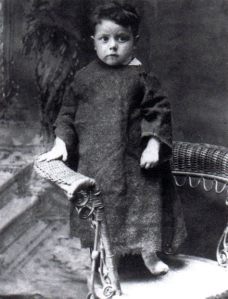 Master William Rowe Richards was born at 6 St Mary’ s Street, Penzance, Cornwall, England on 1 April 1909. He was the eldest son of James Sibley Richards (1887-1939), a general labourer, and Emily Hocking (1887-1972). His parents were both Cornish and had married in 1908. He was named after his maternal grandfather. On the night of the sinking William and his brother were asleep in their cabin with their mother when their grandmother came to alert them of the danger. The family escaped in lifeboat 4 but his uncle was among the lost.
 Mrs Sidney Richards (Emily Hocking) was born in Penzance, Cornwall, England on 22 April 1887. She first appears on the 1891 census living at 39 Adelaide Street, Penzance. Her father is believed to have settled in South where he died and her mother remarried, becoming Mrs William Guy. The family appear on the 1901 census at 34 Mount Street, Penzance. Emily was married in 1908 to James Sibley Richards (b. 9 October 1887), a general labourer from Newlyn, Cornwall. The couple appeared on the 1911 census living at 6 St Mary’s Place, Penzance, a boarding house ran by her mother. The couple would have two sons whilst in England: William Rowe (b. 1909) and Sibley George (b. 1911) and later lived at ‘The Meadow’, Newlyn. Their boat was only a short distance away from the Titanic went it went down. The people in the boat pulled seven men out of the water. The Richards and Hockings hoped that George Hocking had been rescued by another ship, but he was lost. After leaving the Carpathia, the Richards stayed at Blake’s Star Hotel at 57 Clarkson’s Street in New York City and she was reunited with her husband Sibley Richards who had travelled from Akron.
 Frank Thomas Andrew 1 was born as Thomas Francis Gribble in Perranarworthal, Falmouth, Cornwall, England in the closing months of 1885. Frank grew up on his father’s 25 acre farm, Gilly Tresamble, in Perranarworthal and appears there on both the 1891 and 1901 census records. Frank was married on 4 July 1908 at the register office in Helston, Cornwall. His bride was Rhoda Tripp (b. 11 December 1887). Rhoda hailed from Redruth, Cornwall and was the daughter of Henry Tripp, a farmer, and his wife Emily. Frank and Rhoda settled in Illogan, Cornwall and lived at Forest Gate, Four Lanes in that village, appearing there on the 1911 census. At that time they had one daughter, Lucy (b. 30 November 1908). Frank worked as a tin miner. Frank Andrew died in the sinking and his body, if recovered, was never identified.
 Robert Hichens 1 was born in St Peter’s Square, Newlyn, Cornwall on 16 September 1882. He was the son of a fisherman, Philip Hichens and Rebecca Hichens (née Wood) who was originally of Whitby, North Yorkshire. By 1906 he was shown on his marriage certificate to be a “master mariner”. He had married Florence Mortimore at the parish church of Manaton, Devon on 23 October in that year. On the night of 14 April 1912 Robert Hichens was at the ship’s wheel (having relieved Q.M. Oliver at 10 p.m.) when the warning came from the lookout that an iceberg had been spotted ahead of the ship. When the order came to hard a’starboard he immediately swung the wheel as far as it would go. At about 12.23 he was relieved by QM Perkis at around which time one of the officers shouted ‘That will do with the wheel, get the boats out.’ Later, Second Officer Lightoller told Lookout Fred Fleet to get into Lifeboat 6 on the port side and put Robert Hichens in charge of that boat. The lifeboat (capacity 65) left the ship at about 12.55 with only 28 persons on board with the order that they were to make for the lights that could be seen in the distance.
 Mr Richard George Hocking, 22, was born 26 July, 1889 at 39 Adelaide Street, Penzance Cornwall, the youngest son of Mr William Hocking (Confectioner and Baker) and Mrs Eliza Hocking (née Neads). After the death of his father in South Africa the family moved to 6 St Mary’s Street, Penzance.
 Miss Ellen “Nellie” Hocking was born in Penzance, Cornwall, England on 5 November 1891. She was the daughter of William Rowe Hocking (b. 1854), a baker and confectioner, and Eliza Needs (b. 1858). Her father hailed from Cornwall whilst her mother was born in Tresco on the Isles of Scilly and they were married in 1880. When Nellie appears on the 1901 census she is 34 Mount Street, Penzance. Her mother was on her second marriage by this time–the ultimate whereabouts of her father being unknown–to a Mr William Guy. Mr Guy died in 1907 and the family later show up on the 1911 census living at 6 St Mary’s Place, Penzance where her mother ran a boarding house. She remarked at one time to Nora Keane that as night had fallen the previous night she had heard a cock crowing (a sign in Cornish folklore of impending disaster). Nellie was told that she had imagined it but she was adamant. Nellie, her mother, sister and nephews were rescued in lifeboat 4. Her brother George was lost.
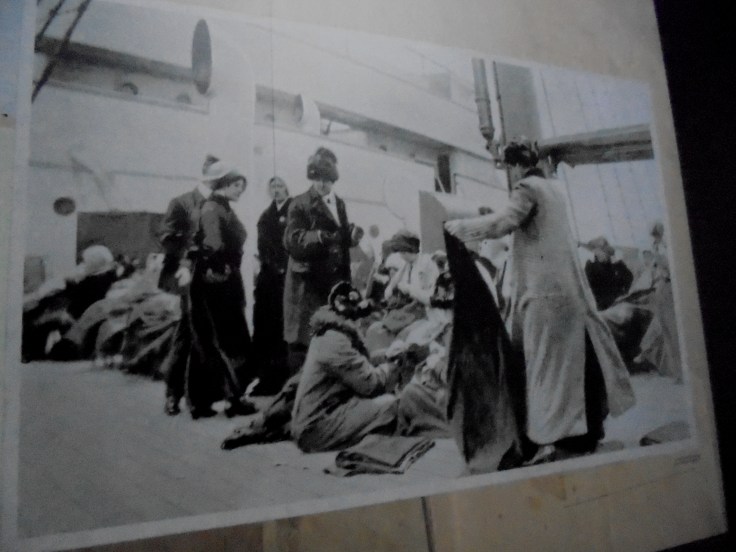 Mr Joseph Charles Fillbrook was born in Truro, Cornwall, England in early 1894. He was the son of William Fillbrook (b. 1868), a mason, and Catherine Vincent (b. 1866). His father was native to Truro whilst his mother was Canadian-born. Joseph first appears on the 1901 census living at the home of his maternal grandparents Edward and Mary Jane Fillbrook at 10 Victoria Square, Kenwyn, Cornwall and again on the 1911 census with his now widowed grandmother at Williams Row, Calenick Street, Kenwyn; he was described as a house painter by the time of the latter record and had been apprenticed as such since leaving school. His parents and siblings are listed on the 1901 census living at 8 Lemon Row and on the 1911 census at 16 Charles Street, Truro. Joseph Charles Fillbrook was lost in the sinking and his body, if recovered, was never identified.
 Mr Joseph Charles Nicholls was born in Nancledra, Cornwall, England on 24 July 1892. He was the son of Richard Henry Nicholls (b. 1867) and Agnes Friggens (b. 1861), both Cornwall natives who had married in 1886 and he had two known siblings: Mary Ethel (b. 1886), Richard Henry (b. 1890). His father was a stonemason who worked at the quarry at Trenowith Downs.
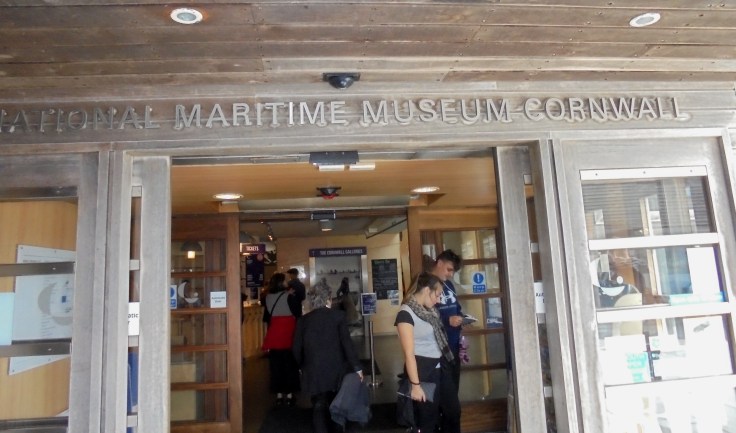


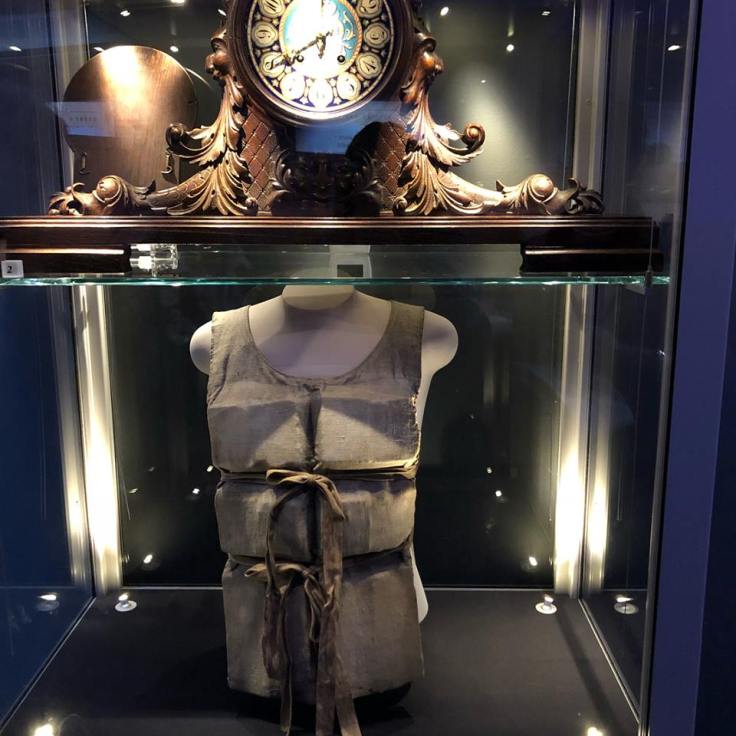


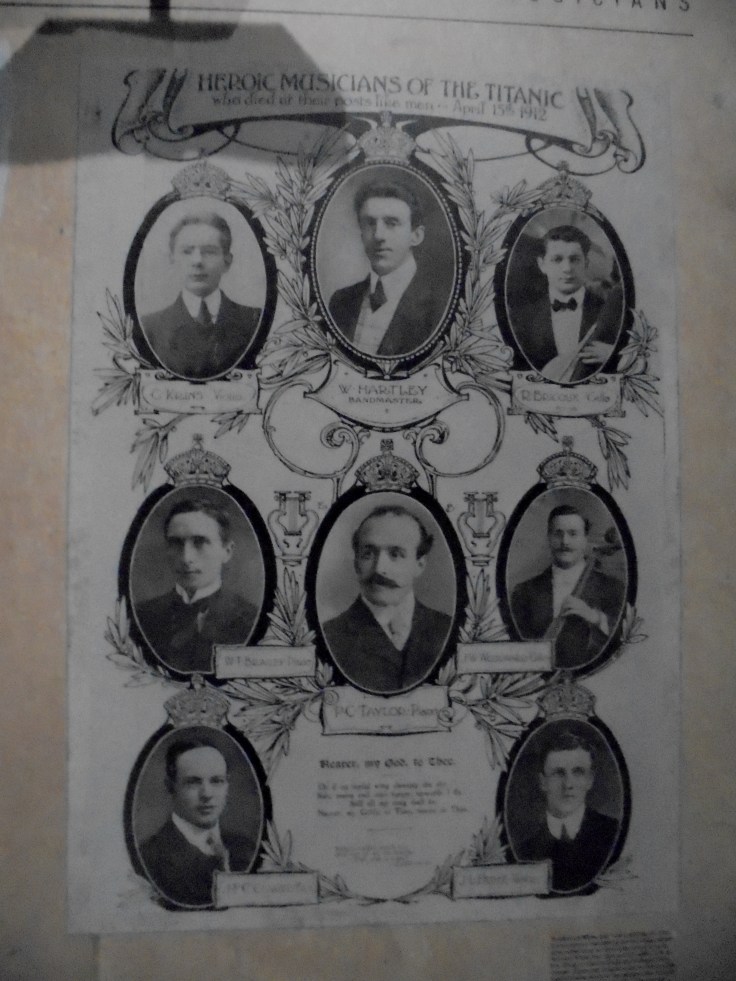
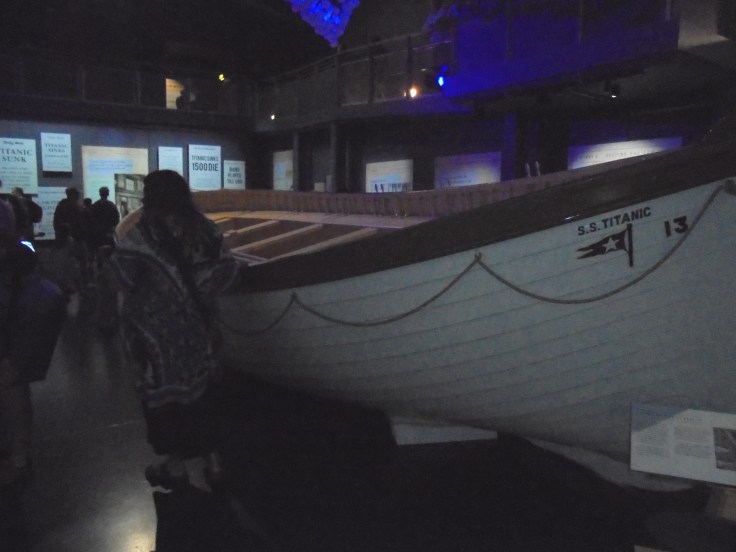


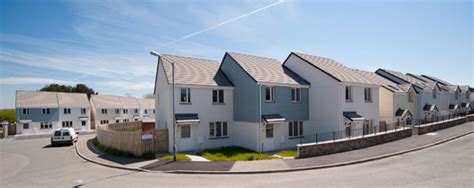

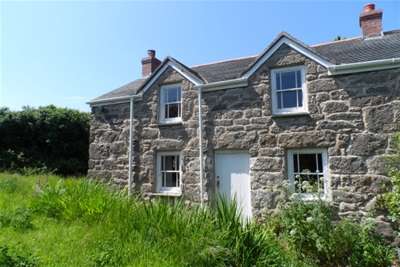







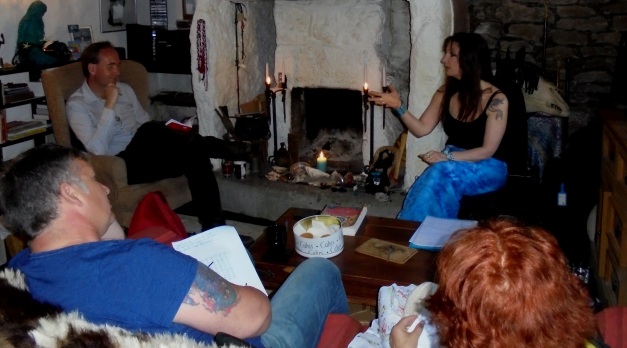


 In my experience this scenario is fraught with difficulties……..


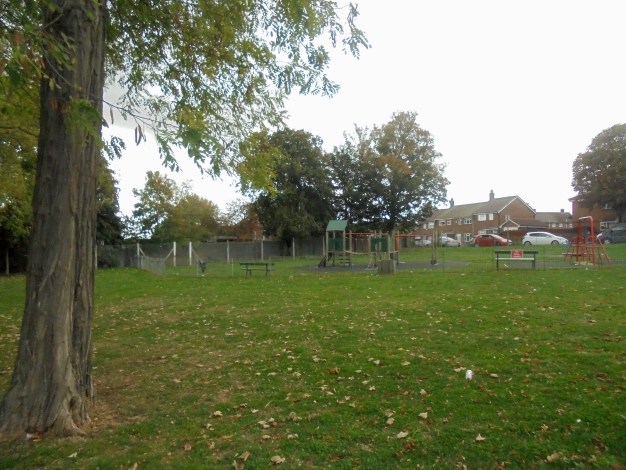
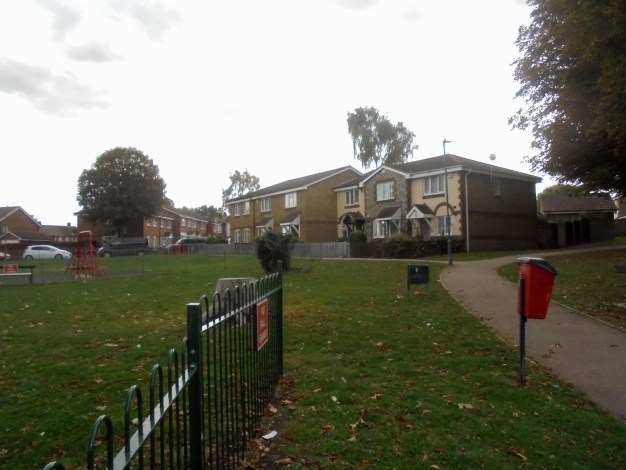
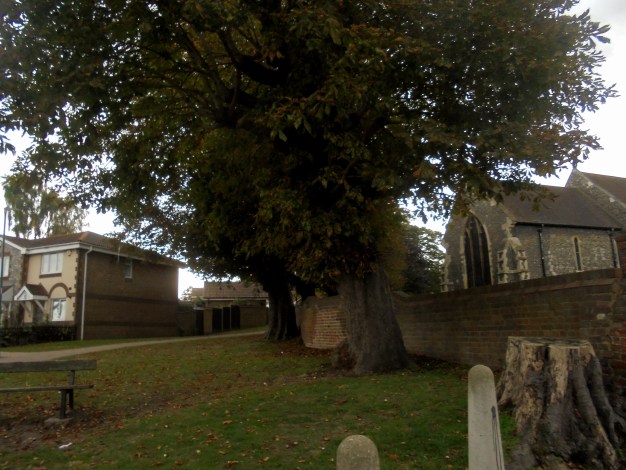

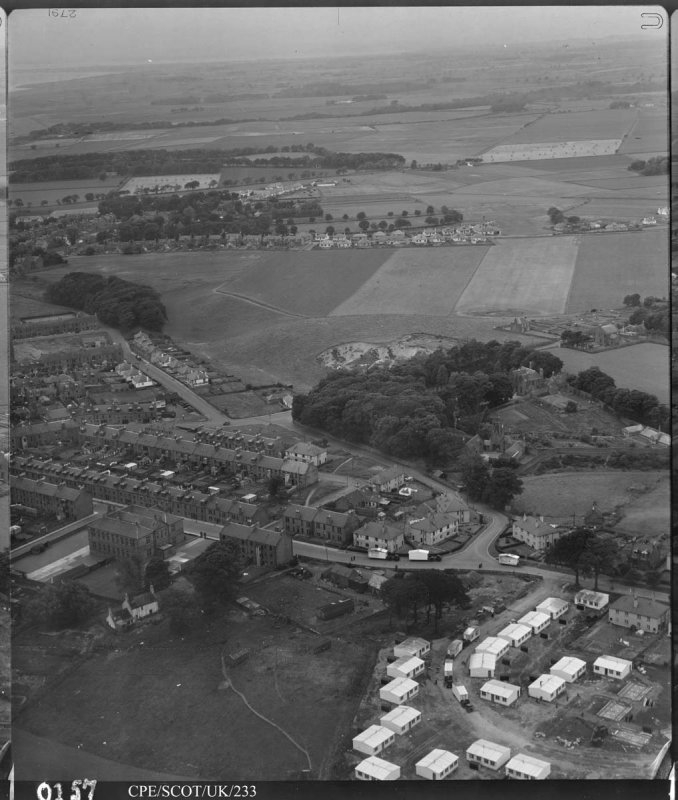
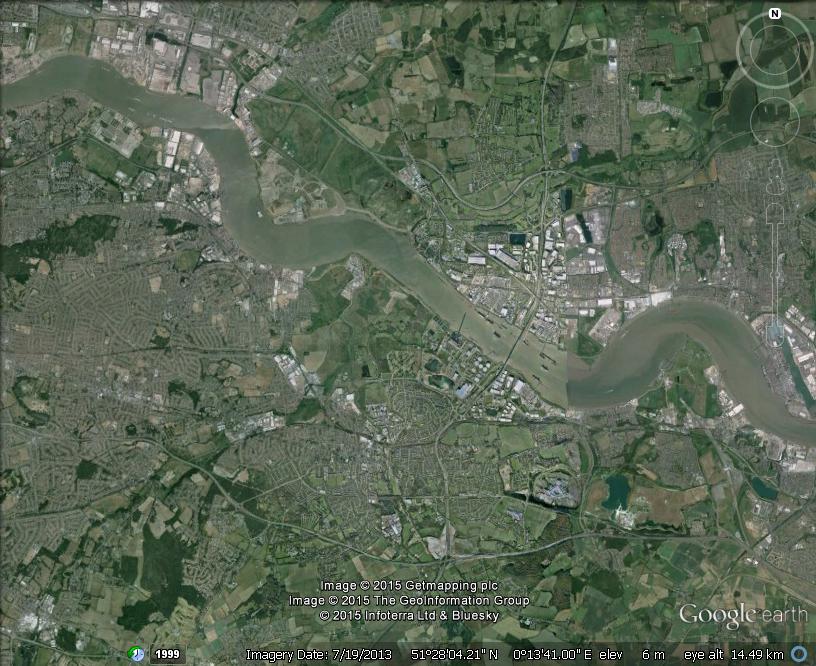
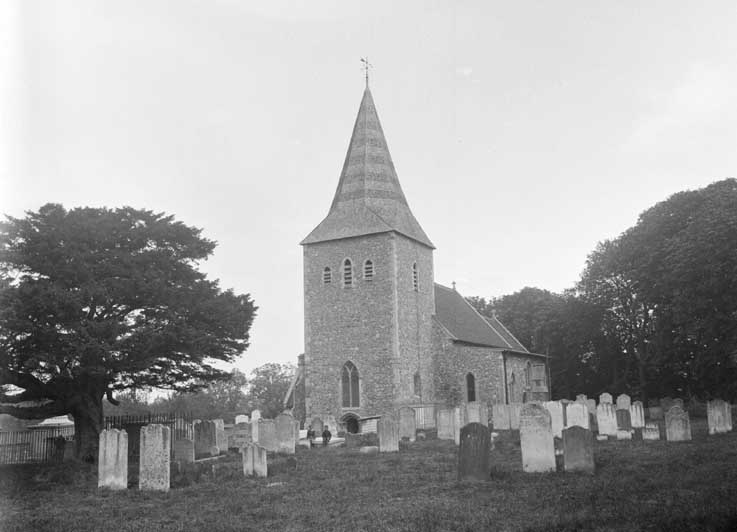
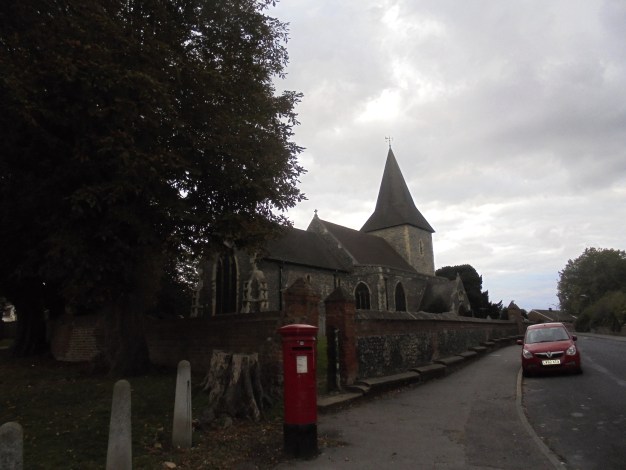


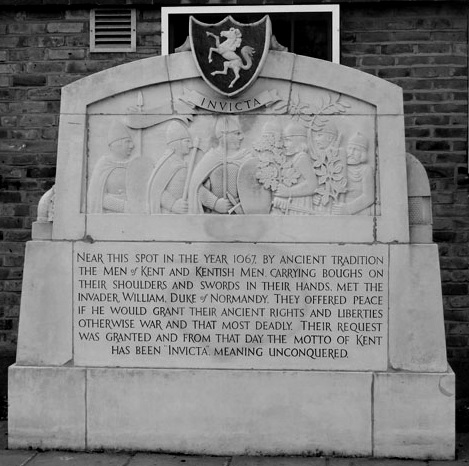





 laetitialathamjones.co.uk