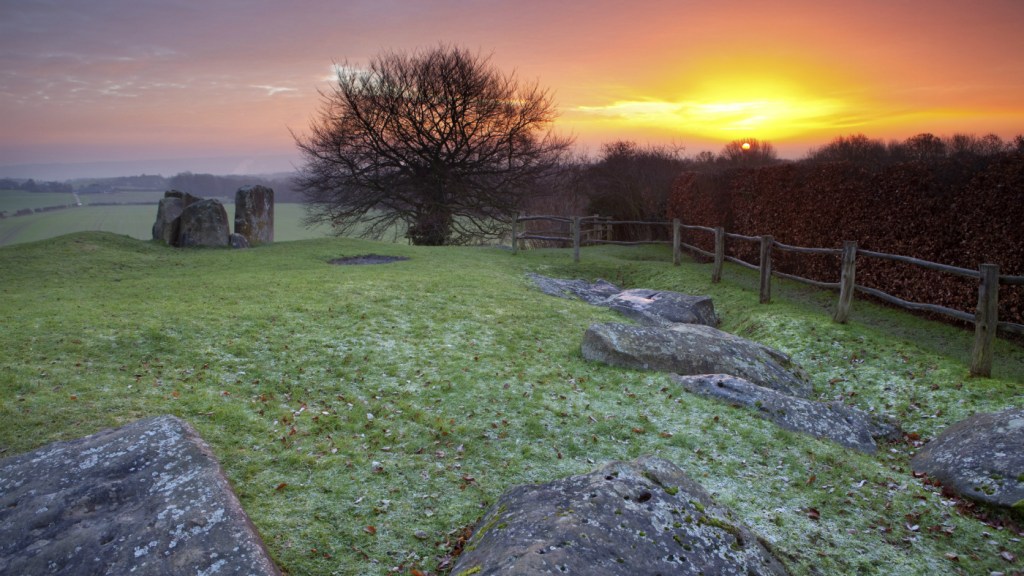
Sunrise at the Coldrum Longbarrow, Trotiscliffe in Kent.
The 13th of August 2026 marks thirty years since I began to research the deeper meaning of life and mortality. My former husband encouraged me to explore various religious and spiritual beliefs to develop and discover myself as my past life and thoughts had been controlled by others.
Many years of research and development has brought me to where I am now. It is a life completely different from the one I had then. I had spent thirty two years adapting my life around two marriages, as well as my children’s education and interests. Any free time I had in my second marriage, I used for college studies as well as spiritual research and development.
Some relationships fell by the wayside while pursuing my dreams as those with agendas eventually revealed themselves. On reflection of the type of people they were, we would have eventually gone our separate ways no matter what choices were made as their actions, words and their treatment of others over the years have proved this to be true.
A poignant statement by political writer Heather Delaney Reese is: “The truth does not disappear because they rewrite the narrative. And consequences do not disappear because they stop believing in them. Consequences have a way of catching up to those who spend their lives convinced they are untouchable. They are patient. They are relentless.”
The most important aspect of my training was developing power of the mind. When it is mastered, negative words and actions from others no longer have the same effect. They are seen for what they are, merely a projection of their own thoughts, actions and toxicity. Another useful skill is to take any negative energy directed towards you and reflect it back to the sender as eventually their own negative energy will destroy them. Another extremely powerful skill is to transform this negative energy so that it empowers you instead of causing harm. This can produce astounding results!
I recently received an uplifting message from someone I met at a seasonal ritual just after my move to Cornwall: “You are a beautiful soul and despite all the stress and trauma, you have elevated from those difficult times. There are others who respect you for it.”

What is it like to strive after what you most desire?
The pursuit of any dream is often romanticized as a shining vision of fulfilment and triumph. Behind the achievements is a story of sacrifice, often untold. When a person chases their dreams, it is essential to acknowledge the reality of the success they demand which is so much more than just wishful thinking. Along with discipline and sacrifice, one also needs to trade short term comforts for long term rewards.
Sacrifice is more about choosing than losing. Its letting go of something you consider of value and exchanging it for something that has more meaning. It can apply to life in all areas, health, relationships, career and personal development. The greater a person’s dream is, the greater their sacrifices.
Growth can mean stepping out of your comfort zone. Public speaking can be particularly difficult on first attempts as one can lack confidence. Taking on a business from one who has been placed on a pedestal by their followers for many years, can cause reluctance in accepting another person taking on this role. Resilience by the successor is needed when faced with rejection by remaining focused on the work in hand rather than caring about others’ opinions. Eventually, the genuine, mature followers will understand and show support.
When a person pursues their dreams, it may mean declining invitations to certain social gatherings. True friends would understand, however some connections could fade as priorities change. Those with hidden agendas will be envious of your courage to reach these goals, but true friends will want the best for you, giving encouragement and support.
Perseverance of following your dreams develops character, resilience, patience and discipline. These qualities are important for long term success. Letting go of distractions leads to clearer priorities as one focuses on what matters.
Paying a price for achievements brings deeper gratitude as it has higher value. The success achieved through sacrifice will be sweeter due to the journey it took to get there. The sacrifices one makes can inspire others to do the same. This causes a ripple effect of ambition and courage.
Remember – Dreams are earned, not handed out.
One of the most important aspects of spiritual development, is respecting and accepting each stage of our lives. I no longer fight it, or chase my youth as we cannot reverse time. No matter how much a person tries to do so, they fight a losing battle with nature. I have had my time of youth and it taught me profound lessons. Each stage of life will bring its own experiences and if we become overly obsessed, it will distract from accepting the beauty of age and wisdom along with important lessons it will teach us.
I have come to the conclusion that we each have a set time to live in this world, some stay longer than others depending on the lessons they need to learn this time around. I believe this is reason some die from diseases and others survive them as it is not their time to leave. We are all here to observe, learn and work it all out for ourselves. True development does not come from following others. One of my children once said to me: “I know the advice you are giving me is right, but I need to find this out for myself.” Although as parents we find it difficult to see our children experience the negative side of life, that is the only way they will learn to survive. We are all spirit beings experiencing a physical life in our own unique way.
I recall a scene in the Titanic movie when passengers fall into the sea and in their panic to survive they grasp onto one another. At times their survival was at the expense of someone else’s life. We see this panic and fight for survival in everyday life, many cling to others, constantly seeking reassurance and social media has highlighted this where relationships and lives are played out in public. Many are fearful of losing relationships and openly state their partners and families are ‘their world’ and main reason for living. They are also fearful of world events, particularly nowadays. Political decisions are creating wars, poverty and financial difficulties. The appalling view from society is that those who are vulnerable with disabilities or elderly are disposable and are no longer of use in the world. The ‘throw away’ mindset of society affects food, clothing, appliances, furniture but worst of all relationships. There is an epidemic happening now where younger generations are cutting off all contact with their parents. I have communicated with thousands of parents who are bewildered, as their adult children have refused to discuss any grievances they may have. I have communicated with hundreds of mothers in this situation and discovered that many adult children are being influenced by new-age therapists on social media groups. They are advised to cut parents out of their lives rather than discuss their differences. It is sad that family dynamics and respect for the older generations has completely changed. There are however some cultures, for example in Mexico where I have experienced respectful behaviour from the younger generation.
It is sad how drama, angst, aggression and worry in this world distracts from its beauty. It is vital for our mental health to spend time in nature, even by sitting in our garden for a while, walk in the woods or by the sea. Deep peace can be achieved here when we still the mind and open our hearts to those energies.
I have now reached the stage where I am no longer afraid of death as I understand the process more. The religion I was raised in taught their members to be fearful of it, promising that if they stayed faithful they would never die, but live forever with young, perfect, physical bodies. (Understanding nature as I do now, I find it difficult to understand how anyone could believe this.) The condition was that they would only attain this if they stayed within the religion and worshipped God their way. Our physical bodies are a temporary vehicle to use while we are here and our spiritual essence that inhabits the body does not change. This is why we find it hard to accept the physical changes when we unexpectedly see ourselves in a reflection, as it does not match the way we feel inside. We can also find it difficult to come to terms with death and the passing of loved ones, as we are not meant to be without them, but will soon meet them again in the spirit world. When my time comes to leave, I look forward to returning ‘home’.
Queen Elizabeth II described this well: “We are all visitors to this time, this place. We are just passing through. Our purpose here is to observe, to learn, to grow, to love… and then we return home.”
My search during this time was for the Ancient Ways and Old Craft and what is at its core is ancestral connection and self development. I thought my development would lead me to one way of being and to one place. I now know that this is not true, especially when I received the results of my ancestry and DNA. I am only 44% English with a larger percentage in the Celtic lands of France, Ireland, Wales, the South West of UK, Scandinavia and surprisingly a small percentage in Mexico! My ancestral roots run deep within all these lands and explain the connection I feel with each of them. Communing with your ancestors is about connecting with ALL of these, by researching their culture and history. They are all aspects of ourselves and will help us grow to a level where we feel complete.
As I reflect on the last thirty years, the sacrifices made, people that disappeared along the way as well as many new friendships I have made, I ask myself whether it was all worth it. Did I truly fulfil those dreams and ambitions? After all the risks I had the courage to take, am I satisfied with the outcome? There is no single answer to these questions as some aspects of my dreams were fulfilled but not others as I had visualised them in a different way. Life constantly changes and will continue to do so.
The day of Lammas was an appropriate time to release this post as it the subject of the season is about reaping what one has sown, thinking about the sacrifices made and how they have helped us become who we are today.
To mark the thirtieth anniversary of my spiritual journey, Crossed Crow Books have released a combined edition of my two-part account: Be Careful What You Wish For. It will be released on the 18th of August 2026.
It will be available at this link on Amazon
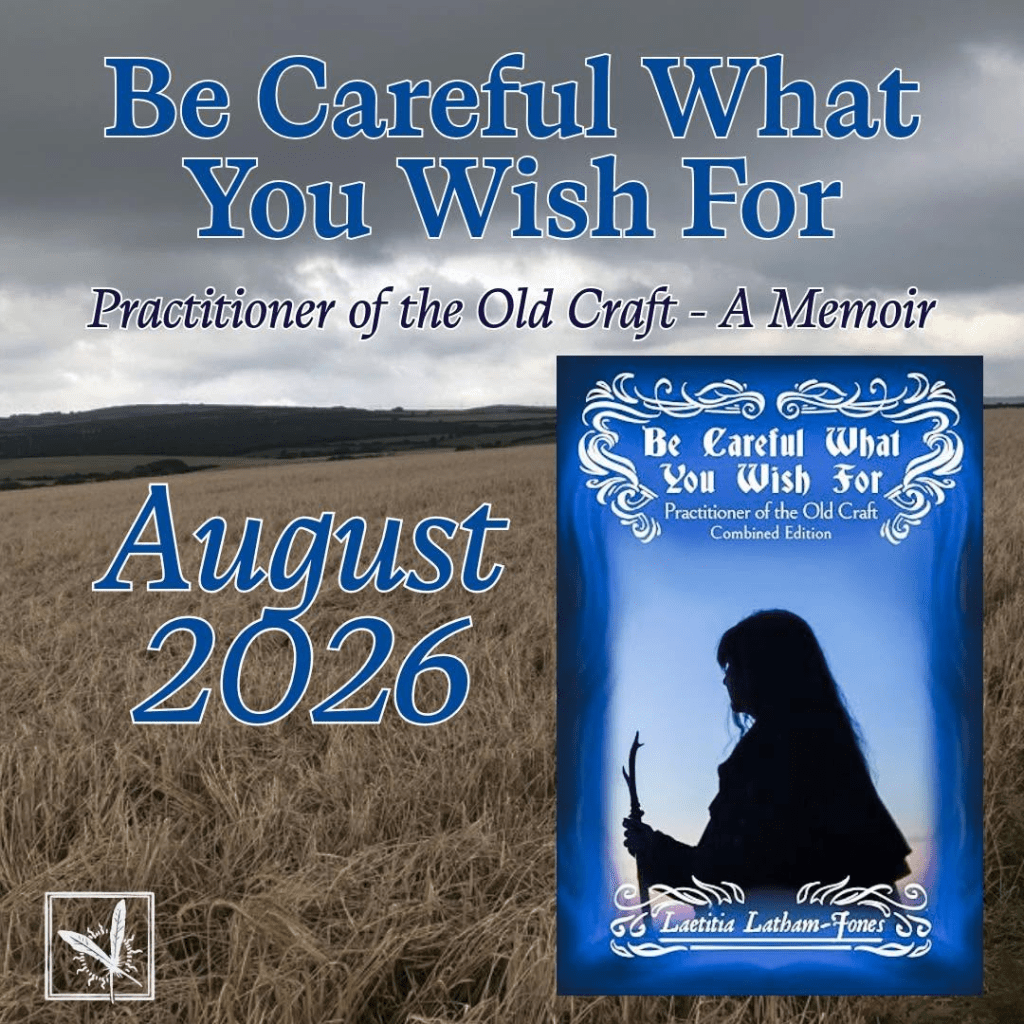
Be Careful What You Wish For describes the courageous journey of a village wisewoman, a witch, in Cornwall, England, as she struggled to find herself and establish her identity. From her strict, religious upbringing to her trials in coming to the Craft, Laetitia’s story is a truly inspiring read that reminds us that perseverance and patience pays off, and is a hard reminder of how the old gods and the spirits can test and challenge us; it’s a story that explores her life-long connection to the magical land of Cornwall, the journey that led her there, and the magical life that followed. For the dreamers and seekers ensnared by the romances of a life of Witchcraft, put on a pot of tea, light a fire, and let Laetitia Latham-Jones tell you her story of self-discovery, empowerment, and her journey home.
As a new company Crossed Crow Books were hesitant about creating larger paperback books as they were concerned with the strength of the page binding. Now, with more experience they are able to merge both books together, which will make it easier for anyone who wishes to read my complete journey.
This factual account of my journey is not ‘sugar-coated’,. It takes the reader on a roller-coaster of wonderful, memorable experiences as well as the obstacles and consequences while pursuing your dreams. It was important to write in this way and inform readers of what to prepare themselves for what may occur if they decide to step out of their ‘comfort zone’ and pursue what they most desire. This new edition also contains new photographs plus an updated addendum
Here are some reviews of my memoir:
Laetitia Latham-Jones, with her years of experience and knowledge, takes the reader through her personal journey, a journey that sees the author go from a strict, religious upbringing to a life as a witch and wisewoman of Cornwall. While the path may not always have been a smooth one, it led to a life of magic and gods, of chants and rituals, and ultimately, one of fulfilment through the Craft. This book is for anyone needing the inspiration to take big risks and explore their spirituality.
As Laetitia recounts the events of her life, she shares with the reader the many things she learned from her occult groups and teachers. Stories of sabbats, festivals, and circles cast among friends are peppered throughout the book’s pages. In Be Careful What You Wish For, the reader is able to get a glimpse into Egyptian, Alexandrian, and Gardnerian practices through the eyes of the author, introducing these classic traditions to a new audience.
An amazing account of Laetitia’s journey into the Craft. This is the second of two books that brings us up to date. No, cagey, vague story of weekend goths and casual wannabes, this is a true account of life with a foot in both worlds and it can be a tricky business being this committed and open, but then nothing worth having comes easy. Laetitia shows how rewarding it can be if you are willing to live with both eyes wide open and speak honestly. Being a witch or wise woman comes at a price which is so much trickier when you don’t know at the outset what that may be. But then, we don’t know either, how great the rewards may be when we seek truth with humility. I can’t recommend this highly enough. Laetitia’s style of writing is both frank and honest, a remarkable memoir.
The author writes powerfully and with a searing honesty. A deeply human book it has been a privilege to read. Highly recommended.
Ultimately a story of survival, of becoming who you truly are, and recognizing that sometimes the status quo is too small a box to fit our grand higher selves into. Laetitia Latham-Jones’ deeply personal memoire is a tale that reminds us to keep persevering, that practice and patience will pay off in due time. For the dreamers and the downtrodden, this book is an inspiring tale of self-discovery, empowerment, and a journey home.
Thank you for sharing your experiences with us, your book teach us how to deal with our own lights and shadows !! there is no light if there is no shadow !! the part 2 is amazing , intense as this first one !!! READ them BOTH !!!
I love the flow of the book; it is easy to read and Laetitia has a way of allowing the magick and the mundane to blend and seperate in a way where one can understand the life story and see the connections within the book. It is incredible; the strength and fortitude Laeitia had within her to navigate the religious zealoutsy, break away, follow her heart and discover her magick and in turn, other like minded people that accepted her!
The only sad thing I can say is I do wish the book was longer! Me being the bookworm I am, I was so down when I finished it, as I wanted to read more!